




Cased Silver Serviette Rings
These cased silver serviette rings are fitted sets of sterling silver napkin bands resting in silk, velvet, or leatherette lined boxes.
Cased Silver Serviette Rings
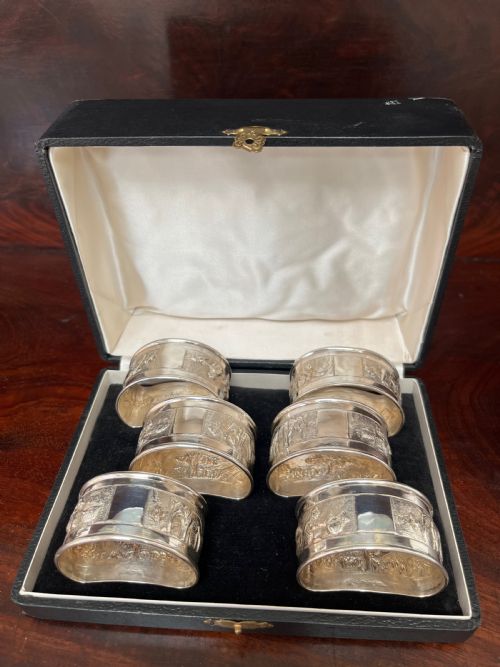
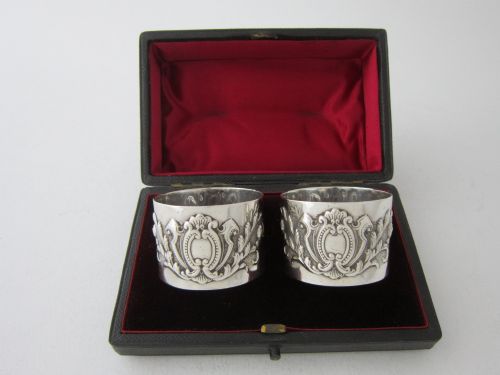
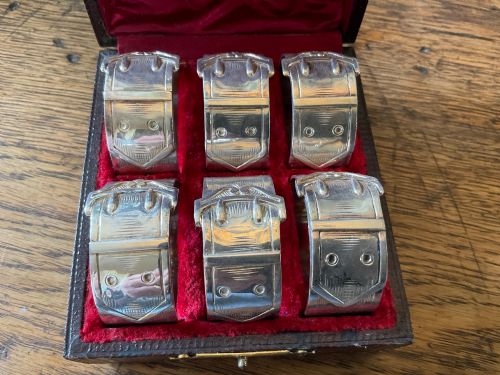
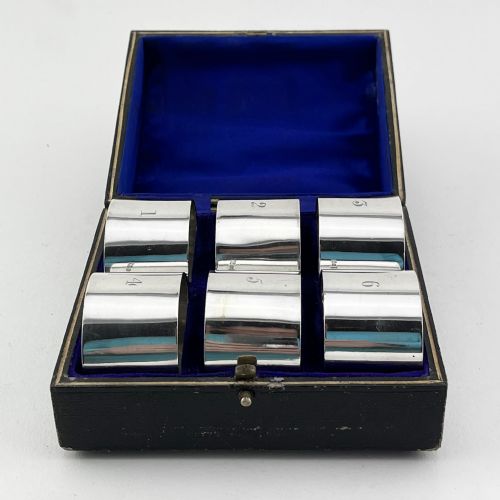
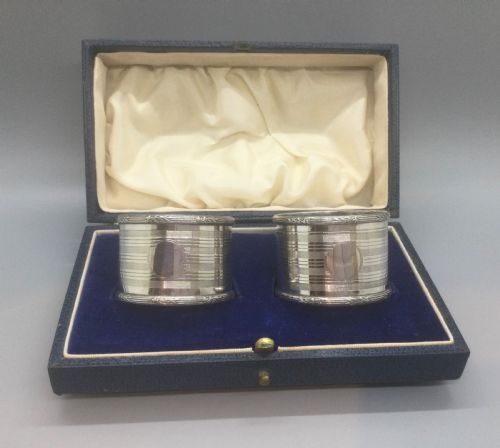
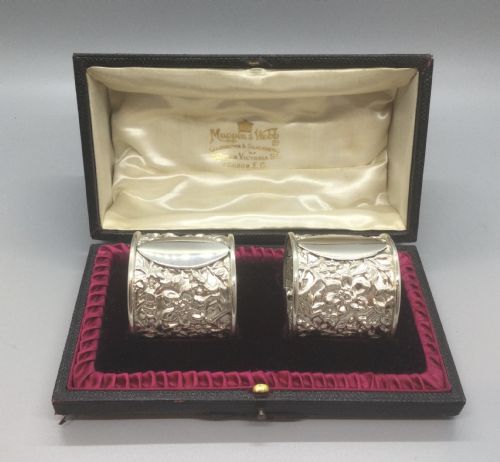
When you search for cased silver serviette rings, you encounter matched pairs and sets of six dining accessories housed in their original protective boxes. These table pieces span the Victorian, Edwardian, George V, and mid-twentieth-century periods, originating from English assay offices including Birmingham, Chester, and London.
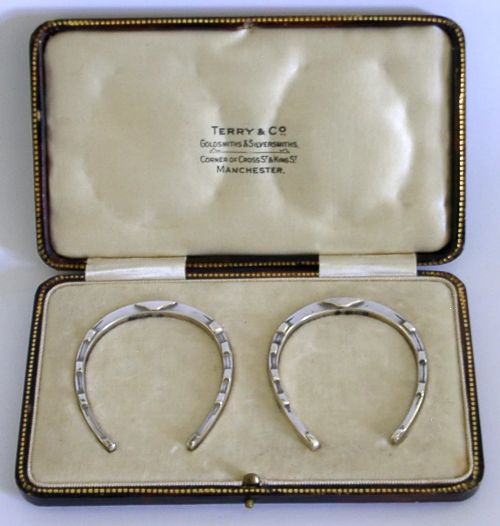
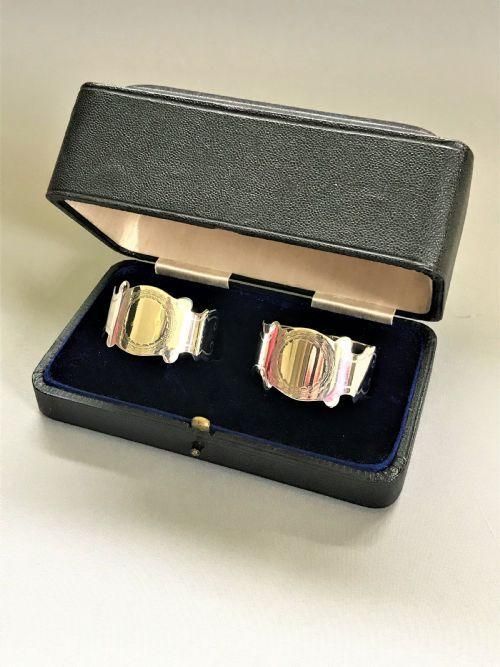
The physical forms on this page range from plain circular bands to decorative rings modelled specifically as horse shoes or belt buckles. Most examples arrive complete with fitted interior trays lined in silk, velvet, or leatherette to cushion the metalwork.
How they were made
The rings themselves are formed from solid sterling silver or silver plate, shaped into rigid bands and finished with engraved, pierced, or plain polished surfaces. Makers constructed the protective outer boxes using sturdy wood cores wrapped in leather, leatherette, or cloth.
Interiors were lined with soft silk or velvet inserts specifically moulded to hold each individual ring securely in place during storage.
Victorian diners apparently required great conviction, as silversmiths modelled these rings into functioning belt buckles and lucky horse shoes.
What varies in quality
Quality separates through the integrity of the housing box and the thickness of the silver used to form each ring. Fitted boxes that retain their original hinges, clasps, and untorn silk linings command greater interest than those with damaged exteriors or replacement interiors.
Heavier gauge sterling silver provides a more substantial feel in the hand, whereas lighter bands risk denting during everyday dining use.
C.T. Burrows & Sons·Mappin & Webb
The Cased Silver Serviette Rings Glossary
- Serviette ring
- A small band used to hold an individual dining napkin at the table. These are frequently found grouped in matching sets within fitted presentation boxes.
- Assay office
- An official body that tested and stamped precious metal objects with hallmarks to guarantee purity. Birmingham, Chester, and London offices appear frequently on these items.
- Sterling silver
- An alloy comprising ninety-two point five percent silver by mass, with the remainder consisting of copper or other metals. This standard grade is stamped with specific hallmarks on British items.
- Leatherette
- A synthetic material designed to imitate leather, commonly utilised to cover the exterior of presentation boxes from the Edwardian era onward.
- Hallmark
- A series of official marks stamped onto precious metal items indicating the maker, assay office, standard of purity, and year of assay.
Cased Silver Serviette Rings: Frequently Asked Questions
Are these sets safe for daily dining?
Solid sterling silver rings withstand regular use when handled with reasonable care during meals. The metal is durable enough for daily service while remaining decorative on the table.
Keep them away from harsh chemical detergents to preserve both the silver and any original surface patination.
How do I date an unmarked box?
Examine the hallmarks stamped directly onto the silver rings inside the case rather than relying solely on the box. Assay office marks and date letters on the metal provide precise years of manufacture.
Box styles, interior fabrics, and hinges offer secondary clues that generally align with the period of the silver contents.
Why were these sold in fitted cases?
Fitted presentation boxes protected delicate silver dining items from dust, tarnishing, and physical damage while stored in sideboards. They also made these sets suitable for wedding, anniversary, or seasonal gifting.
The original silk and velvet linings cushioned each ring individually to prevent scratching during transport.