




Hallmarked Silver Watch
A hallmarked silver watch or associated accessory is a piece of portable history, offering solid British assay marks alongside practical Victorian and twentieth-century timekeeping.
Hallmarked Silver Watch
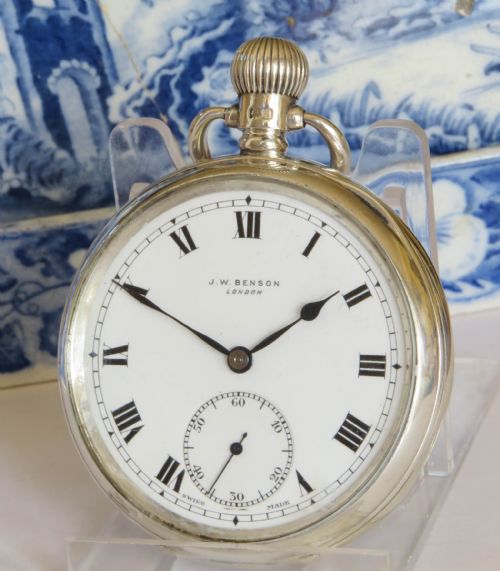
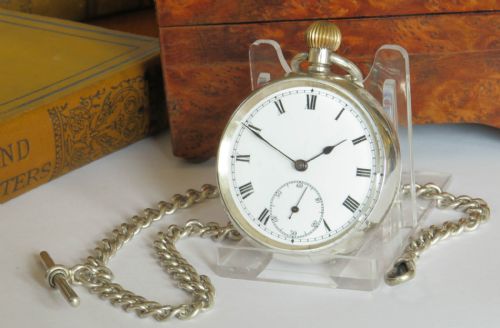
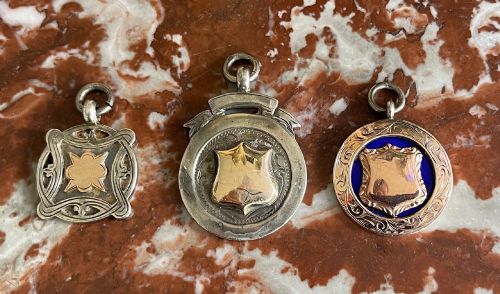
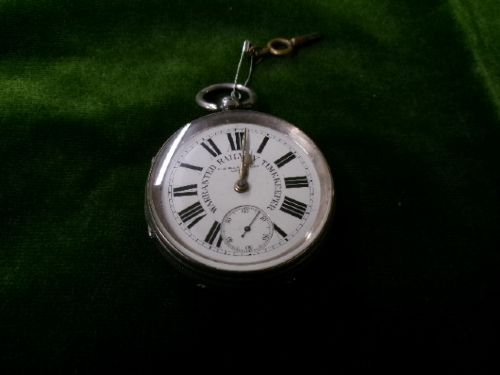
A hallmarked silver watch search brings up pocket watches, travel clocks, watch chains, sovereign cases and fob pendants spanning the nineteenth century through the interwar period. The visitor to this page meets Victorian pocket watches, Edwardian whistlers, Art Deco timepieces and sturdy albert chains.
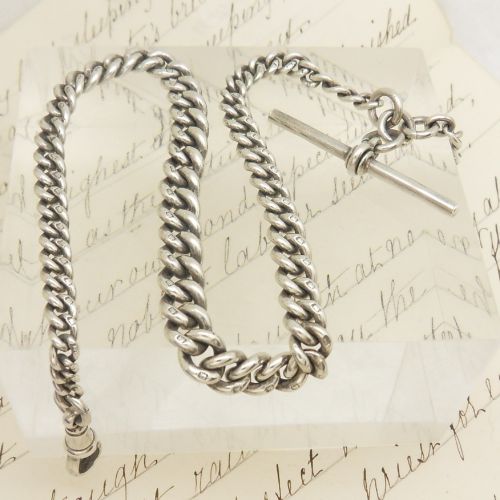
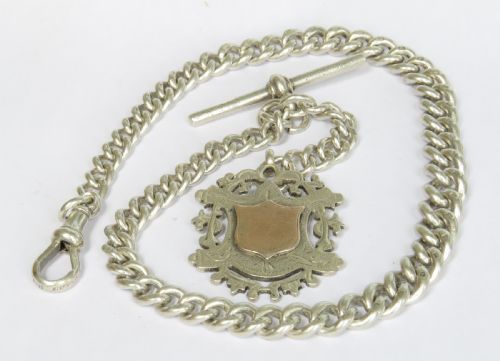
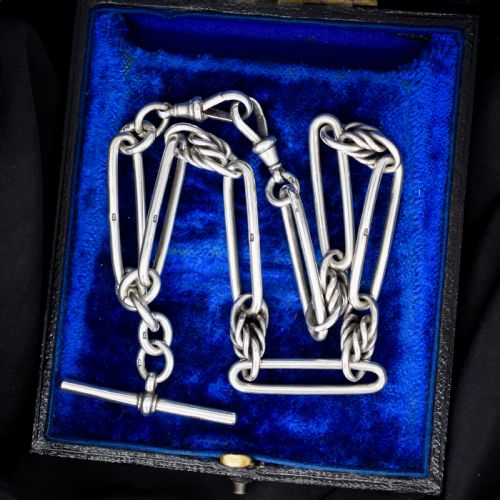
Pocket watches form a core part of the selection, accompanied by silver double watch chains, trombone love knot chains and curb link necklaces fitted with dog clips and t-bars. Assay offices such as Chester, Birmingham and Sheffield stamp these objects with official standards of purity.
Alongside timepieces, the selection includes silver sovereign cases, watch holders and folding travelling clocks with presentation inscriptions. These accessories share the same heavy sterling silver construction and clear hallmarking seen on the watches themselves.
Materials and construction
Silversmiths utilised sterling silver and silver gilt to form the cases, chains and sovereign holders, often combining them with glass crystals, enamel work and brass internal components. Gold and rose gold accents appear on specific chains and pendants, while velvet lines protective travel cases.
Makers constructed robust curb link, uniform curb and trombone chains by hand or with early mechanical assistance, attaching secure dog clips and t-bars. Cases and watch housings received crisp punch marks denoting the assay office, date letter and sterling standard.
Hallmarked Silver Watch Retail Price Guide 2026
Typical asking prices for hallmarked silver watch among the pieces listed under this phrase on Sellingantiques today, from the lower quarter to the upper quarter. They describe what is for sale here now, not the wider market.
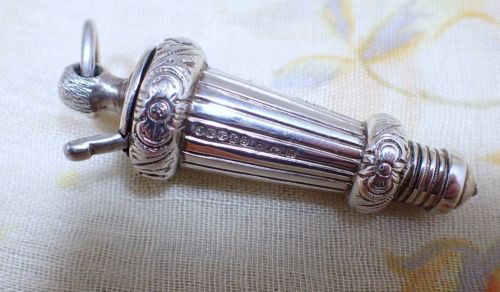
Edwardian whistle pendants tucked discreetly inside matching silver cases ensure nobody misses a blast when calling for a cab.
Factors of quality
Quality rests in the legibility and completeness of the hallmarks stamped across the silver components, ensuring clear attribution to specific towns and years. Crispness in the chasing, engraving and link formation distinguishes superior chains and sovereign cases from standard commercial production.
The integrity of the mechanism, the presence of original components like t-bars and dog clips, and the condition of enamel or glass elements elevate certain pieces above others. Maker attribution to notable names adds distinct authority to the work.
Aaron Lufkin Dennison·Kendal and Dent·J W Benson·J G Graves
The Hallmarked Silver Watch Glossary
- Hallmark
- Official stamps applied by an assay office to guarantee the purity of precious metal items. These marks typically include a maker's mark, standard mark, assay office mark and date letter.
- Albert chain
- A watch chain designed to attach a pocket watch to a waistcoat, named after Prince Albert. They often feature a t-bar at one end and a dog clip at the other.
- Sovereign case
- A small, round container engineered to hold gold sovereign coins securely in the pocket. Many feature spring-loaded lids and loop attachments for watch chains.
- Half hunter
- A pocket watch featuring a case with a glass or open-centred front cover that allows the user to read the hands without opening the case fully.
- T-bar
- The crossbar attached to the middle or end of a watch chain. It slips through a waistcoat buttonhole to anchor the chain securely.
Hallmarked Silver Watch: Frequently Asked Questions
How do I read a silver hallmark?
Assay offices stamp items with a series of punches that include the metal standard, the town mark, and a specific date letter corresponding to the year of testing.
Collectors consult reference tables to match the shape of the shield and the specific font of the date letter to determine exact years of manufacture.
What is an albert chain used for?
An albert chain secured a pocket watch to a gentleman's waistcoat, with the t-bar sliding through the buttonhole and the watch tucked into the pocket.
Today, many buyers wear these robust silver chains as necklaces, utilising the original dog clips to suspend pendants or sovereign cases.
Are these pocket watches still working?
Many antique pocket watches remain in working order, though mechanical reliability varies across individual pieces from the Victorian and Edwardian eras.
Buyers often consult specialist horologists for servicing to ensure accurate timekeeping and proper preservation of the internal movement.