



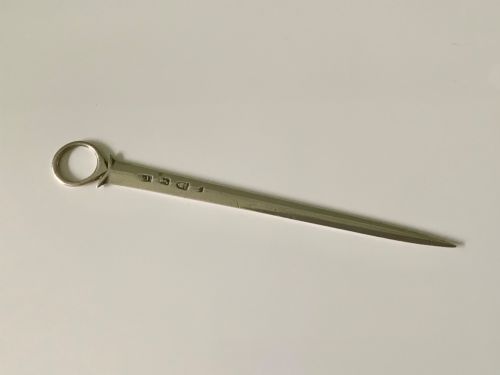


Hallmarked Silver Letter Knife
A hallmarked silver letter knife is a desk accessory that opens correspondence with precision, combining precious metal with practical utility.
Hallmarked Silver Letter Knife
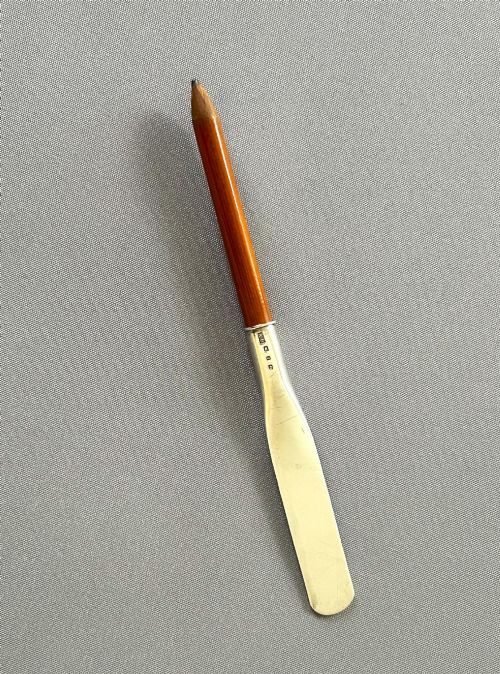
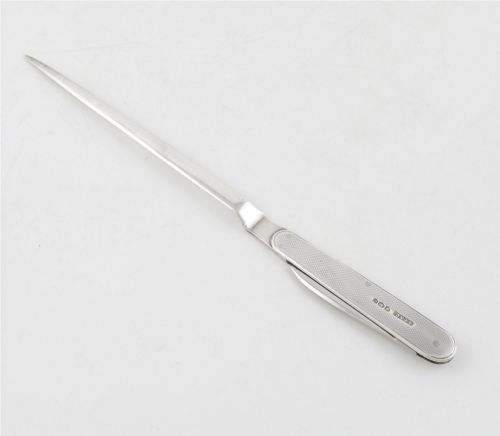
When you search for a hallmarked silver letter knife, you encounter desk accessories spanning from the Georgian period through to the mid-twentieth century. The selection includes simple sterling silver blades alongside more elaborate forms combined with agate, tortoiseshell, and steel.
You are most likely to meet pieces originating from the Victorian and Edwardian eras, often bearing full hallmarks that indicate the assay office and date of manufacture. These items served as functional tableware and desktop implements for opening mail before the era of machine-sealed envelopes.
The category extends to encompass related desk items such as page turners and meat skewers repurposed as letter openers. Makers range from renowned retailers like Asprey to specialised silversmiths operating in London, Chester, and Birmingham.
How they were made
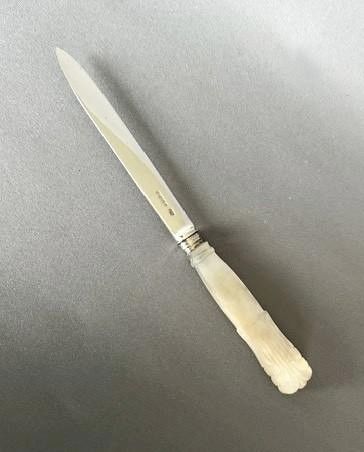
Silversmiths constructed these blades using sterling silver, frequently pairing the precious metal with organic materials such as tortoiseshell and agate handles. Steel was often utilised for the cutting edge to provide necessary rigidity while the handle remained silver.
Manufacturing techniques included hand-forging, casting, and engraving, complemented by the application of vitreous enamel for decorative novelty pieces. Hallmark stamps were struck directly into the metal to certify the silver standard and year of production.
Hallmarked Silver Letter Knife Retail Price Guide 2026
Typical asking prices for hallmarked silver letter knife among the pieces listed under this phrase on Sellingantiques today, from the lower quarter to the upper quarter. They describe what is for sale here now, not the wider market.
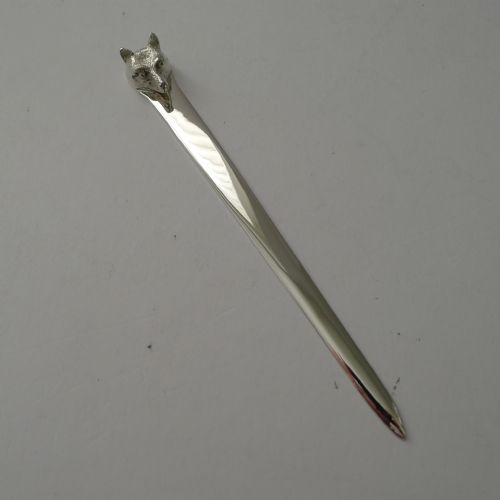
A silver fox or pheasant perched upon a handle turns opening the post into a momentary country pursuit.
What varies in quality
Quality rests upon the crispness of the hallmarks, the integrity of the join between handle and blade, and the presence of specialised decoration like enamelling or carved stone. Simpler Chester or Birmingham silver blades offer straightforward utility, whereas signed London pieces demonstrate superior finishing.
The inclusion of mixed materials such as agate or tortoiseshell introduces greater complexity in construction and elevates the visual interest of the object. Weight, gauge of silver, and the preservation of original polish distinguish standard utilitarian desk tools from luxury examples.
Asprey·Moses Brent·A Barrett
The Hallmarked Silver Letter Knife Glossary
- Hallmark
- Official stamps applied to precious metals indicating the purity, the maker, and the year of assay. These marks provide a secure method for dating English silver.
- Sterling silver
- An alloy consisting of 925 parts of silver per thousand, forming the primary material for the majority of these desk implements. It ensures durability alongside a bright metallic lustre.
- Page turner
- A larger desk accessory designed for separating uncut pages in books, frequently grouped alongside letter openers due to similar manufacture in silver and tortoiseshell.
- Assay office
- An official body responsible for testing the purity of precious metals and stamping them with the appropriate hallmarking symbols. Towns like London, Chester, and Birmingham maintained active offices during the periods represented.
Hallmarked Silver Letter Knife: Frequently Asked Questions
How do I date a silver letter knife?
Dating relies upon the stamped hallmarks, which include specific date letters corresponding to the assay office that tested the metal. Reference tables match these letters to the exact year of manufacture.
Additional clues emerge from the style of the piece, the form of the maker mark, and the historical period associated with the design.
Were these items used for anything else?
While primarily designed for opening letters and envelopes, some larger examples doubled as page turners for books and documents. Historic meat skewers were also occasionally adapted for opening correspondence.
Novelty designs featuring animals or shooting motifs served as decorative desktop conversation pieces as well as functional tools.
What materials are combined with the silver?
Makers frequently paired sterling silver with organic materials like tortoiseshell and hardstones such as agate for the handles. Steel blades were also incorporated to provide a firmer edge for cutting paper.
Enamel decoration appears on specialised novelty items to add colour and detailed imagery to the handle or terminal.
How should I care for a silver letter knife?
Regular gentle dusting and occasional cleaning with a specialised silver cloth will maintain the polish without wearing down the engraved details or hallmarks. Avoid harsh abrasive dips, particularly on pieces that combine silver with tortoiseshell or enamel.
Store the object in a dry environment to prevent tarnishing and to protect delicate organic handle materials from extreme temperature shifts.