




Hallmarked Silver Condiments
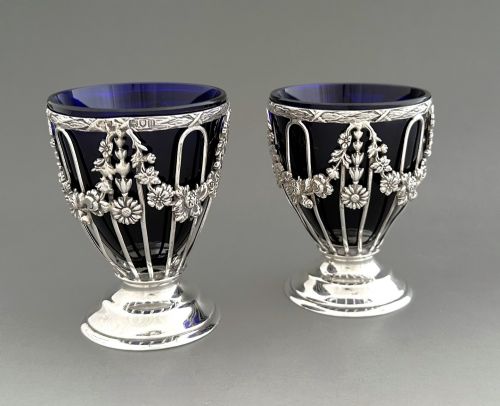
These hallmarked silver condiments bring tactile weight to the dining table, pairing solid sterling frames with cut glass and cobalt liners.
Hallmarked Silver Condiments
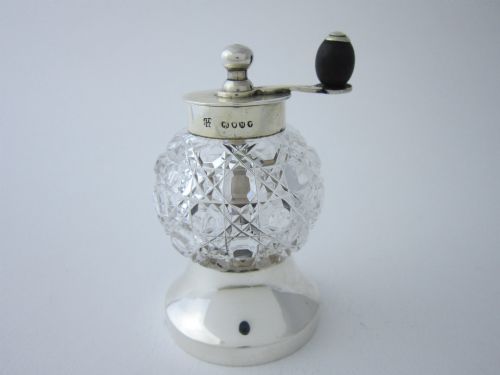
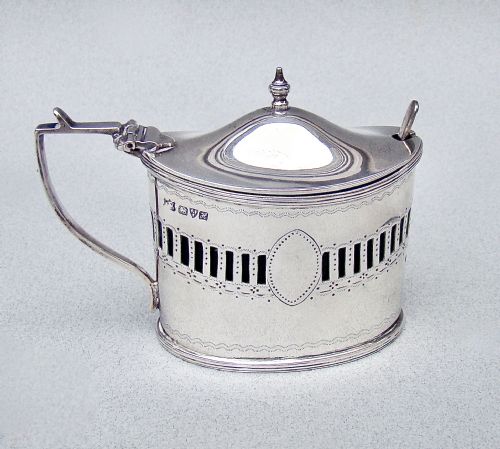
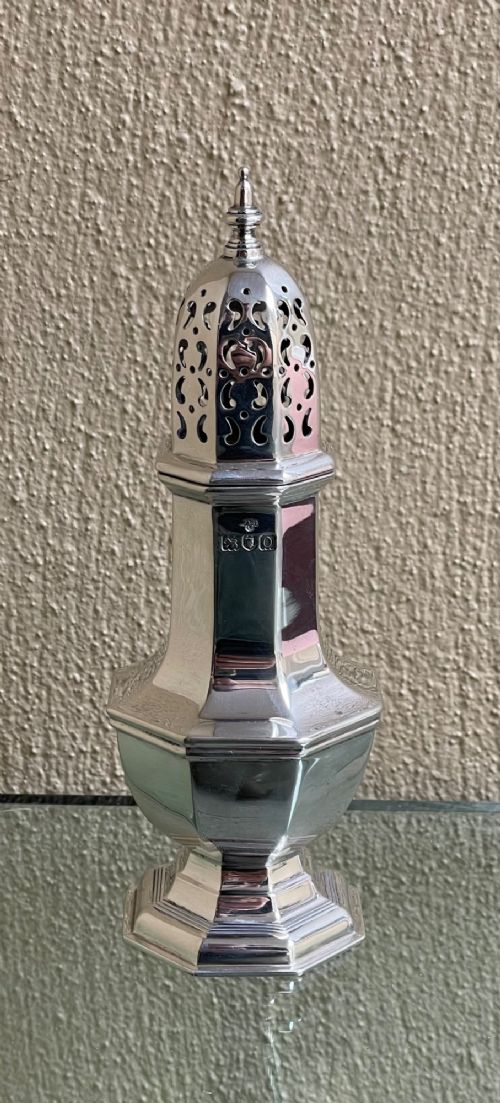
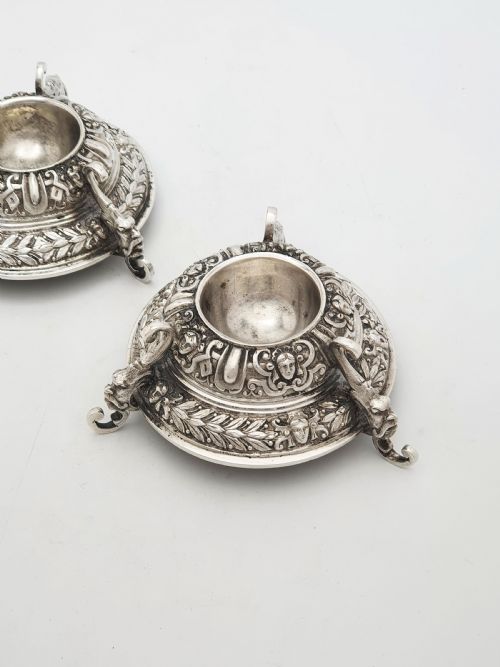
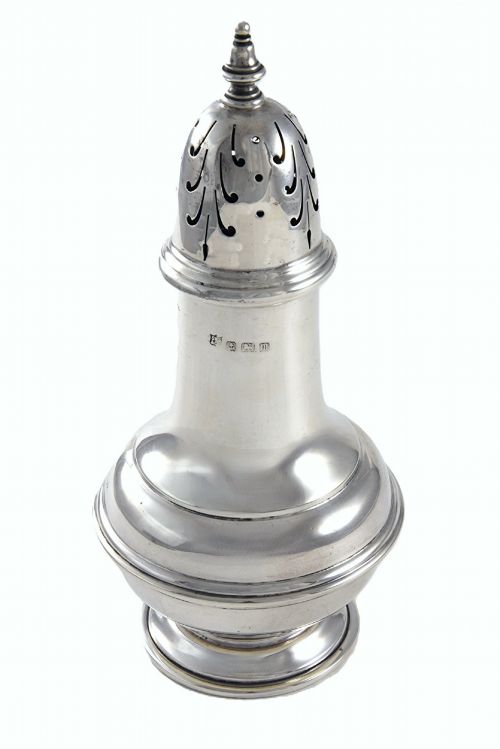
Hallmarked silver condiments encompass salt cellars, mustard pots, pepper mills, sugar casters, and sauce boats spanning the Victorian, Edwardian, and mid-century periods. Buyers will frequently encounter cased pairs of salt cellars alongside individual mustard pots and complete cruet sets on stands.
The objects originate primarily from British assay offices in London, Birmingham, Sheffield, and Chester, reflecting active domestic dining rituals across the late nineteenth and twentieth centuries. Makers utilise traditional forms ranging from plain sauce boats to novelty animal pepperettes shaped like owls.
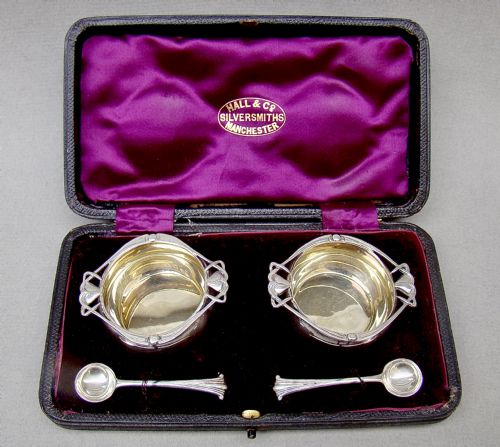
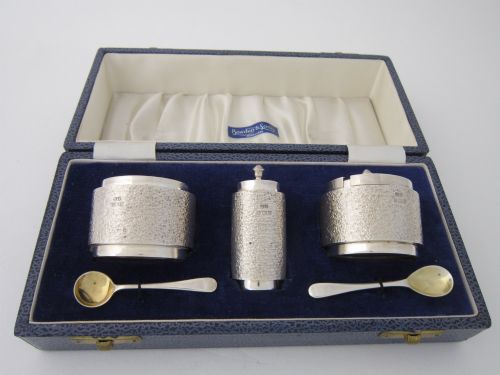
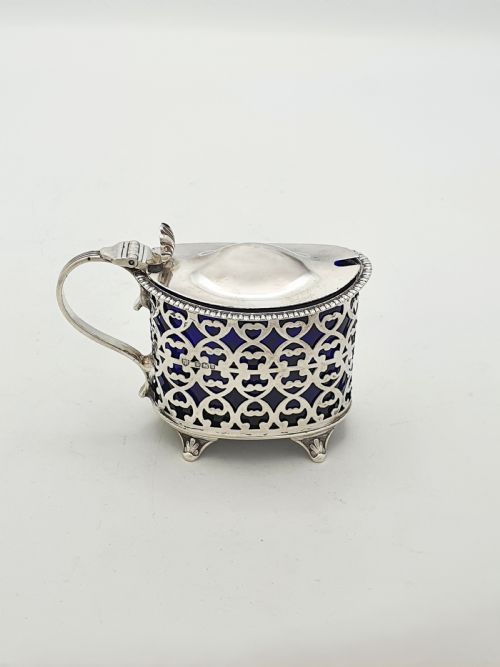
Sets frequently integrate fitted wooden cases lined with velvet or silk, indicating presentation and gift-giving purposes during the Edwardian and Georgian Revival eras. Individual condiment jars combine sterling silver frames with clear or cobalt cut glass bodies.
Materials and Technique
Silversmiths constructed the primary vessels using solid sterling silver, applying techniques such as piercing, wirework, and casting to create decorative galleries and sturdy frames. Interiors often received a thin coating of silver gilt to protect the metal from corrosive salts and mustards.
Glass components, including condiment jars and pepper grinder bodies, were heavy-cut or moulded to fit snugly within pierced silver mounts. Steel mechanisms were integrated into pepper grinders to provide the necessary cutting edge for dry peppercorns.
Hallmarked Silver Condiments Retail Price Guide 2026
Typical asking prices for hallmarked silver condiments among the pieces listed under this phrase on Sellingantiques today, from the lower quarter to the upper quarter. They describe what is for sale here now, not the wider market.
Victorian silversmiths occasionally fashioned salt and pepper pots as tiny owls and babies, turning ordinary table condiments into whimsical conversation pieces.
Assessing Quality
The calibre of a piece rests upon the crispness of the chased or pierced decoration and the relative weight of the sterling silver used in its construction. Heavier gauges of silver retain their structural integrity better over decades of daily dining use.
The integration of secondary materials such as cobalt glass liners or original cut glass bodies elevates an item's integrity. Maker marks from notable workshops provide clear attribution, while complete cased sets with intact spoons demonstrate higher original preservation.
Josiah Williams & Co·Alfred Marston·Wilmot Manufacturing Co·Viners·George Adams·Heath and Middleton·Walker and Hall·Charles Thomas Fox·Thomas Johnson
The Hallmarked Silver Condiments Glossary
- Hallmark
- A series of official marks stamped on items to guarantee the purity of the silver, the assay office, and the year of manufacture. These stamps serve as the primary tool for dating British tableware.
- Silver Gilt
- Sterling silver that has been coated with a thin layer of gold on the interior surfaces. This technique prevents acidic condiments like mustard from tarnishing the base metal.
- Cruet Set
- A matched collection of condiment containers, typically holding salt, pepper, and mustard, often presented together on a dedicated silver stand. They formed an essential centrepiece of formal dining tables.
- Pierced Work
- A decorative technique where holes are cut through the sheet silver to create openwork patterns such as lattices or scrolling foliage. This method lightened the visual weight of salt cellars while displaying the coloured glass liner within.
- Caster
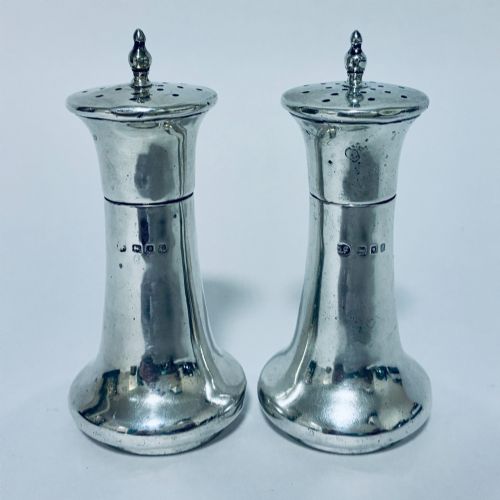
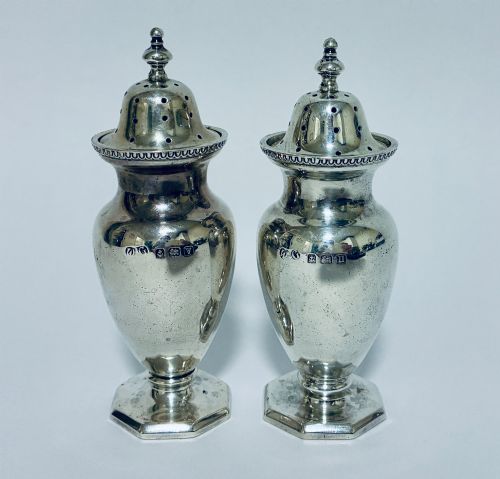
- A small jar or pot with a perforated lid designed for sprinkling sugar or dry spices over food. They feature threaded or push-on tops secured to a weighted base.
Hallmarked Silver Condiments: Frequently Asked Questions
How were condiment sets used?
Hosts placed these vessels around the dining table to allow guests to season their food individually during multi-course meals. Spoons accompanied open salt cellars and mustard pots for hygienic serving.
Complete cruet sets gathered all necessary seasonings onto a single silver stand, making them easy to pass between diners.
How do I care for silver condiments?
Regular, gentle cleaning with a soft cloth and proprietary silver polish keeps the metal bright without wearing down the raised details of the hallmarks. Storing them away from damp environments prevents premature tarnishing.
Removable glass liners should be washed separately in warm soapy water to ensure acidic residues from mustard or salt do not attack the silver mounts.
How do I identify the date of a piece?
The stamped hallmarks on the base or rim provide the exact assay office, silver standard, and a specific date letter corresponding to the year of manufacture. Comparing these marks against standard reference tables reveals the precise year.
Stylistic cues such as Art Nouveau curves or Edwardian pierced work also help narrow down the period when full date stamps are rubbed.