

Hall Tree Umbrella Rack
A hall tree umbrella rack meets the everyday demands of an entrance hall by combining hat storage, coat hooks, and stick holders into a single piece of furniture.
Hall Tree Umbrella Rack
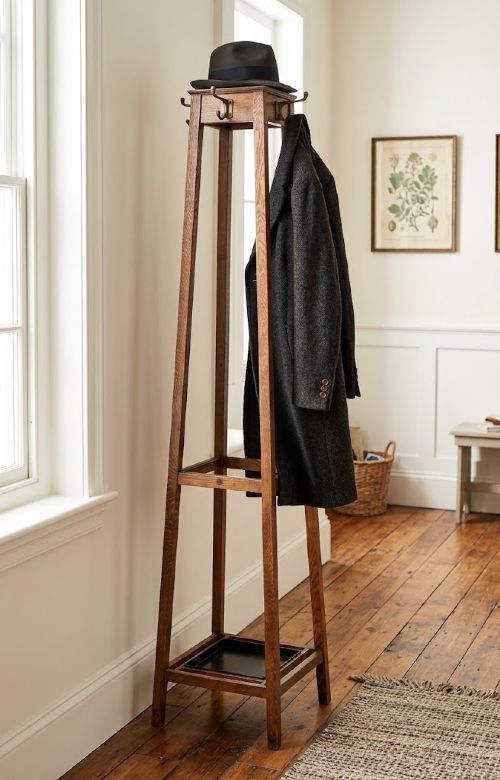
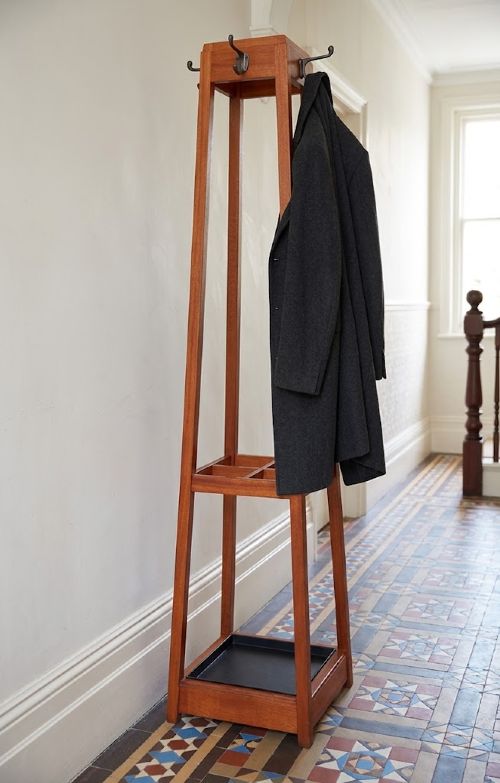
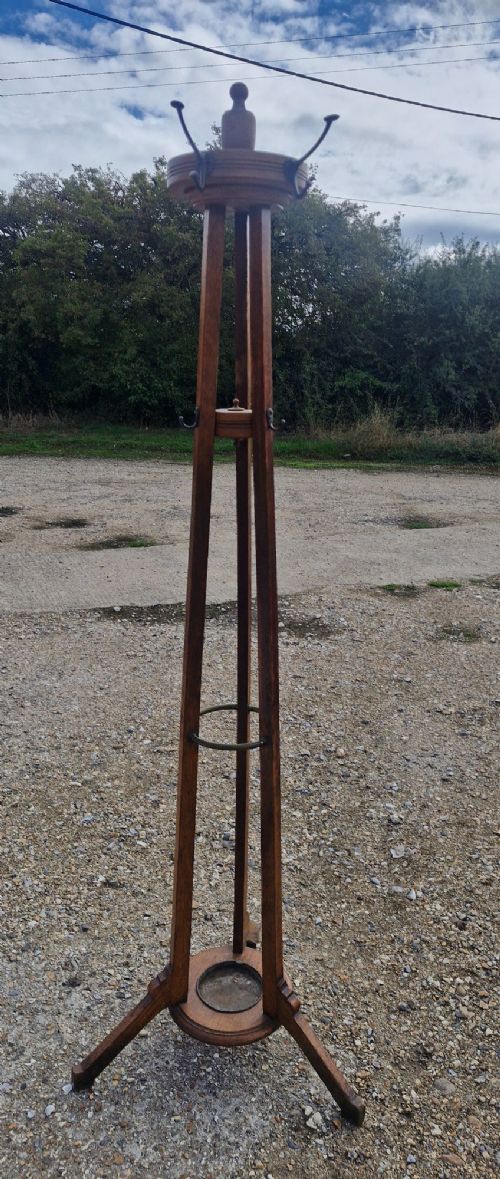
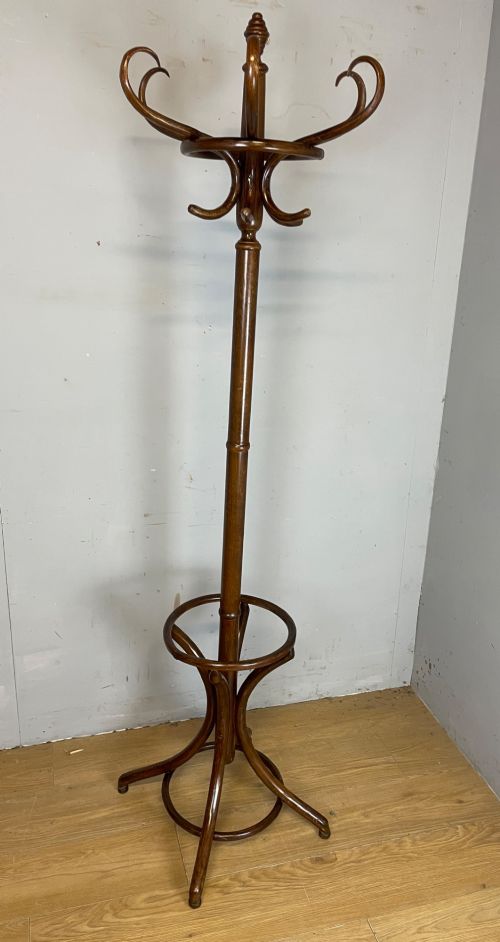
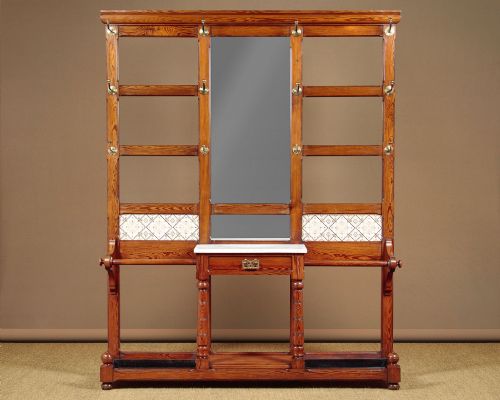
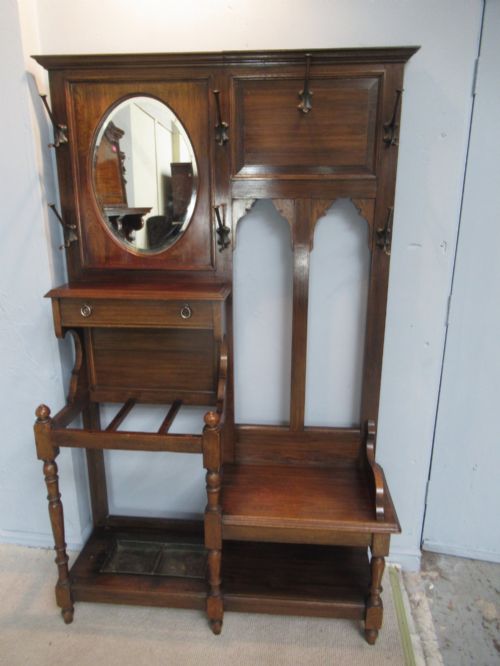
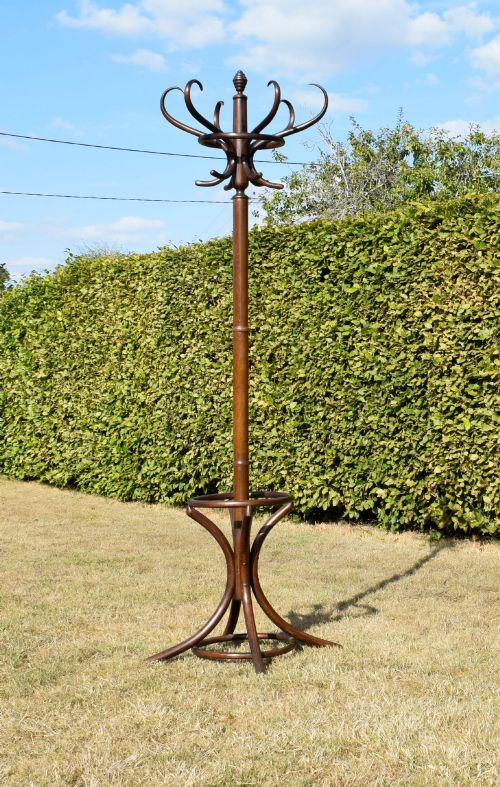
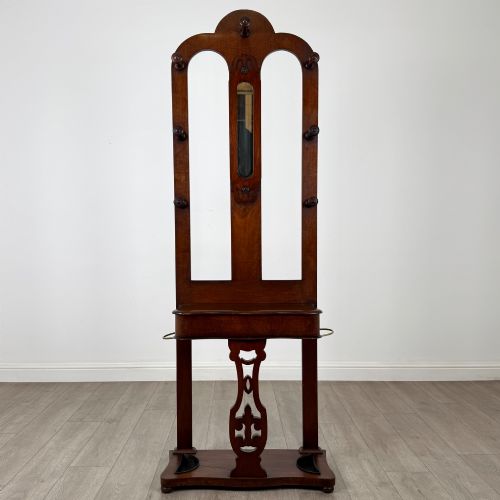
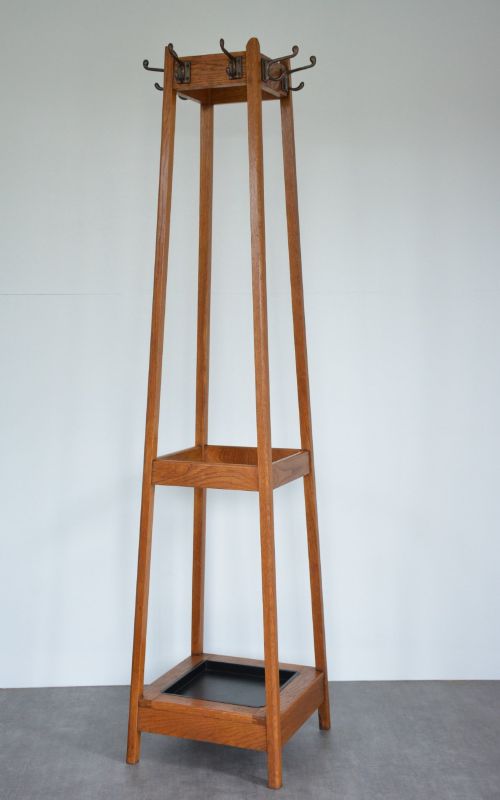
A hall tree umbrella rack is designed to organise coats, hats, and walking sticks in domestic hallways. The pieces appearing here span from the nineteenth century into the twentieth, taking forms such as upright bentwood stands and substantial timber hall stands.
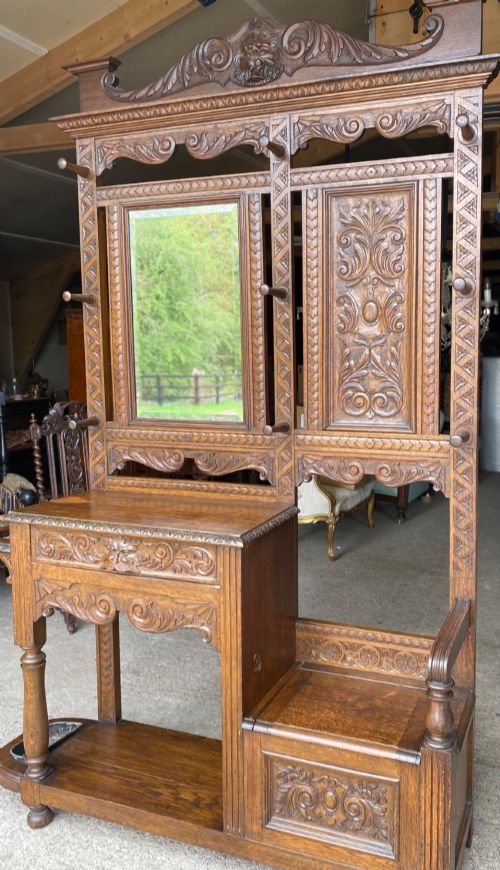
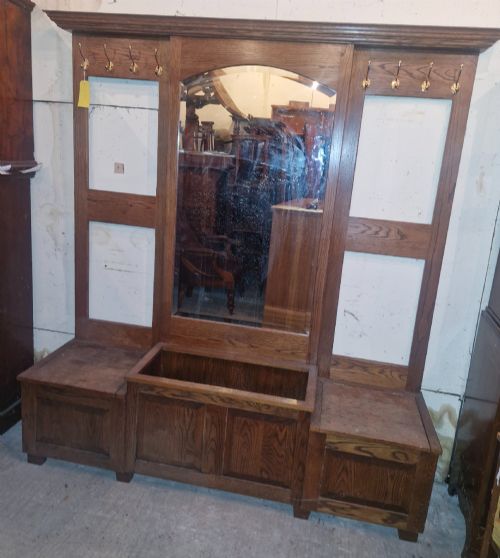
The materials recorded in these listings range from oak, mahogany, and pine to bentwood, cast iron, and bamboo. Buyers encounter compact revolving stands alongside large multi-functional hall seat combinations featuring integrated drip trays.
Originating predominantly from Victorian and Edwardian periods, alongside Art Nouveau and Arts and Crafts movements, these pieces reflect the shifting interior fashions of their eras. French and Austrian influences appear frequently among the bentwood and faux bamboo designs.
How they were made
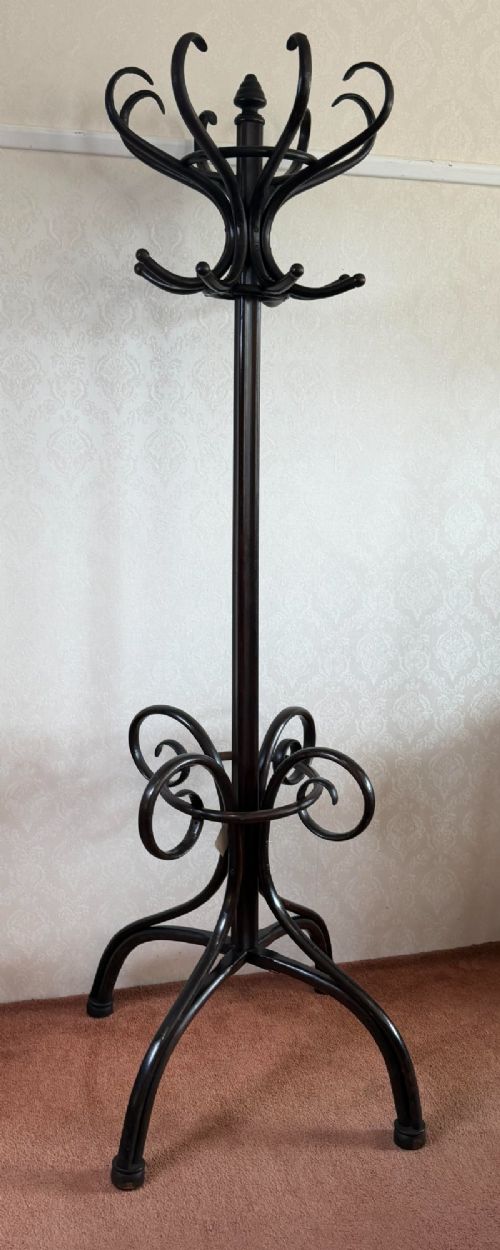
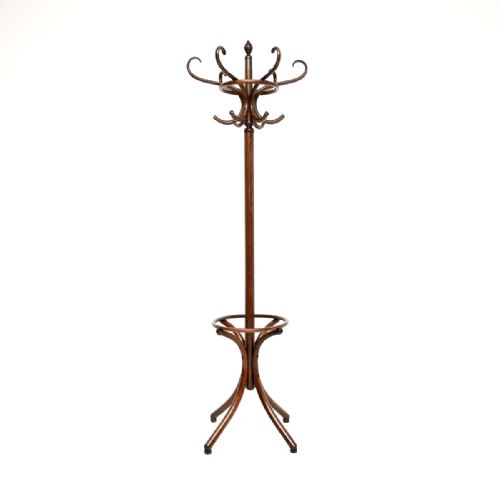
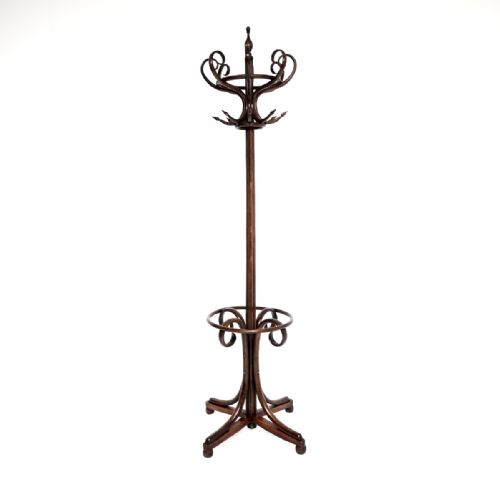
Timber construction relies on solid woods such as oak, mahogany, and pine, often shaped through traditional joinery and detailed carving. Bentwood examples utilise steamed beech or beechwood manipulated into curved framework forms.
Metal elements incorporate cast iron, frequently moulded into decorative shapes or faux bamboo textures to support heavier garments and umbrellas. Drip trays and hooks are typically cast in brass or iron to withstand moisture.
One exceptional nineteenth-century example takes the form of a carved Black Forest bear holding onto the hat stand.
What varies in quality
The standard of a hall tree umbrella rack depends upon the ambition of its design and the integrity of its construction. Elaborate carved timber and sophisticated bentwood curving represent superior craftsmanship compared to simpler utilitarian builds.
Material selection dictates durability, with dense hardwoods and robust cast iron forming more enduring structures than lighter softwood variants. The presence of original fitted components, such as metal drip trays and matching coat hooks, influences the integrity of the piece.
Thonet·J Parker of Woodstock
The Hall Tree Umbrella Rack Glossary
- Bentwood
- Wood shaped by steaming and bending it into curves. This technique creates lightweight yet resilient frames seen in many stands.
- Hall stand
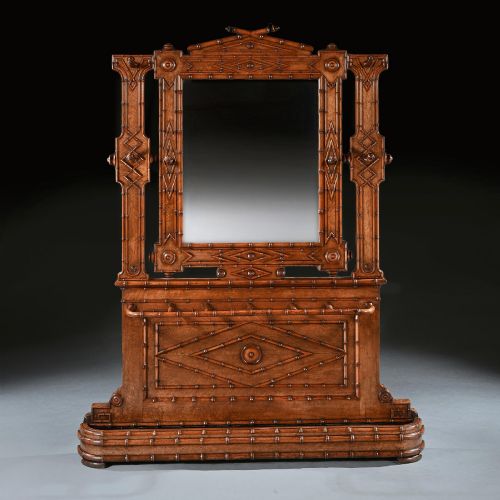
- A piece of furniture placed in an entrance hall for coats, hats, and sticks. These often incorporate mirrors and umbrella receptacles.
- Drip tray
- A metal basin positioned at the base of a stand to catch water from wet umbrellas. It protects the surrounding floor from moisture.
- Aesthetic Movement
- A late nineteenth-century design movement focusing on visual beauty rather than narrative meaning. Pieces from this style often feature bamboo and Japanese-inspired motifs.
- Faux bamboo
- Wood or metal carved and painted to imitate natural bamboo stalks. This decorative finish was popular in nineteenth-century French furniture.
Hall Tree Umbrella Rack: Frequently Asked Questions
How do I place a hall tree?
Position your hall tree in an entrance hall or porch where coats and umbrellas are discarded upon entry. Ensure adequate clearance around the base so that coats hang freely without blocking doorways.
Larger timber versions with seats require more spatial depth, whereas compact bentwood or revolving designs fit narrow corridors comfortably.
What is bentwood furniture?
Bentwood furniture is made by steaming timber until it becomes pliable, allowing craftsmen to bend the wood into graceful curves. Beechwood is commonly used for this method due to its responsiveness.
This technique produces sturdy, lightweight frames that became popular across Europe during the late nineteenth and early twentieth centuries.
How do I care for wood stands?
Maintain wooden hall stands by dusting them regularly with a dry cloth and occasionally applying a suitable furniture wax. Avoid placing them directly against heat sources to prevent the wood from drying out.
Metal drip trays should be emptied and wiped dry after wet weather to protect adjacent wooden components from moisture damage.
Are these stands suitable for modern homes?
These practical items serve contemporary hallways just as effectively as historical ones by providing designated spots for outerwear and walking sticks. Their varied forms suit traditional and eclectic interiors alike.
Compact models work well in restricted spaces, while larger multi-functional pieces act as statement furniture in spacious entrance areas.
What is faux bamboo?
Faux bamboo describes furniture where wood or metal is shaped and painted to resemble natural bamboo stalks. This decorative finish gained popularity during the nineteenth century under Asian design influences.
Pieces featuring this technique often display meticulous hand-painted nodes and joint details mimicking the real plant.