

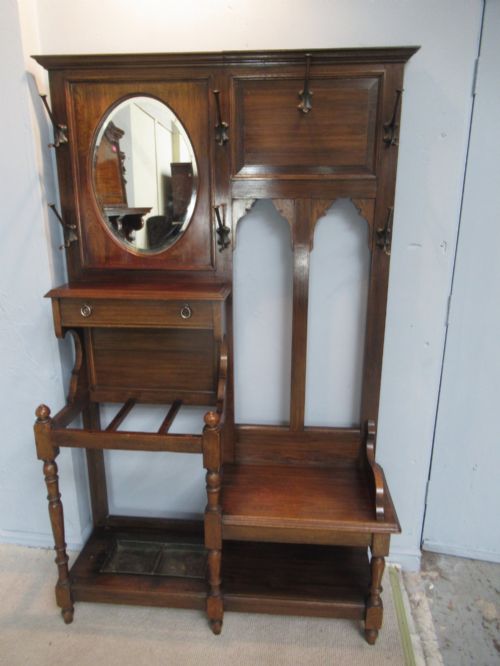
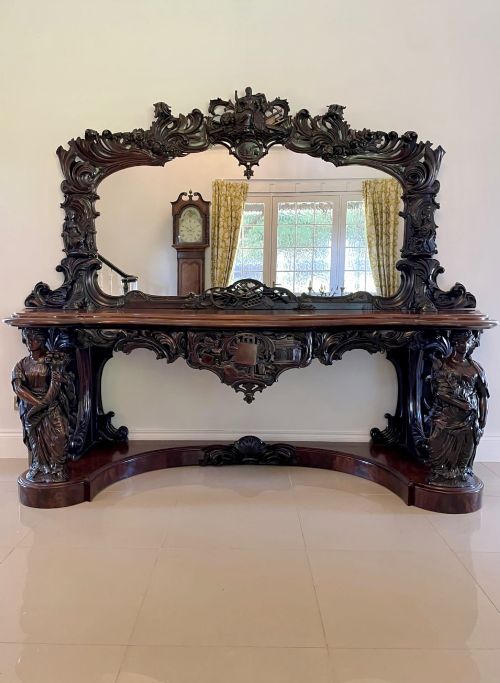
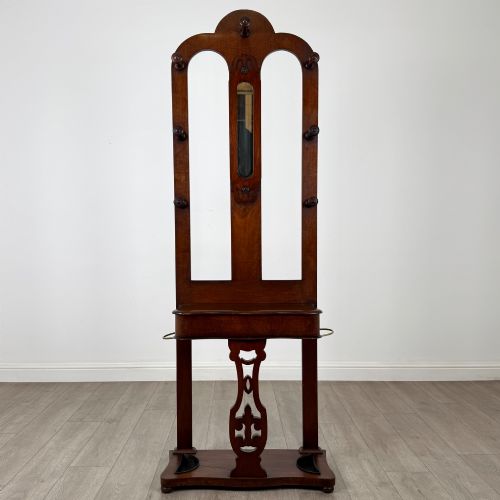
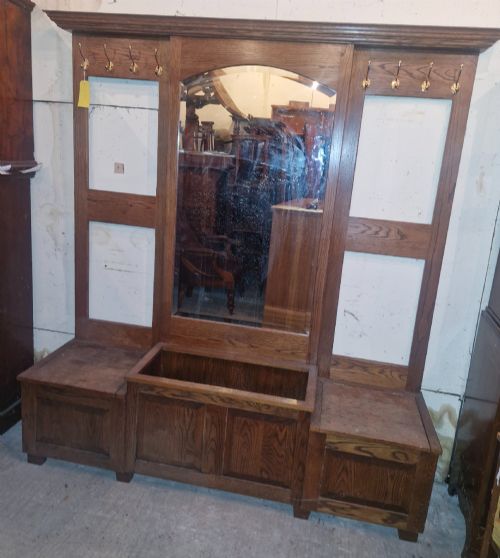
Hall Stand with Mirror
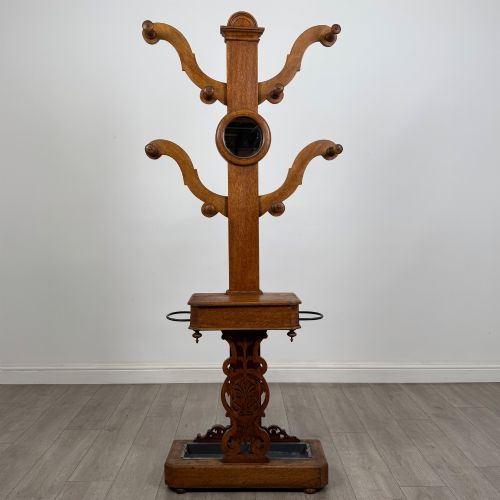
A hall stand with mirror anchors an entrance hall, combining a glass plate for a quick glance before leaving with hooks and umbrella wells.
Hall Stand with Mirror
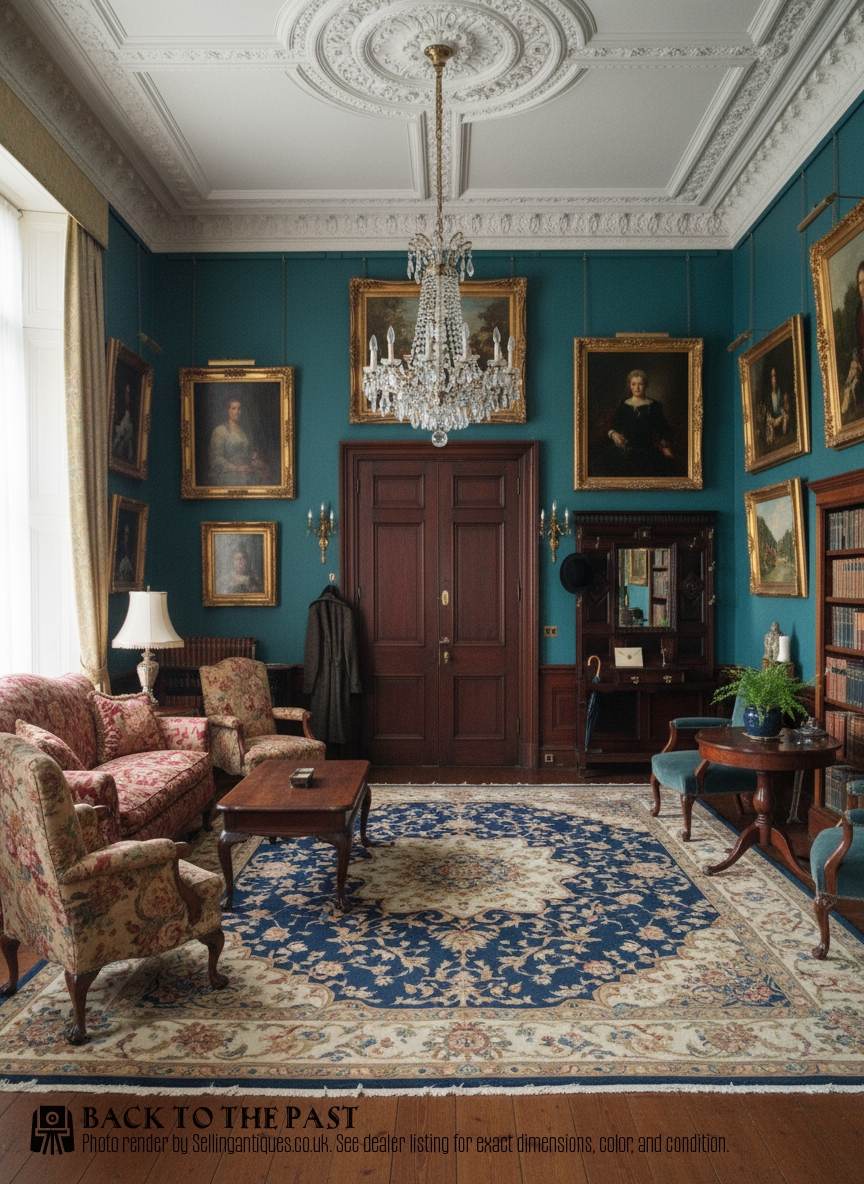
A hall stand with mirror brings together practical furniture for outerwear and a central glass looking plate, appearing frequently in Victorian and Edwardian iterations. These pieces span the nineteenth and early twentieth centuries, emerging in robust oak, rich mahogany, and lighter bamboo or pine.
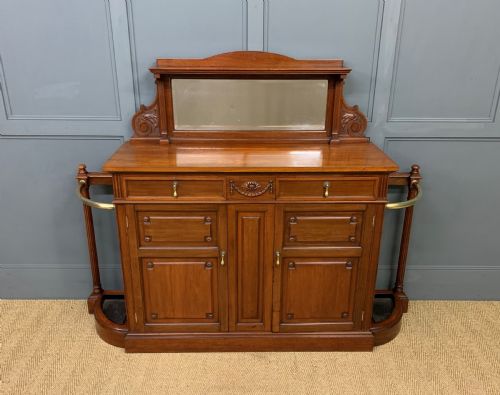
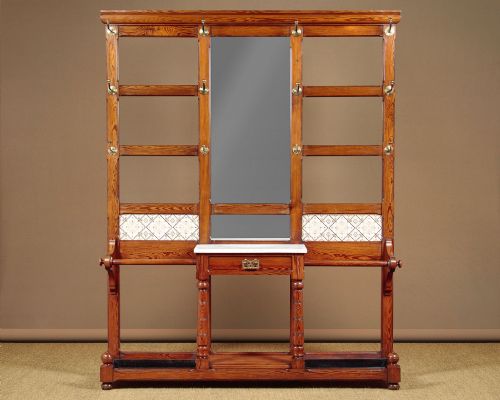
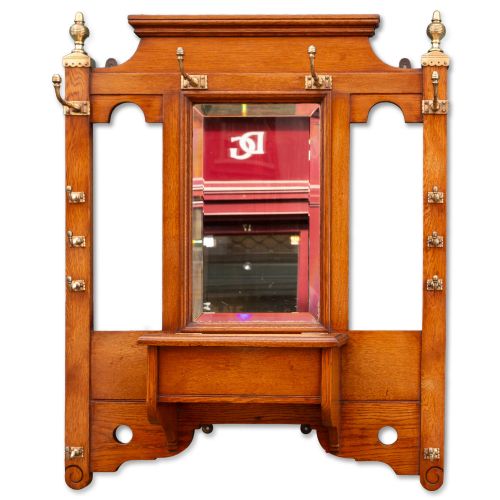
The version most commonly met on this page is the substantial oak or mahogany hall stand featuring coat hooks, a central mirror, and drip trays for umbrellas. Makers of the Victorian and Arts and Crafts periods tailored these fixtures for the hallway, often incorporating small drawers or marble shelves.
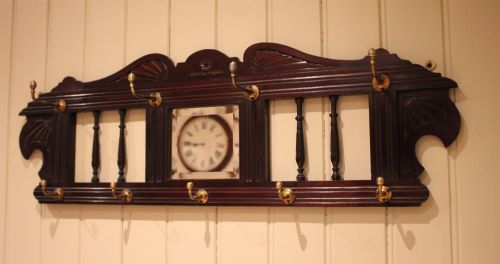
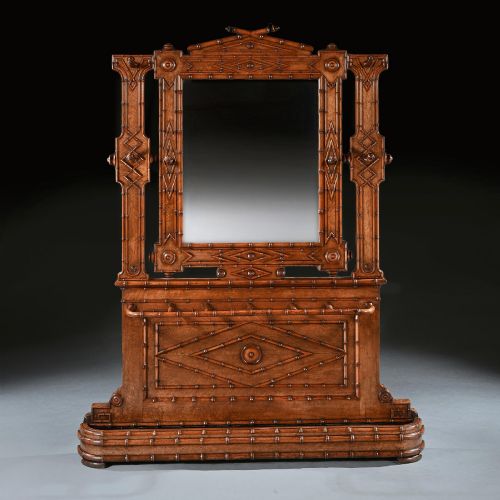
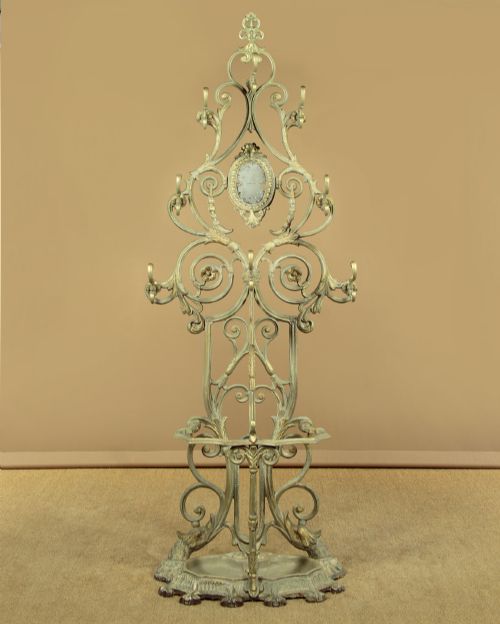
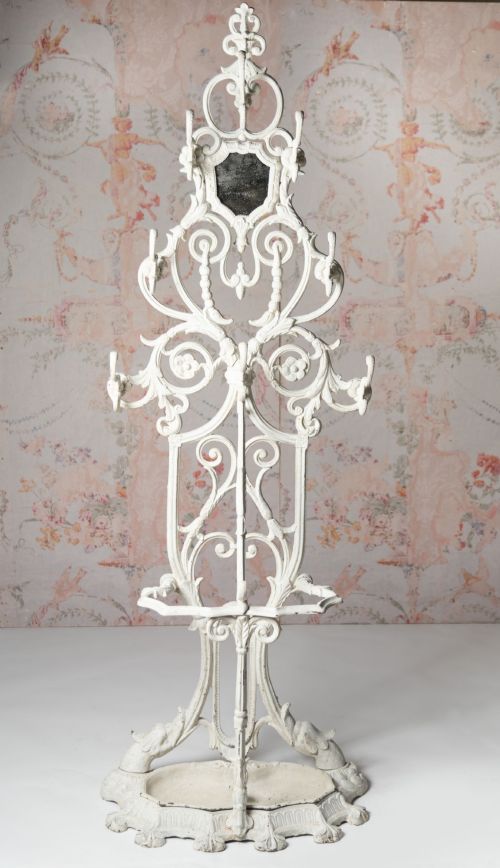
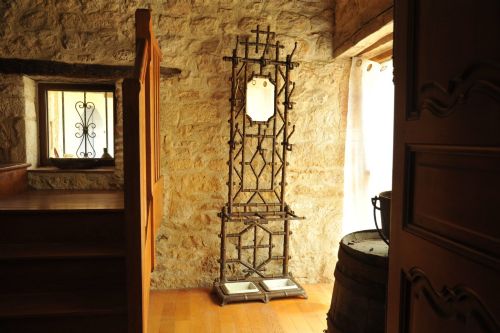
Alongside standard timber hallstands, variations include French cast iron and faux bamboo designs, as well as wall-mounted coat racks with integrated mirrors. Pieces from the Aesthetic Movement and Art Nouveau introduce carved details and stylised vegetal motifs to the entranceway.
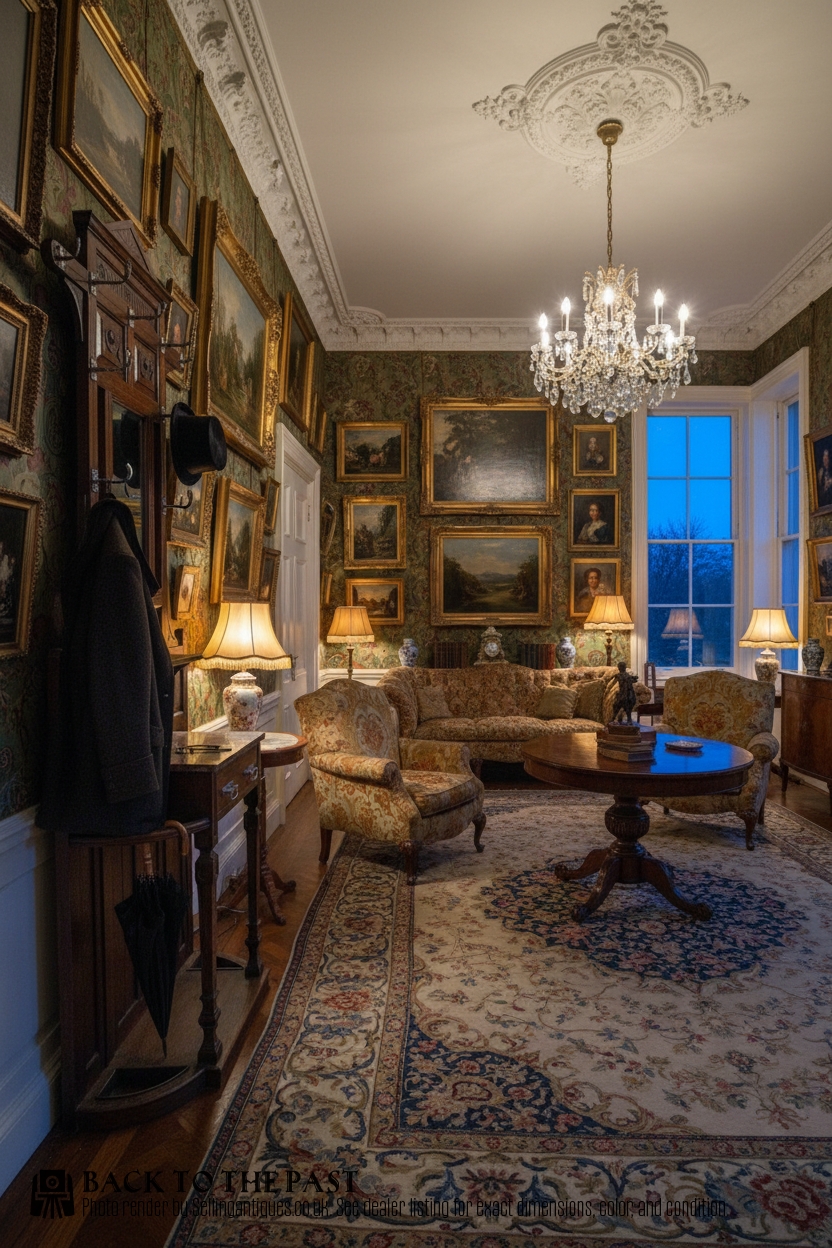
Materials and Construction
Makers utilised solid timbers such as oak and mahogany, often shaping them with deep bevelled glass plates, brass hooks, and cast iron umbrella stands. Construction techniques relied on sturdy joinery to support heavy winter garments and wet walking sticks.
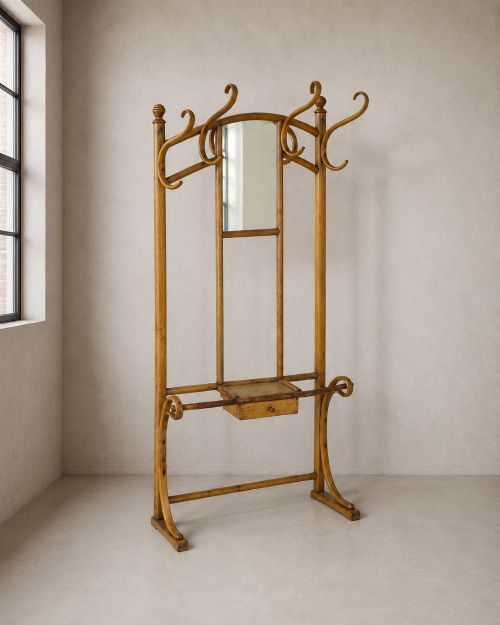
Alternative materials include bentwood, bamboo, and cast iron, sometimes finished with faux bamboo moulding or painted surfaces. Marble shelves and tiled inserts provided durable, waterproof ledges for visiting cards and wet items.
Hall Stand with Mirror Retail Price Guide 2026
Typical asking prices for hall stand with mirror among the pieces listed under this phrase on Sellingantiques today, from the lower quarter to the upper quarter. They describe what is for sale here now, not the wider market.
Many a Victorian visitor used the central mirror for a final hat adjustment before stepping out into the fog.
Craftsmanship and Proportion
Quality rests in the depth of timber carving, the clarity of the original bevelled glass mirror plate, and the integrity of the structural frame. Finer examples display thoughtful integration of brass hardware and substantial framing that withstands daily use.
Simpler pine or cast iron variations focus on utility, whereas pieces featuring marquetry inlay, shaped fretwork, or exotic woods demonstrate higher workshop ambition. The balance between the mirror scale and the coat hook arrangement dictates the visual harmony of the piece.
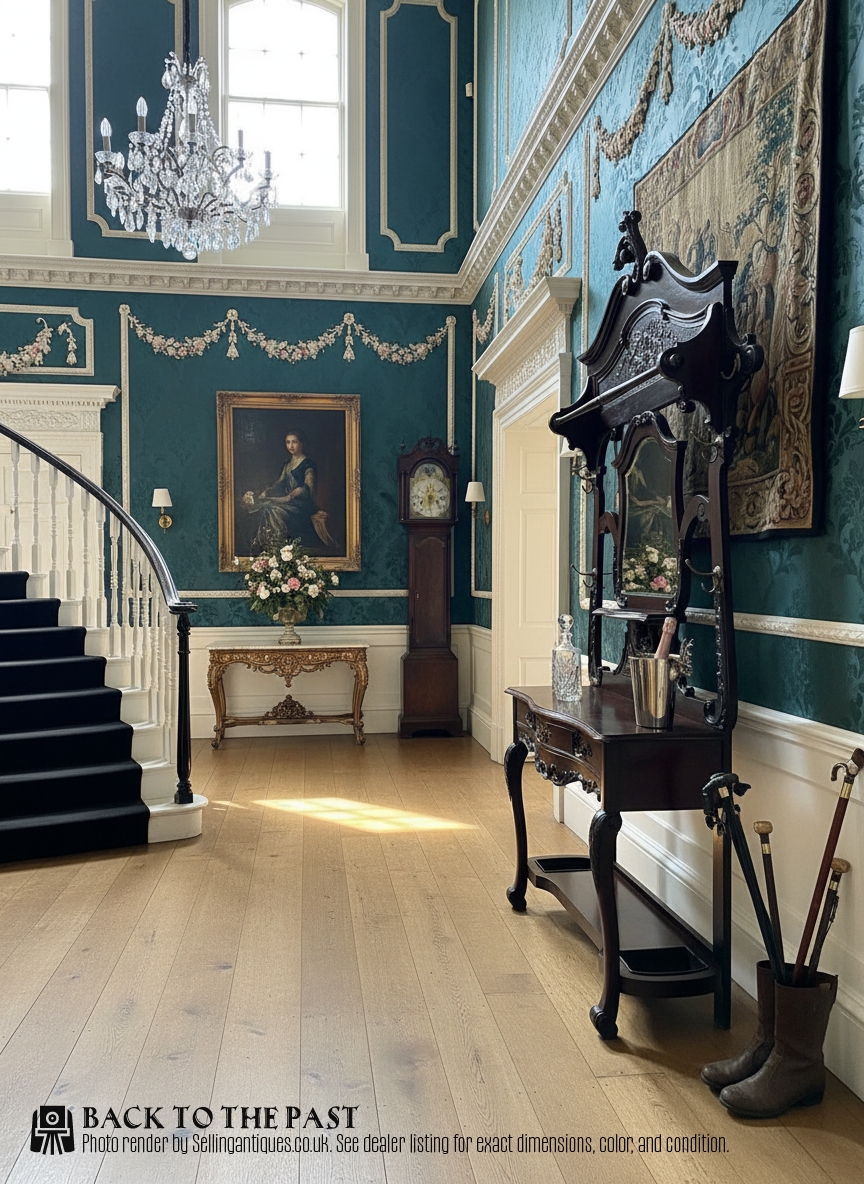
Coalbrookdale·Christopher Dresser·Thonet
The Hall Stand with Mirror Glossary
- Bevelled plate
- A mirror glass with an angled edge ground down to create a decorative framed border. This reflects light and adds depth to the entrance space.
- Portmanteau
- A comprehensive piece of hallway furniture incorporating hat hooks, umbrella stands, a mirror, and often a small seat or compartment. It serves multiple entry functions in one footprint.
- Faux bamboo
- A decorative technique where timber, such as maple or pine, is carved or turned to imitate the segmented nodes of natural bamboo. It was popular in nineteenth-century French and English design.
- Drip tray
- A metal or ceramic basin positioned at the base of a stand to catch water from wet umbrellas and walking sticks. These trays protect the underlying wooden floor from moisture damage.
- Barley twist
- A spiral turning technique applied to wooden structural supports and furniture legs. It creates a dynamic, twisted column effect popular in Victorian and Edwardian joinery.
Hall Stand with Mirror: Frequently Asked Questions
How do I maintain the mirror plate?
Clean the glass gently using a soft cloth and a mild glass cleaner, taking care to avoid spraying liquid directly onto the wooden or metal frame.
Inspect the backing periodically to ensure moisture from the hallway does not cause silvering degradation along the edges.
Where should I place a hall stand?
Position the piece against a sturdy interior wall in an entryway or hallway where it can be secured if necessary. Ensure adequate clearance for coats hanging on the hooks and easy access to the umbrella wells.
Keep the stand away from direct, harsh sunlight to prevent fading of the polished mahogany or oak surfaces.
How do I identify a Victorian hall stand?
Look for dense timbers such as mahogany or oak, often accompanied by heavy cast iron umbrella rings and dark brass hooks. Carved architectural motifs and deep bevelled mirror plates are characteristic of the period.
Later Victorian examples may incorporate Aesthetic Movement or Arts and Crafts styling with simpler geometric lines or turned bamboo.
What is the difference between a coat rack and a hall stand?
A coat rack is typically a wall-mounted board featuring hooks and sometimes a small mirror or shelf. It is designed to save floor space in narrower corridors.
A hall stand is a freestanding piece of furniture that extends to the floor, incorporating umbrella storage, drip trays, and often a bench seat or console table alongside the mirror.