

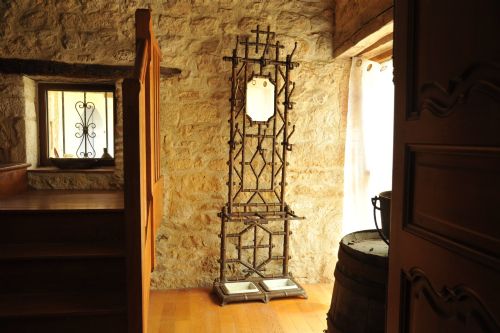
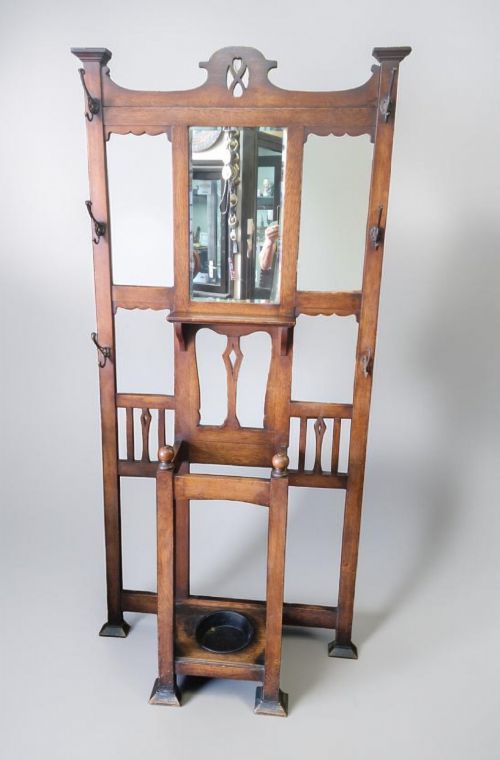
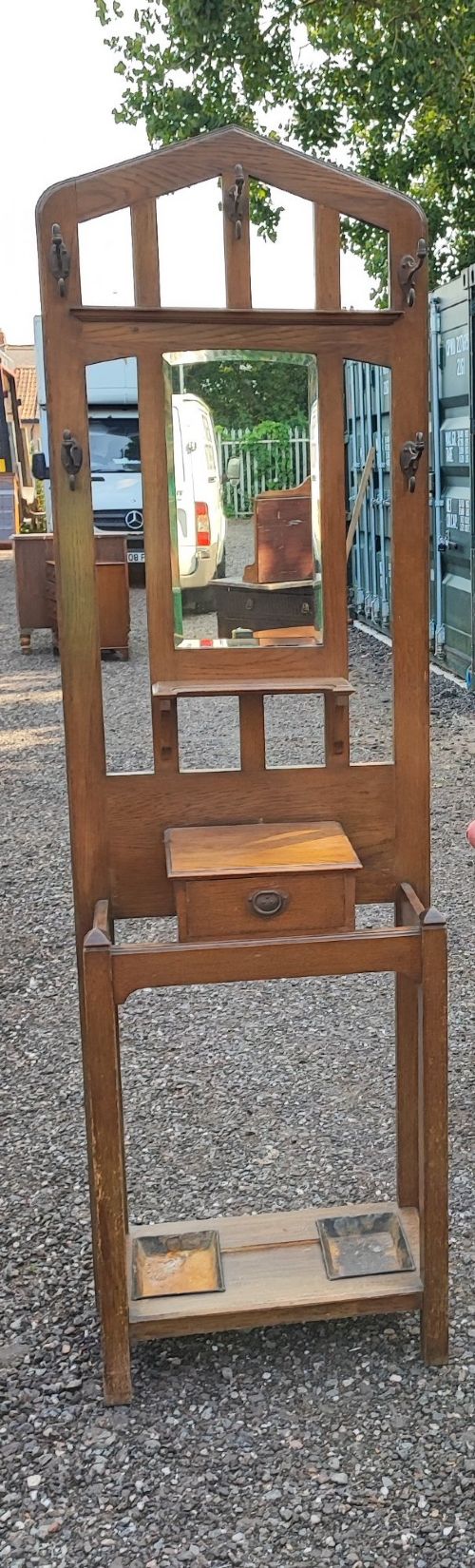
Hall Rack with Mirror
A hall rack with mirror anchors the entranceway, offering a place to check your appearance and hang coats.
Hall Rack with Mirror
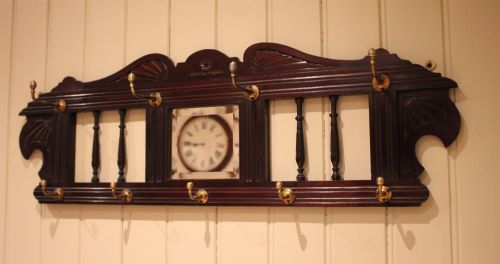
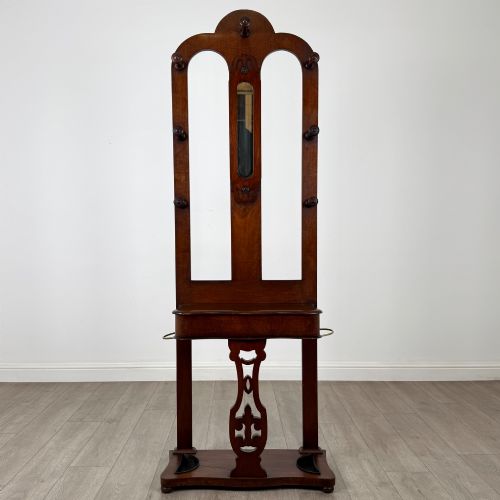
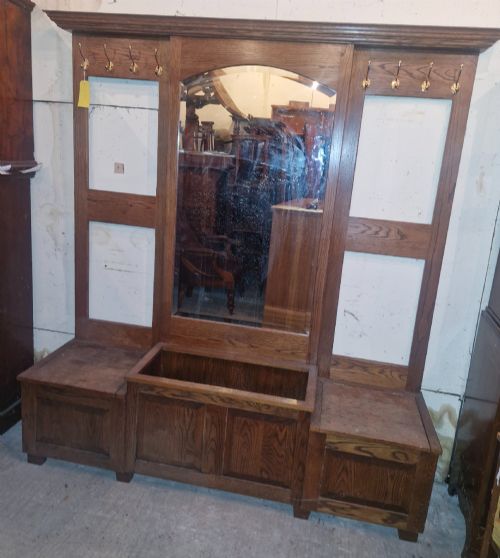
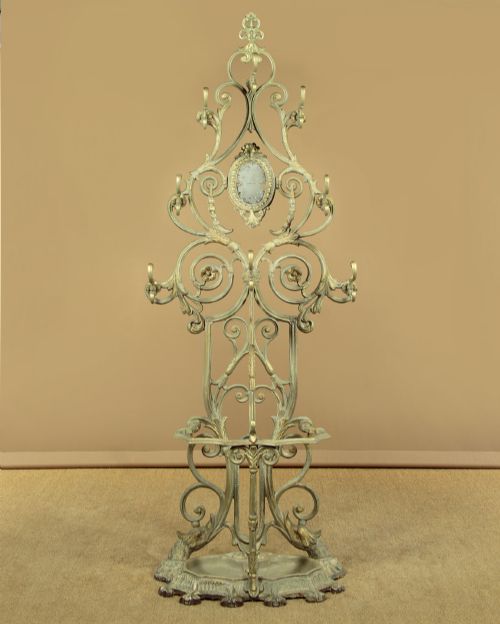
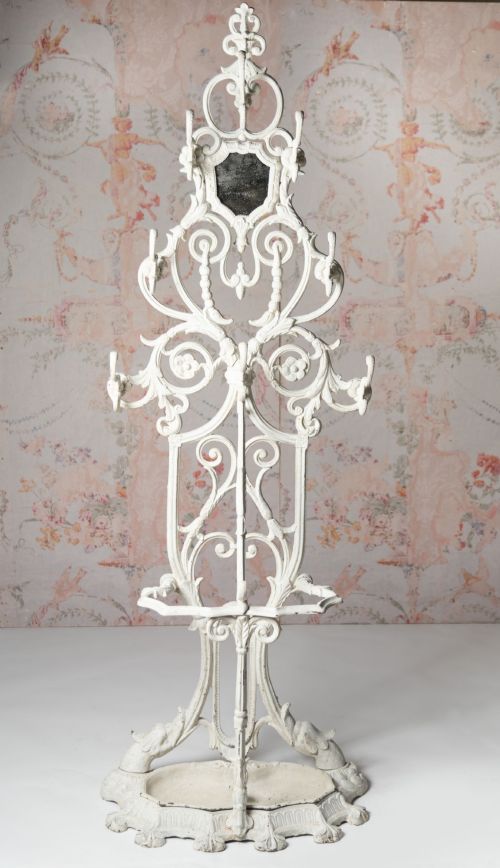
A hall rack with mirror combines a looking glass with hooks for hats and coats, serving as a functional entrance piece. When searching this phrase, you encounter large freestanding stands alongside compact wall-mounted racks designed for smaller spaces.
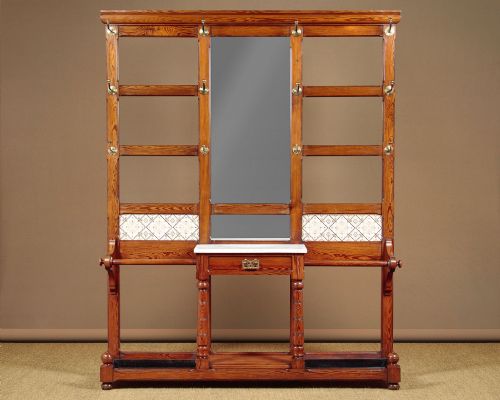
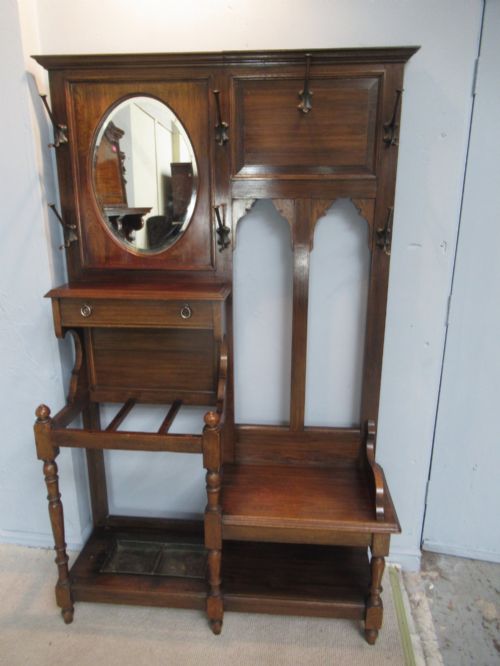
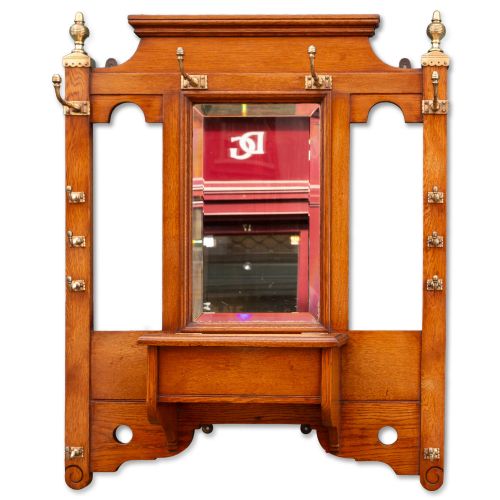
The pieces on this page span the nineteenth and twentieth centuries, featuring heavy Victorian and Edwardian timber designs as well as lighter French and industrial examples. Oak and mahogany dominate the freestanding hall stands, while wall-mounted variants utilise brass hooks and bevelled glass.
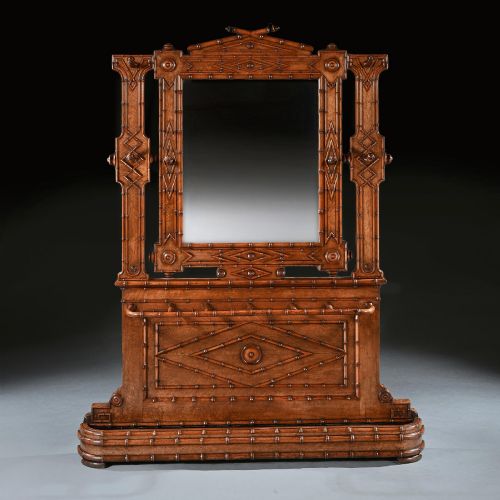
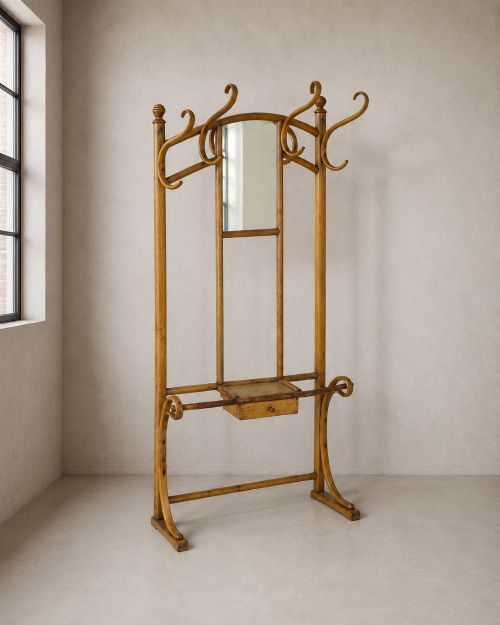
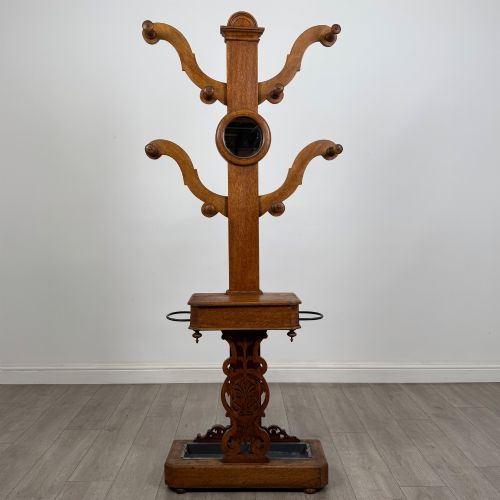
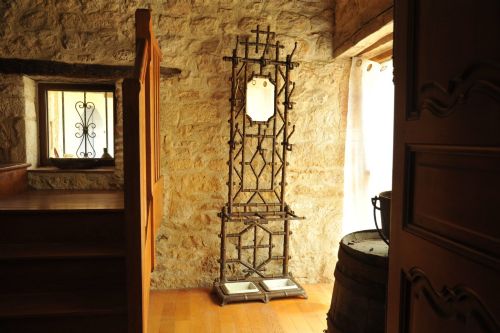
Many items include umbrella stands, marble shelves, or carved wooden details such as Green Man motifs or faux bamboo. You also find specialised forms like horseshoe mirrors and bentwood stands from makers like Thonet.
Materials and construction
Makers utilised solid hardwoods like oak, mahogany, and pine, often combining them with cast iron frames or bentwood techniques to provide structural support for heavy winter garments. Carved wooden panels and applied mouldings display the craftsmanship of the period.
Metal elements such as brass hooks, cast iron backplates, and iron framing appear frequently, secured with period fixings. Glass mirrors feature bevelled plates, sometimes held by original wooden frames or secured behind metal brackets.
Some hall stands double as horseshoe luck charms with iron frames shaped specifically to greet your visitors.
Quality and craftsmanship
The distinction between standard utility hall furniture and finer examples lies in the depth of the carving and the selection of timber figures, such as birdseye maple or golden oak. Superior pieces display integrated marble shelves, heavy cast iron work from known foundries, and robust multi-functional framing.
Construction methods also separate the grades, with solid timber framing and original bevelled mirror plates indicating higher workmanship than later or purely utilitarian replacements. The integration of storage compartments, drip pans, and solid brass hardware marks the upper tier of these entrance pieces.
Coalbrookdale·Thonet·Christopher Dresser
The Hall Rack with Mirror Glossary
- Bevelled plate
- A mirror glass with an angled edge ground down to create a decorative border. This finish often indicates better quality manufacturing in Victorian and Edwardian glass.
- Bentwood
- Wood softened by steam and bent into curved shapes under pressure. Thonet utilised this technique to create lightweight, resilient hall stands.
- Faux bamboo
- Wood or cast iron carved and painted to imitate natural bamboo stalks. This decorative finish became popular during the nineteenth-century taste for Japonisme.
- Portmanteau
- A large hall stand combining a mirror, coat hooks, umbrella wells, and sometimes a bench seat. These grand pieces greeted visitors in country houses.
- Green Man
- A sculptural architectural ornament depicting a face carved with leaves and vines. It appears frequently on nineteenth-century oak hall furniture.
Hall Rack with Mirror: Frequently Asked Questions
How do I mount a wall rack?
Wall-mounted hall racks require secure fixing into wall studs or solid masonry to support the weight of heavy coats and the mirror frame.
Utilise sturdy screws matched to the mounting holes on the wooden backplate or metal brackets.
Where were hall stands placed?
These pieces stood immediately inside the front door of a home to receive outerwear upon arrival.
They served guests and residents alike by organising hats, umbrellas, and coats in the main entrance hall.
How do I care for the mirror?
Clean the glass with a gentle cloth and standard glass cleaner, avoiding harsh chemicals that might seep into the surrounding wood or metal frame.
Check the backing periodically to ensure the mirror plate remains secure within its mountings.
Are umbrella stands waterproof?
Many freestanding hall stands include metal drip pans or wells at the base to catch water from wet umbrellas.
Empty and dry these liners regularly to prevent moisture damage to the surrounding timber floor.