


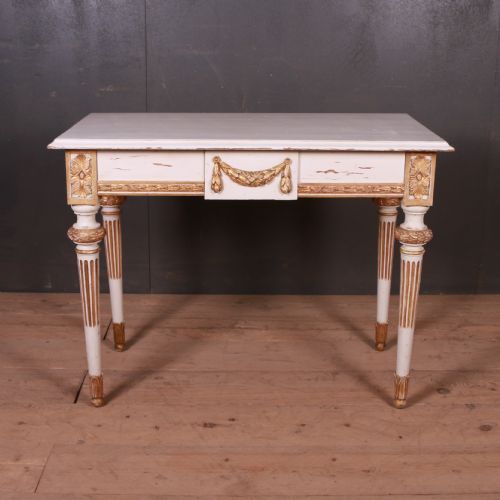
Gustavian Painted Desk
These gustavian painted desk examples bring restrained Scandinavian elegance into a room, offering functional writing spaces finished in pale traditional hues.
Gustavian Painted Desk
When you search for a gustavian painted desk, you encounter pieces originating primarily from Sweden across the eighteenth, nineteenth, and early twentieth centuries. The selection spans straightforward writing tables and side tables through to more complex bureau bookcases and escritoires.
The version you are most likely to meet on this page is a nineteenth-century pine writing desk or table carrying its original or aged painted finish. These forms reflect Scandinavian country and folk art traditions alongside formal Gustavian design principles.
Materials and construction methods
Makers built these pieces predominantly using softwood and pine, applying layers of paint over the wooden carcase to achieve a durable and decorative surface. Harder woods occasionally appear alongside metal elements like brass handles and iron fittings.
Surface treatments define the aesthetic, with painted wood forming the primary medium. Some examples incorporate marble tops or utilitarian writing slopes designed for everyday correspondence.
Listings feature pine and softwood construction finished with paint, alongside occasional marble and brass details.
Judging the quality of these surfaces and forms
Quality rests in the integrity of the painted surface and the proportion of the woodwork. Pieces that retain their original layered pigments without heavy modern intervention display a superior character.
Construction detail distinguishes simple side tables from elaborate bureau cabinets. Well-proportioned mouldings and sound joinery in the pine framework separate standard utility pieces from finer expressions of Scandinavian craftsmanship.
The Gustavian Painted Desk Glossary
- Gustavian
- A Swedish neoclassical style spanning the late eighteenth and early nineteenth centuries. It simplifies French court tastes into lighter, restrained forms.
- Escritoire
- A fitted writing cabinet with a sloping or drop-front flap concealing small drawers and pigeonholes. It provides a dedicated space for correspondence and document storage.
- Softwood
- Timber from coniferous trees such as pine, widely utilised in Scandinavian furniture making. It accepts paint readily and forms the structural base of these desks.
- Bureau bookcase
- A dual-purpose piece combining a lower writing desk with an upper shelving unit enclosed by doors. It offers both display and concealed workspace.
- Side table
- A small functional table designed to stand against a wall. These items frequently double as compact writing surfaces in domestic interiors.
Gustavian Painted Desk: Frequently Asked Questions
What is a gustavian painted desk?
A gustavian painted desk is a wooden writing surface, table, or bureau originating from Sweden and finished in traditional paint. These pieces reflect Scandinavian design aesthetics ranging from formal neoclassical styles to country folk art.
They serve as functional workspace furniture while introducing pale tones and restrained decorative details to an interior space.
How do I date these painted desks?
Dating relies on examining the construction methods, the type of pine timber, and the layering of the paint finish. Pieces span the eighteenth, nineteenth, and early twentieth centuries.
Earlier examples often show hand-planed surfaces and traditional joinery, whereas late nineteenth and early twentieth-century versions display more standardised manufacturing techniques.
Where were these painted desks made?
The pieces originate primarily from Sweden, with occasional examples from Denmark. They were produced within Scandinavian country workshops and regional cabinet-making traditions.
The regional focus explains the prevalent use of pine and softwood alongside characteristic painted surface treatments.
How do I care for a painted wooden surface?
Maintaining these surfaces requires gentle dusting with a soft, dry cloth and protection from direct sunlight and excessive moisture. Avoid harsh chemical cleaners that might strip the historic paint.
Keeping the room climate stable prevents the underlying pine from expanding or contracting, which helps preserve the integrity of the finish.
What is the difference between a writing desk and a bureau?
A writing desk provides an open or flat surface for working, sometimes featuring a drawer or a raised top section. It offers a light and accessible space for daily tasks.
A bureau typically includes a hinged flap that pulls down or slopes to reveal internal compartments, allowing paperwork to be concealed when not in use.