





Gustavian Credenza
These pieces known as a gustavian credenza bring the pale, measured elegance of northern European design straight into a modern room.
Gustavian Credenza
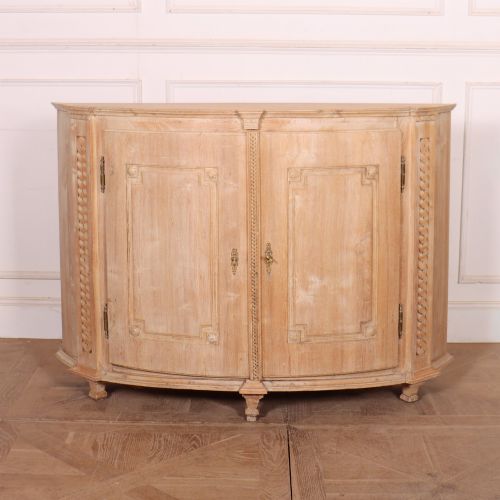
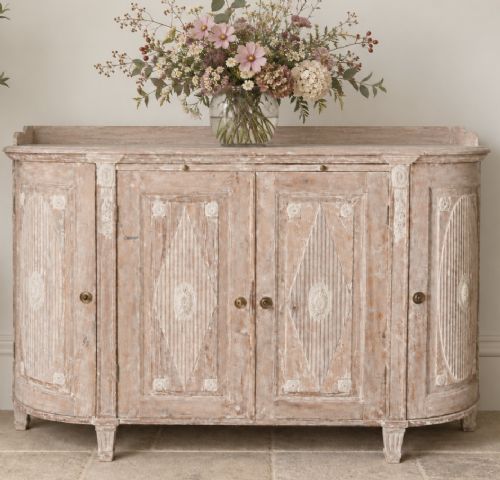
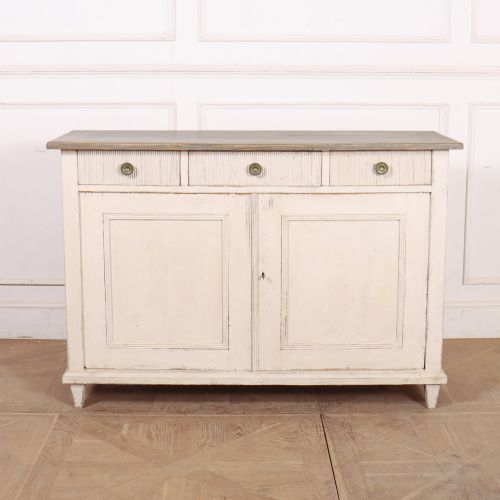
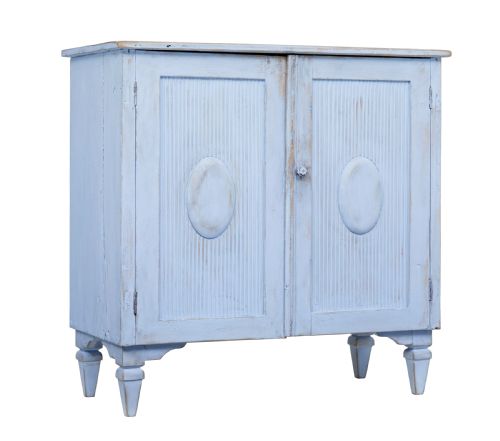
When you search for a gustavian credenza, you encounter substantial storage furniture rooted in Scandinavian country traditions, often taking the form of painted sideboards, buffets, and cupboards. These pieces predominantly originate from the nineteenth century, carrying the characteristic light palette and balanced neoclassical proportions typical of the style.
The examples most commonly met on this page are Swedish painted pine cupboards and buffets, alongside related continental pieces from the eighteenth and nineteenth centuries. They range from simple bowfront buffets to breakfront commodes and tall linen cupboards, all united by a history of painted wooden surfaces.
How they were made
Makers built these storage pieces primarily from pine and softwood, preparing the timber for layered paint finishes that define the aesthetic. Iron and brass hardware such as hinges and locks provide functional structure and subtle contrast against the pale painted wood.
Surfaces often show original scraped paint techniques where earlier decorative layers remain partially visible beneath later coats. The construction relies on traditional joinery suited to large cupboards and sideboards designed to hold linens and domestic provisions.
Gustavian Credenza Retail Price Guide 2026
Typical asking prices for gustavian credenza among the pieces listed under this phrase on Sellingantiques today, from the lower quarter to the upper quarter. They describe what is for sale here now, not the wider market.
Many Swedish cupboards carry the ghostly traces of forgotten pastel hues beneath generations of practical white paint.
What varies in quality
The character of the painted surface dictates much of the distinction between pieces, particularly where original scraped paint reveals authentic historical depth rather than uniform modern application. The handling of proportions and the refinement of neoclassical mouldings separate standard utilitarian cupboards from more ambitious architectural sideboards.
The integrity of the structural timber and the retention of original iron or brass fittings influence the overall standing of an item. Pieces that maintain their early painted finishes without heavy restoration carry a more cohesive historical presence.
The Gustavian Credenza Glossary
- Bowfront
- A curved front contour found on certain sideboards and buffets, creating a gentle convex sweep. This shape softens the profile of large wooden furniture.
- Breakfront
- A cabinet or commode design where the central section projects forward from the flanking sides. It adds architectural depth to the piece.
- Commode
- A low cabinet or chest of drawers used for storage, frequently associated with eighteenth-century continental forms. These pieces often feature decorative painted finishes.
- Scraped paint
- A finish where layers of historic paint are selectively worn back to expose underlying colours and past decoration. This technique reveals the chronological depth of the wood surface.
Gustavian Credenza: Frequently Asked Questions
Where should I place a painted cupboard?
These large storage pieces suit dining rooms, hallways, or living spaces where they function as focal points while concealing tableware or linens. Their pale painted finishes help brighten rooms with neutral or muted interior schemes.
Ensure adequate wall clearance for taller linen cupboards and sideboards before positioning them in narrow circulation areas. Their substantial proportions require balanced placement against plain walls.
How do I clean painted pine furniture?
Dust surfaces regularly with a soft, dry cloth to prevent dirt accumulation on historic painted finishes. Avoid modern chemical solvents or abrasive cleaners that can strip or damage fragile layers of old paint.
Maintain stable indoor humidity levels to protect the underlying softwood from seasonal expansion and contraction. This prevents unnecessary stress on the traditional joinery.
What defines nineteenth century Scandinavian design?
Nineteenth century Scandinavian furniture draws heavily on neoclassical restraint, favouring symmetry, fluted columns, and pale, light-reflecting paint colours. These pieces adapted grand continental motifs for practical country houses.
The style prioritises functional storage through large cupboards and sideboards while maintaining a bright, uncluttered visual aesthetic suited to northern interiors.
How can I tell original paint from modern?
Original historic paint typically shows natural craquelure, subtle fading, and varied wear patterns accumulated over decades of use. The underlying layers often emerge naturally through handling and age.
Modern repainting tends to present an overly uniform texture and lacks the subtle tonal shifts found in scraped historic surfaces. Examining edges and interior corners often reveals the history of application.