

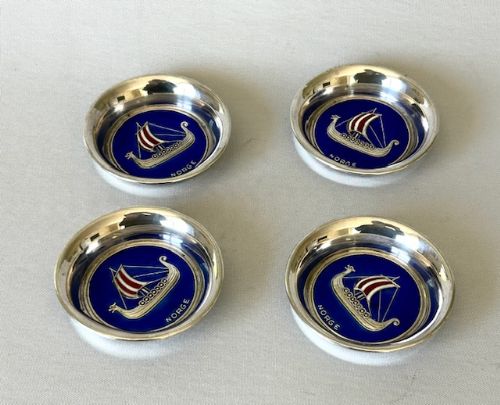


Guilloche Enamel Set
A guilloche enamel set brings together precious metals and translucent coloured glasswork, offering refined coordination for the dressing table or dining service.
Guilloche Enamel Set
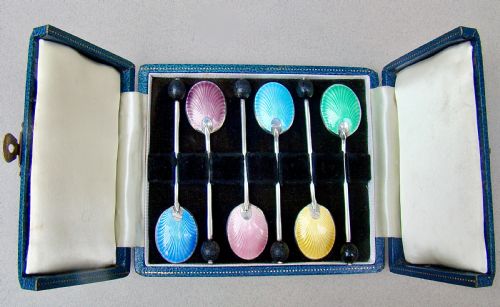
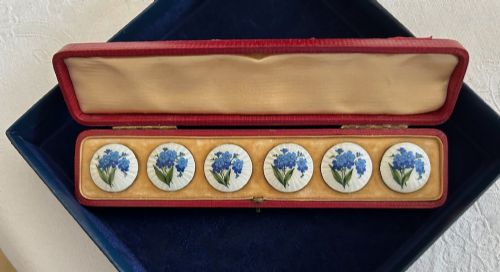
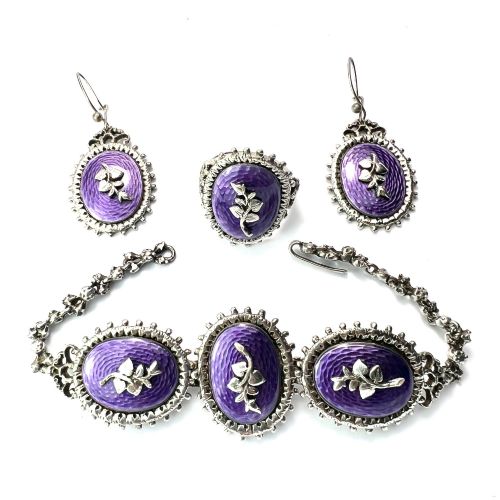
When you search for a guilloche enamel set, you encounter coordinated groupings of matching items spanning Edwardian, Art Deco, and mid-century periods. These assemblages range from vanity items like hand mirrors and dressing table jars to dining accessories including coffee spoons, teaspoons, and salt and pepper shakers.
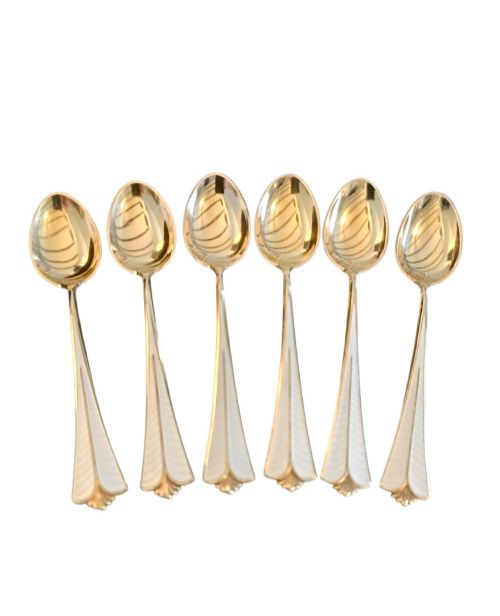
The most common groupings on this page include cased sets of silver coffee spoons and matching dressing table accessories. Individual pieces frequently share a unified decorative scheme, bringing together sterling silver, silver gilt, and patterned vitreous coatings.
The selection encompasses diverse geographical origins, featuring British workshop productions alongside Scandinavian modern and Art Deco continental pieces. These sets served both functional and decorative roles in daily domestic life.
How they were made
Maker's workshops built these pieces using sterling silver or silver gilt as a foundation, applying mechanical engraving to the metal surface before glazing. This engine-turned groundwork creates geometric patterns that show through translucent layers of coloured enamel.
Artisans fused powdered glass to the engraved metal base through high-temperature firing, building up glossy coloured surfaces. Additional elements incorporate cut glass containers, natural bristle brushes, and gold gilt finishes.
Guilloche Enamel Set Retail Price Guide 2026
Typical asking prices for guilloche enamel set among the pieces listed under this phrase on Sellingantiques today, from the lower quarter to the upper quarter. They describe what is for sale here now, not the wider market.
Even tiny bean knops on coffee spoons received the full guilloche treatment, proving that morning caffeine required serious artistic commitment.
What varies in quality
The distinction between standard production and finer execution lies in the precision of the engine-turned engraving beneath the glaze. Deeper, sharper mechanical patterns catch the light more effectively through the translucent enamel surface.
The integrity of the vitreous coating and the preservation of the underlying gilding determine the overall refinement of each piece. Matching sets that retain their original fitted cases demonstrate greater care and completeness.
Turner And Simpson·David Andersen·Harold Arthur Lazarus
The Guilloche Enamel Set Glossary
- Guilloche
- A decorative technique in which a mechanical lathe etches precise, intricate geometric patterns into a metal substrate. This engraved groundwork provides the visual texture beneath translucent enamel.
- Silver Gilt
- Sterling silver that has been coated with a thin layer of gold, often providing a warm inner glow beneath coloured glass enamels. It appears frequently in mid-century and Art Deco spoons and napkin rings.
- Vitreous Enamel
- Glass powder fused to a metal surface at high temperatures to create a durable, glossy coloured finish. It forms the smooth, reflective coating characteristic of these vanity and dining sets.
- Bean Knop
- A terminal shape resembling a small bean, commonly found on the handles of decorative coffee spoons from the mid-twentieth century. It offers a comfortable grip while complementing the cased presentation.
- Dressing Table Jars
- Small glass or crystal containers fitted with decorative metal and enamel lids, designed for cosmetics and pins. They form a standard component of period vanity groupings.
Guilloche Enamel Set: Frequently Asked Questions
How do I clean a guilloche enamel set?
Clean the metal components gently using a soft cloth and warm soapy water, avoiding harsh abrasive polishes that can scratch the glass surface. Keep enamel pieces away from prolonged immersion and harsh chemical dips.
Dry the items thoroughly immediately after washing to protect any exposed silver or natural bristle elements. Proper storage in lined cases prevents accidental surface scratching between uses.
Were these sets used daily or displayed?
Many dressing table items and tea sets saw regular daily use in middle and upper-class households during the early and mid-twentieth century. Vanity jars held creams and pins, while cased spoons served guests during formal afternoon tea.
Over time, surviving examples transitioned from functional domestic objects into collectible display pieces. Their intricate coloured surfaces make them popular for decorative interior placement today.
What is silver gilt on these sets?
Silver gilt refers to sterling silver that has undergone a process of gold plating, creating a rich golden sheen across the metal elements. This treatment was frequently applied to the interior bowls of coffee spoons and the bodies of napkin rings.
The gold layer adds warmth and protects the underlying silver from tarnishing while enhancing the depth of the transparent enamel laid over it. Traces of this gilding help indicate the original finish of the piece.