




Greyhound Dog Figurine
A greyhound dog figurine captures the lithe elegance of the breed in materials ranging from earthenware to cast bronze.
Greyhound Dog Figurine
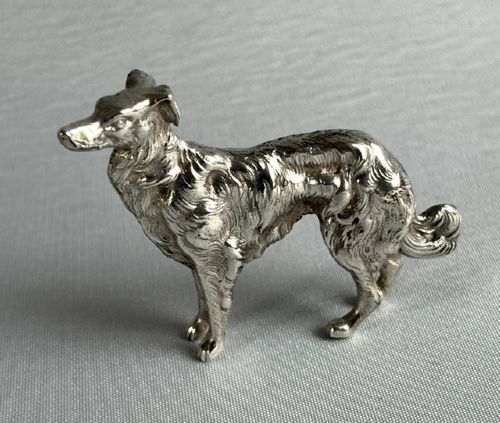
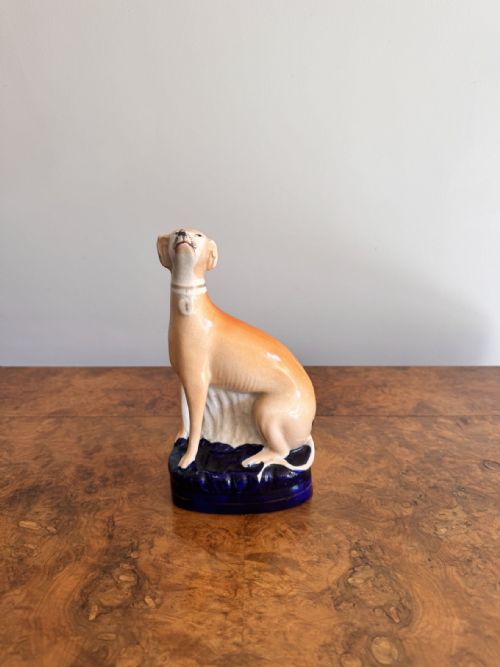
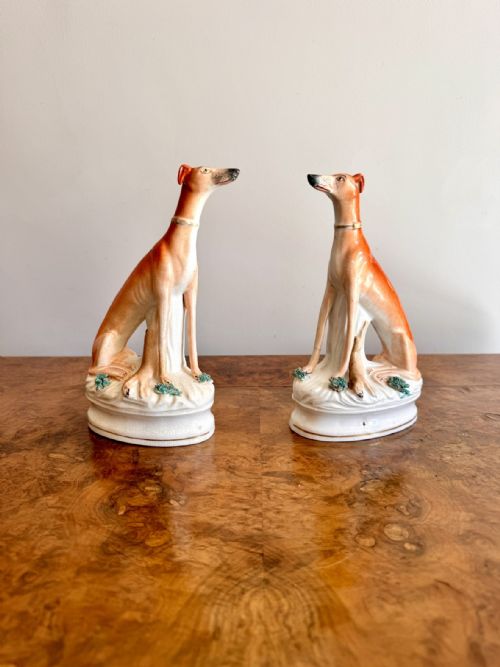
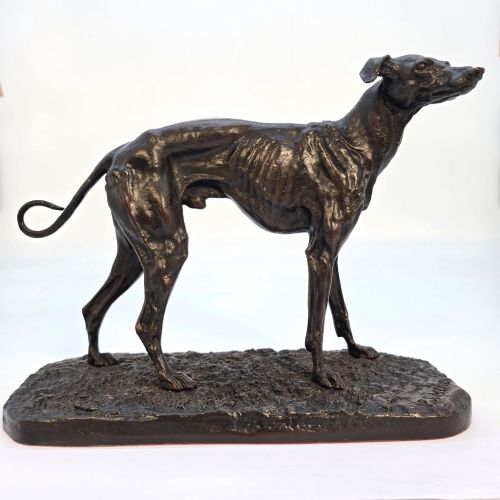
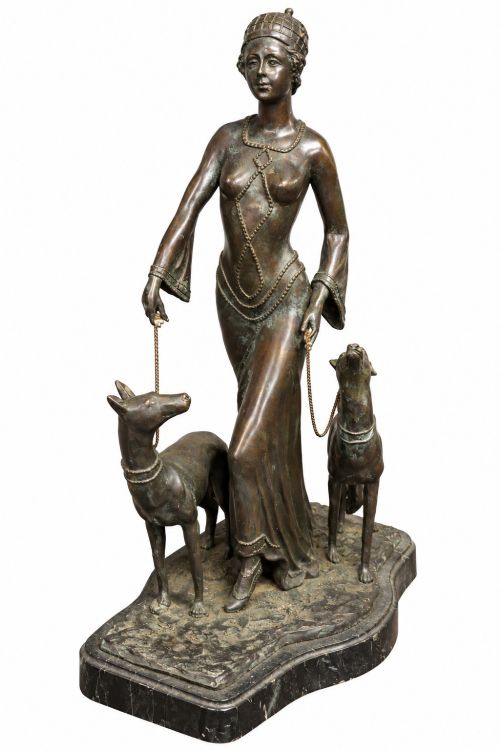
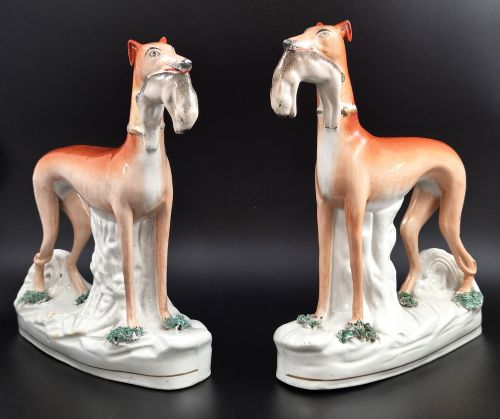
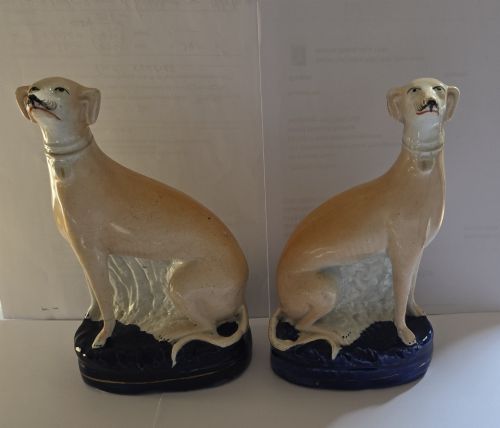
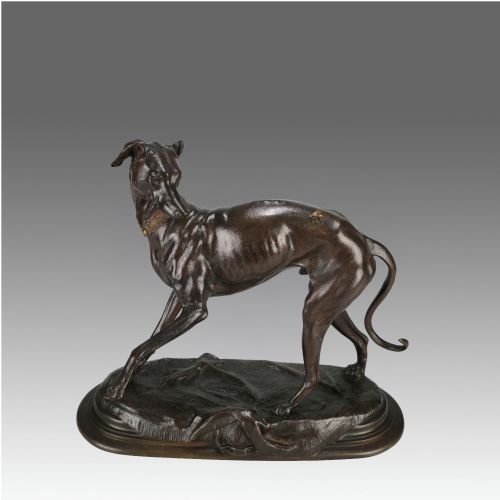
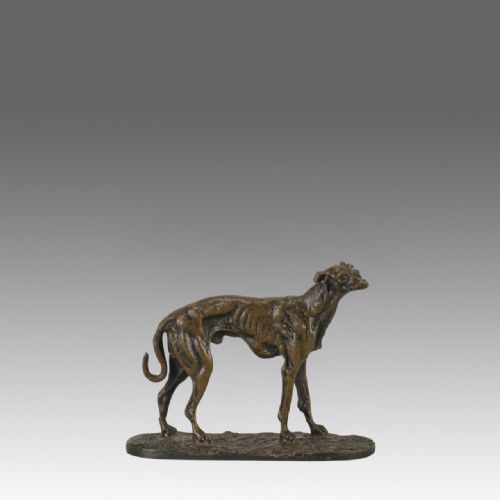
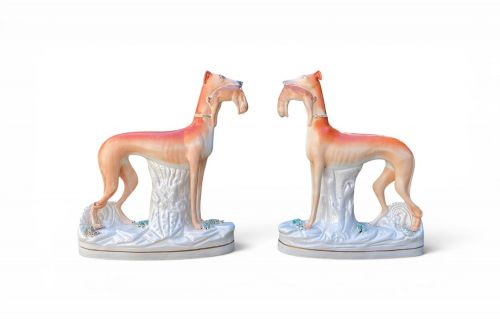
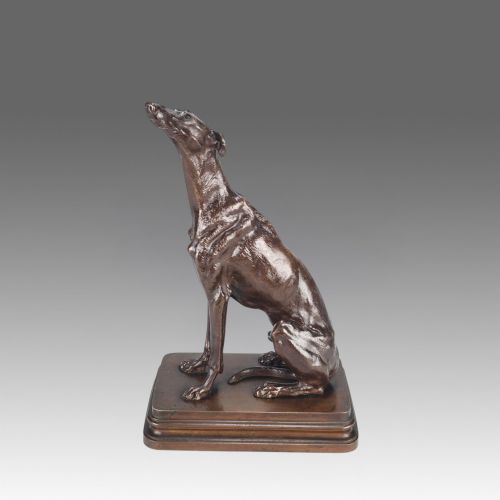
A greyhound dog figurine spans distinct aesthetic traditions, appearing most frequently as pairs of earthenware Staffordshire figures from the nineteenth century or as bronze sculptures from the animalier school. The Staffordshire pieces often depict seated or recumbent hounds, sometimes paired with hares or adapted into functional items like inkwells and quill holders. Later twentieth-century examples frequently embrace the streamlined geometry of Art Deco, casting the hounds in bronze or spelter alongside figures or mounted on marble bases.
The nineteenth-century domestic earthenware versions originate predominantly from English potteries, characterised by hand-painted details and utilitarian charm. Conversely, the bronze and spelter representations lean towards the French animalier tradition, capturing muscle and movement with anatomical fidelity. Buyers navigating this selection will encounter everything from small porcelain desk ornaments to substantial mantel sculptures created across several decades of stylistic evolution.
Materials and Construction
Earthenware and ceramic figurines rely on traditional pottery techniques, involving moulded clay bodies finished with glazes and enamel paint to render the markings of the dogs. Many of these Staffordshire pieces incorporate shredded clay applied to the base to simulate grass, showing a textured surface achieved through manual skill.
Bronzes and metal castings utilise the lost-wax technique or metal moulding, often mounted on heavy marble plinths or paired with silver plating. Some metal works feature cold-painted enamel details, applying colour directly onto the finished bronze surface to accentuate the realism of the hound.
Greyhound Dog Figurine Retail Price Guide 2026
Typical asking prices for greyhound dog figurine among the pieces listed under this phrase on Sellingantiques today, from the lower quarter to the upper quarter. They describe what is for sale here now, not the wider market.
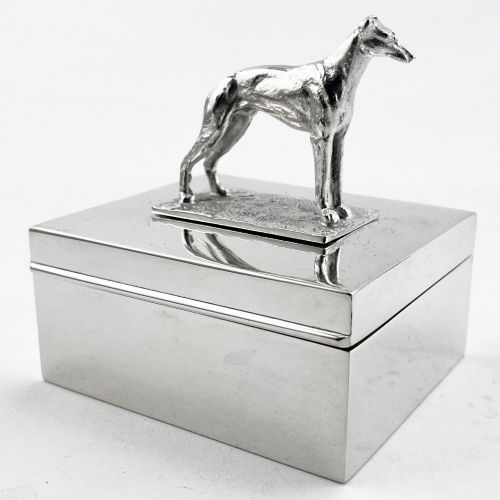
Form variations include decorative sculptures, inkwells, quill holders, trinket boxes, night lights, and paperweights.
Judging the Standard
The degree of anatomical observation and sculptural precision sets the tier of metal castings apart, where master founders capture tension in the muscles and authentic posture. In earthenware pieces, the clarity of the moulding and the delicacy of the hand-painted facial expressions dictate the refinement of the work.
The presence of original matched pairs, complete decorative elements such as hares, or functional integrations like inkwells and quill holders elevates the desirability of the piece. Craftsmanship in the finishing stages, whether in the smooth patination of a bronze or the even application of ceramic glaze, determines the enduring appeal of the figure.
P. J. Mène·Alfred Dubucand·Alfred Barye·Thomas Parr·Joseph Francois Victor Chemin·Christophe Fratin·Georges Gori·Geo Maxim·Karl Hagenauer·Rosenthal
The Greyhound Dog Figurine Glossary
- Animalier
- A nineteenth-century artistic movement focused on the realistic portrayal of animals. Sculptors in this tradition studied live subjects extensively to achieve anatomical accuracy.
- Spelter
- A zinc alloy frequently utilised as an economical alternative to bronze. It accepts metallic finishes well but possesses a lighter weight and softer composition.
- Staffordshire
- A term designating pottery produced in the industrial region of England. These earthenware figures served as popular chimney ornaments in Victorian homes.
- Patina
- The surface sheen and coloration developed by bronze over time through oxidation and handling. A rich patina indicates age and composition quality.
- Vienna Bronze
- Small, highly detailed bronze sculptures produced in Austrian workshops during the late nineteenth and early twentieth centuries. These pieces typically feature vibrant cold-painted enamel finishes.
Greyhound Dog Figurine: Frequently Asked Questions
What is an animalier bronze?
An animalier bronze is a sculpture depicting animals in realistic poses, a genre that gained immense popularity in nineteenth-century France. These works focus on capturing the true anatomy, movement, and physical tension of creatures like greyhounds and whippets.
Artists in this tradition worked closely with foundries to ensure the cast metals retained the fine textures of fur and muscle observed in living subjects.
Were these figures purely decorative?
While many greyhound figures served strictly as mantel ornaments or paperweights, a significant number integrated practical functions into their design. Makers frequently adapted the form into inkwells, quill holders, and trinket or cigarette boxes.
These functional pieces combined Victorian utility with domestic charm, allowing owners to display their appreciation for hunting dogs while keeping desk accessories organised.
How should I display a bronze on marble?
Art Deco and animalier bronzes mounted on marble plinths require a stable, level surface away from direct sunlight and excessive moisture. The heavy stone bases provide necessary counterweight to the metal figures, so placement should ensure the entire piece is secure from accidental knocks.
Dusting the bronze gently with a soft, dry cloth helps preserve the patina without disturbing the metallic surface.