
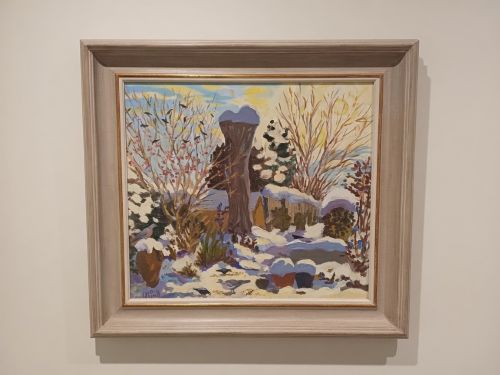
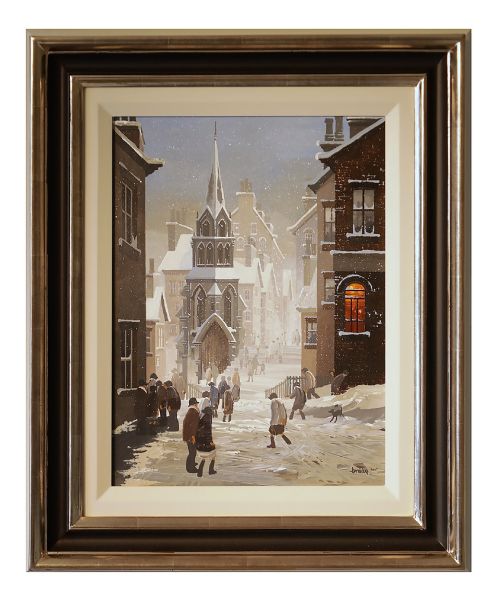
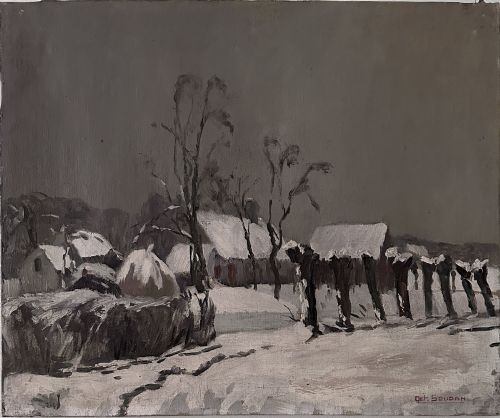


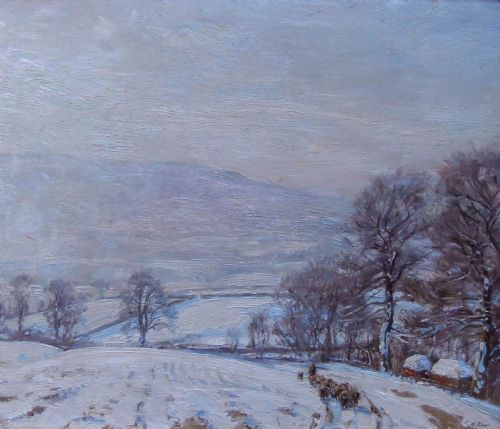

Grey Winter Landscape
A grey winter landscape brings the quiet chill of snow and frost directly onto the wall through the hand of an artist.
Grey Winter Landscape
A grey winter landscape captures the stark and muted tones of cold weather scenes across various periods. Buyers searching for a grey winter landscape will encounter works spanning from the nineteenth century through to the modern era, reflecting seasonal scenes in oil and watercolour.
The selections available here range from Dutch winter views and Yorkshire dales to French post-impressionist pastels and Canadian snow scenes. Many of these paintings focus on rural settings, villages, and frosty pastures under overcast skies.
Works attributed to regional painters sit alongside anonymous village scenes and international subjects. The predominant forms are framed oil paintings on canvas and watercolours on paper depicting snow, ice, and winter light.
Materials and Technique
Artists rendering a grey winter landscape relied primarily on oil paint applied to canvas or wood panels, alongside watercolours and pastels on paper. Oil paint allowed for layered brushwork to build up heavy snow textures, while watercolours offered a transparent wash suitable for misty skies and pale light.
The application ranges from the precise detail found in nineteenth-century works to the looser brushwork of British Impressionism and modern British styles. Supports of canvas, paper, and wood dictated how fluidly the pigment could be manipulated to evoke frost and chill.
The selection includes British Impressionist, Dutch School, and modern British painting styles.
Judging Quality and Execution
Quality in these seasonal works rests upon the artist's ability to capture atmospheric light and the heavy stillness of cold weather using limited tonal ranges. Superior examples demonstrate confident brushwork and precise colour placement that convey depth within an austere palette.
Lesser works rely on formulaic depictions of snow without capturing the subtle shifts in grey and white that define winter skies and frosted earth. The strength of the composition and the handled texture of the paint ultimately separate accomplished fine art from standard decorative pieces.
Lucy Pratt·Brian Shields·Thomas Hicks·Fred Lawson·John Smith Atherton·Herbert Royle·Charles Jones·Pieter Cornelis Steenhouwer·George Graham·Ernest Higgins Rigg·Matthew Hale·William Cave Day·Arthur Anderson Fraser
The Grey Winter Landscape Glossary
- Canvas
- A heavy woven fabric stretched across a wooden frame to serve as a sturdy surface for oil painting. It remains the most common support for works from the nineteenth century onwards.
- Watercolour
- A painting method where fine pigment is suspended in a water-soluble binder and applied to paper. This medium creates luminous washes that suit pale winter skies and snow scenes.
- Impressionism
- A nineteenth-century painting style focused on capturing light and atmospheric conditions through visible brushstrokes. Practitioners often worked outdoors to record the exact tone of a winter day.
- Pastel
- A dry art medium consisting of pure powdered pigment and a binder, formed into sticks. It permits rapid blending of soft greys and whites ideal for misty frost effects.
- Dutch School
- A collective term for seventeenth-century and later Dutch artists renowned for realistic landscape and winter scene paintings. Their influence persists in regional interpretations of snowy villages.
Grey Winter Landscape: Frequently Asked Questions
What periods do these winter paintings come from?
The works originate from various decades spanning the nineteenth century through to the later twentieth century.
They reflect shifting artistic approaches from traditional realism to British Impressionism and modern interpretations.
How should I care for an oil painting on canvas?
Keep the artwork away from direct sunlight and sudden shifts in room temperature or moisture.
Dust the surface gently with a dry, soft cloth and avoid using any liquid cleaners on the paint or canvas.
Are watercolours framed differently than oils?
Watercolours on paper require framing under glass to protect the delicate surface from moisture and airborne dust.
Oil paintings on canvas or wood are typically displayed unglazed to let the textured paint surface remain visible.
What subjects typically appear in these winter scenes?
Common subjects include snow-covered Yorkshire dales, rural villages, frozen harbours, and pastures with livestock.
Artists frequently focused on the muted light of winter afternoons and overcast skies over frost-laden landscapes.