



Grey Wash Drawing
These grey wash drawing pieces capture tonal landscapes and figures through monochrome ink layers on paper, prized for their delicate atmospheric depth.
Grey Wash Drawing
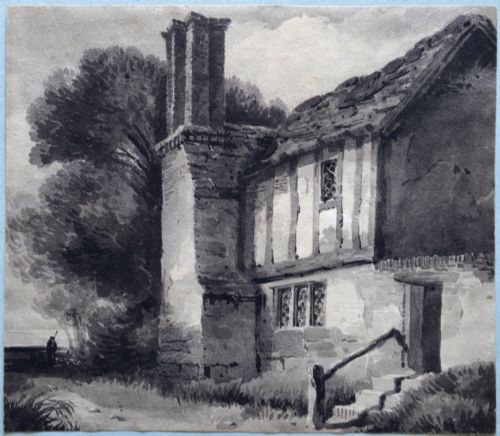
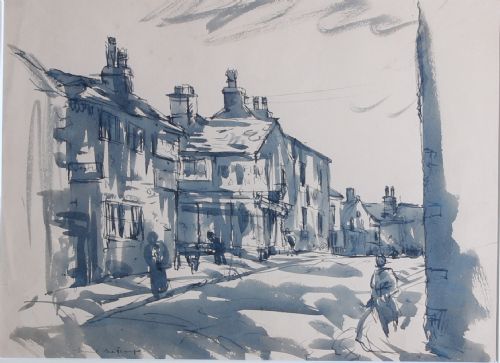
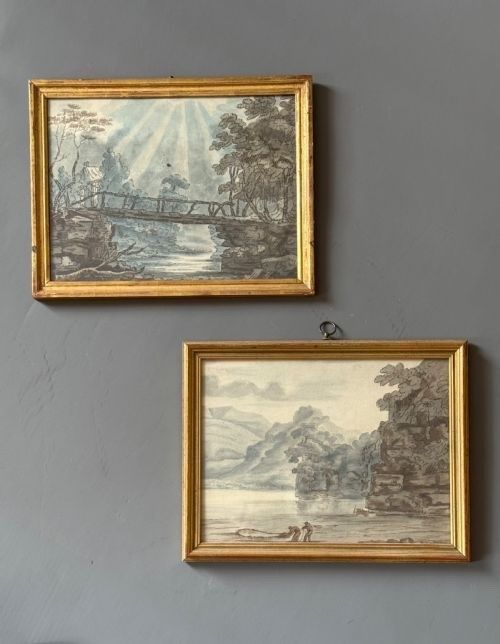
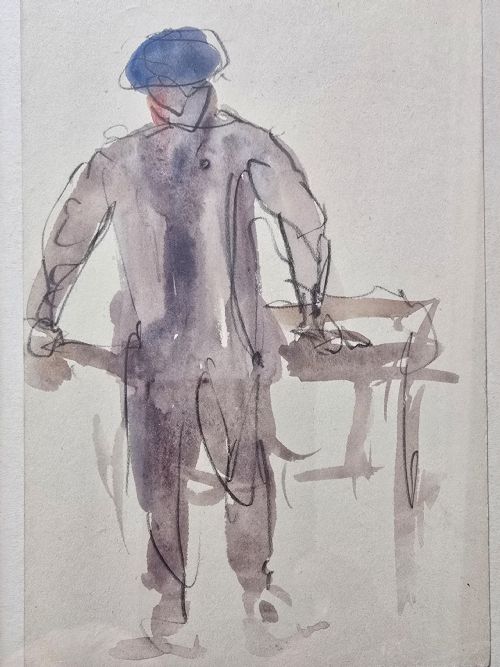
When you search for a grey wash drawing, you enter a field of monochrome works on paper spanning the eighteenth and nineteenth centuries. These framed artworks range from pastoral landscapes and architectural views to lively caricatures and equestrian scenes.
The pieces on this page include Georgian English landscapes, early works by continental masters, and twentieth-century British and Irish watercolours. They capture tonal contrast through restrained monochrome application rather than full chromatic palettes.
How they were made
Makers utilised paper as the primary support, applying iron gall or carbon ink for foundational lines and contours. This linear framework provided the structural skeleton for subsequent monochrome passages.
Artists dissolved dark pigments in water to create transparent washes, layered carefully with brushes to achieve graduated shadows and atmospheric depth. Glazed wooden frames frequently protect these delicate paper works from ambient moisture and dust.
Grey Wash Drawing Retail Price Guide 2026
Typical asking prices for grey wash drawing among the pieces listed under this phrase on Sellingantiques today, from the lower quarter to the upper quarter. They describe what is for sale here now, not the wider market.
The listings on this site combine eighteenth-century English landscapes with twentieth-century British and Irish watercolours on paper.
What varies in quality
The distinction between ordinary and exceptional works rests upon the surety of the initial pen stroke and the control of the tonal wash. Master practitioners demonstrate an economy of line where every mark establishes form and light simultaneously.
Paper preservation and the stability of the ink significantly influence desirability across different centuries. Subtle handling of diluted pigment reveals the hand of a trained draughtsman over a mechanical copyist.
Michael Healy·Stanley Orchart·Edward Dayes·Thomas Rowlandson·Amos Green·Johan Noah Bemmel·Peter Tillemans
The Grey Wash Drawing Glossary
- Wash
- A thin layer of diluted ink or watercolour applied to paper to create smooth background tones and shadows. This technique provides the primary tonal depth in monochrome works.
- Pen and ink
- A linear drawing method utilising a nib and dark fluid applied directly to paper. It creates crisp outlines that often precede the application of wet washes.
- Pastoral
- A style of art depicting idealized rural landscapes and rustic scenes of shepherds or agricultural life. These subjects dominate eighteenth-century British works on paper.
- Framed artwork
- A picture enclosed within a protective border of wood and glass. This housing preserves fragile works on paper from atmospheric damage.
Grey Wash Drawing: Frequently Asked Questions
What is a grey wash drawing?
A grey wash drawing is a monochrome artwork created by applying diluted black or grey ink onto paper. Artists use this technique to build up tonal shadows and atmospheric depth.
These pieces often combine precise pen outlines with soft, fluid washes of pigment. They range from eighteenth-century topographical views to twentieth-century pastoral compositions.
How should I frame these drawings?
Works on paper require conservation mounting with acid-free materials to prevent discolouration over time. Glass provides essential physical protection against dust and atmospheric pollutants.
Keeping them away from direct sunlight preserves the stability of the ink and paper support. Professional framing ensures the delicate medium remains stable within its wooden enclosure.
How do I date an antique drawing?
Dating relies on stylistic markers, paper characteristics, and the specific composition of the ink and watercolours used. Eighteenth-century works often feature distinct laid paper watermarks and characteristic pastoral subject matter.
Comparing known hands, signatures, and framing remnants helps narrow the period of creation. Attributions often reference comparable pieces from documented artists active in British and continental schools.
Where were these monochrome artworks produced?
Production centres span British, Irish, Dutch, and German workshops across the eighteenth, nineteenth, and twentieth centuries. Artists often sketched directly from local topography, architecture, and rural landscapes.
Topographical subjects document specific locations such as the English Lake District and Yorkshire. Continental masters contributed equestrian scenes and panoramic views.