

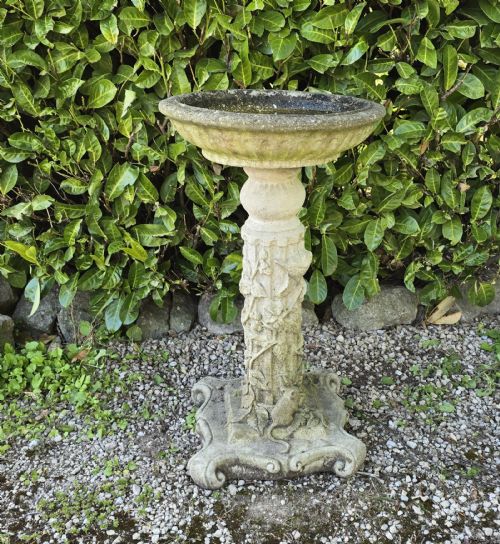
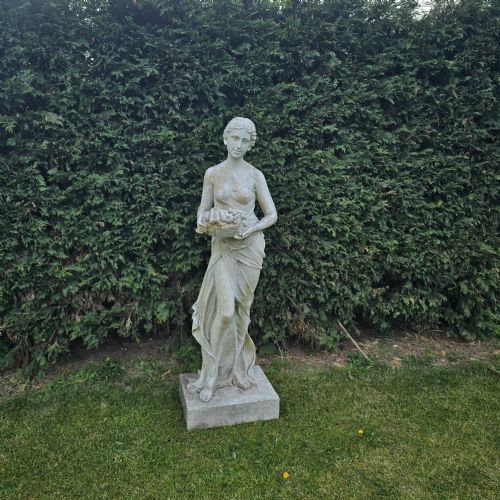
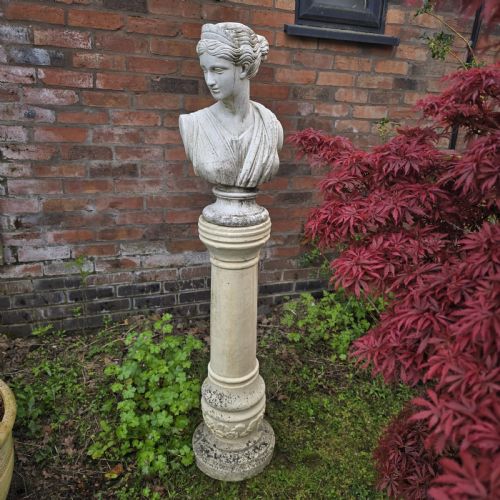
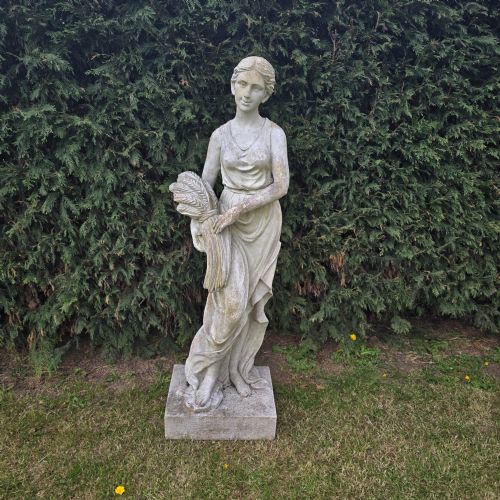


Grey Reconstituted Stone Statues
Grey reconstituted stone statues bring classical form and enduring presence to the garden, shaped from aggregate and binder to weather gracefully outdoors.
Grey Reconstituted Stone Statues
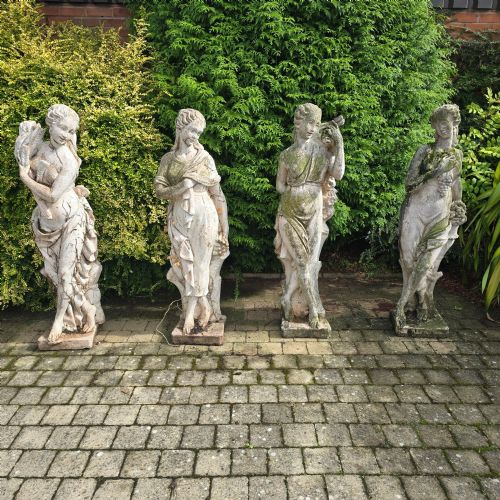
Grey reconstituted stone statues encompass garden ornaments, figures, and architectural finials produced across the late nineteenth and twentieth centuries. When searching for grey reconstituted stone statues, buyers encounter classical deities, animals, and allegorical figures rooted in neoclassical and traditional English garden styles.
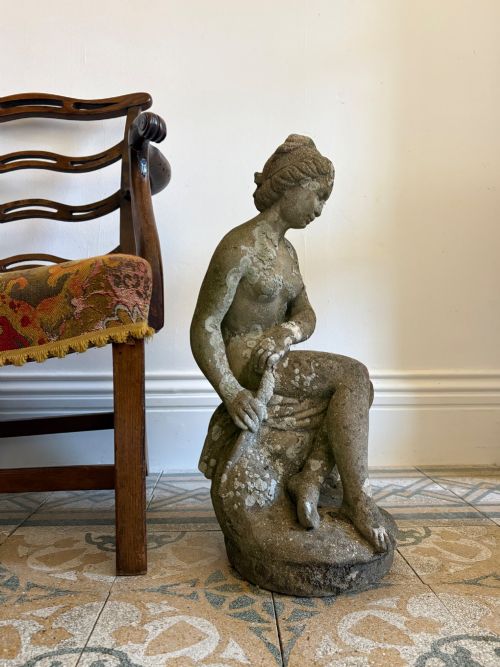
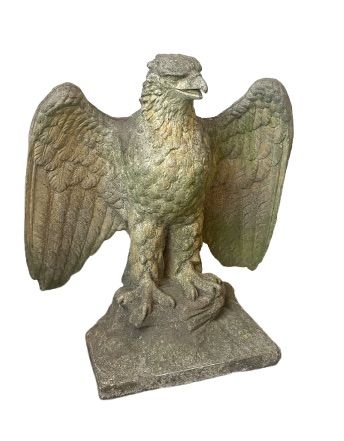
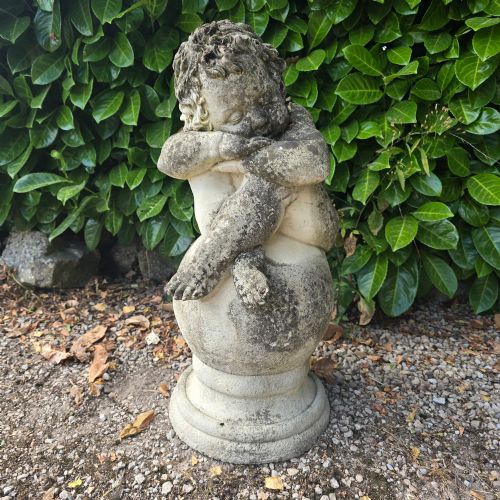
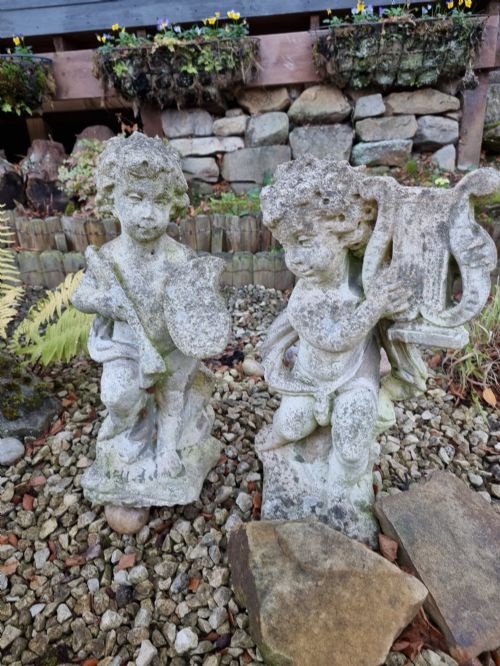
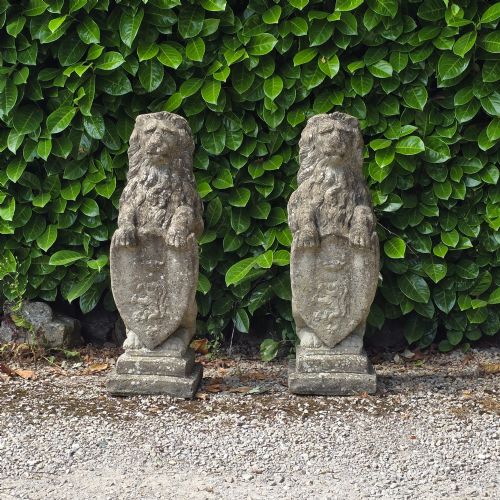
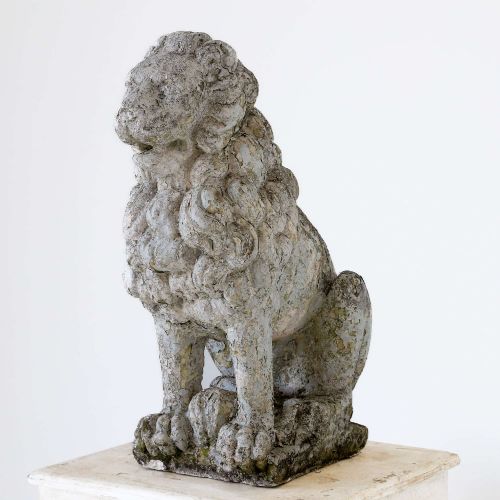
The selections span from monumental pairs of lions and eagles to life-sized figures representing the Four Seasons, alongside cherubs, bathers, and portrait busts. Many pieces integrate pedestals or plinths, designed to elevate sculptural forms within garden landscapes.
Dated examples trace back through the decades from the Victorian era into the mid-twentieth century, showing sustained popularity for cast compositions replicating carved stone. These objects serve as focal points in traditional settings, acquiring genuine patination through decades of exposure.
Materials and casting methods
Surfaces frequently retain traces of early paint or develop natural weathering across the grey ground, depending on exposure to moisture and lichen growth over time. The solid construction method allows substantial forms like standing lions and life-sized figures to withstand outdoor elements.
Grey Reconstituted Stone Statues Retail Price Guide 2026
Typical asking prices for grey reconstituted stone statues among the pieces listed under this phrase on Sellingantiques today, from the lower quarter to the upper quarter. They describe what is for sale here now, not the wider market.
Listings feature periods spanning from the late nineteenth century through to the nineteen-fifties, alongside materials including cast stone, concrete, and composite stone.
Distinctions in craftsmanship and design
Quality rests in the fidelity of the mould and the crispness of the modelling, distinguishing spirited classical interpretations from softer, more generic castings. The proportion of the aggregate and the density of the mix dictate how cleanly the surface takes the impression and ages outdoors.
Substantial scale and balanced anatomical proportions elevate works like life-sized figures and architectural finials. The harmony between the sculptural subject and its dedicated plinth contributes to the overall presence of the piece.
The Grey Reconstituted Stone Statues Glossary
- Reconstituted stone
- A composite material made from crushed stone and cement binder, moulded to replicate natural carved rock. It provides a durable medium for garden sculpture.
- Pier finial
- An architectural ornament placed atop a gate pier, pillar, or wall end. Eagles and lions frequently serve this structural role.
- Plinth
- A heavy architectural base supporting a statue, bust, or urn. It elevates the sculpture above ground level.
- Neoclassical
- A style reviving classical antiquity in art and architecture, visible in figures modelled after Greek and Roman prototypes. It informs many garden statues and busts.
- Weathered
- The natural ageing of a surface through exposure to weather, moss, and lichen. This process softens raw grey tones.
Grey Reconstituted Stone Statues: Frequently Asked Questions
How do I clean my garden statue?
Gentle washing with water and a soft brush removes loose dirt while preserving the accumulated weathering and lichen that give the stone character.
Avoid harsh chemical cleaners or pressure washers, which strip away the surface skin of the cast material and expose raw aggregate underneath.
Can these statues stay outside in winter?
These dense composite materials withstand frost, making them suitable for year-round outdoor display in standard garden environments.
Keeping statues elevated on stone feet or plinths prevents moisture from drawing up from damp ground during freezing conditions.
How do I date a cast stone statue?
Dating relies on style, surface patination, and construction characteristics rather than explicit makers' marks, which are uncommon on garden statuary.
Earlier twentieth-century pieces often display deeper weathering patterns and softer aggregate compositions compared to mid-century castings.
Are these pieces solid stone?
They are composed of cast stone or concrete rather than quarried natural block, formed by pouring aggregate mixtures into moulds.
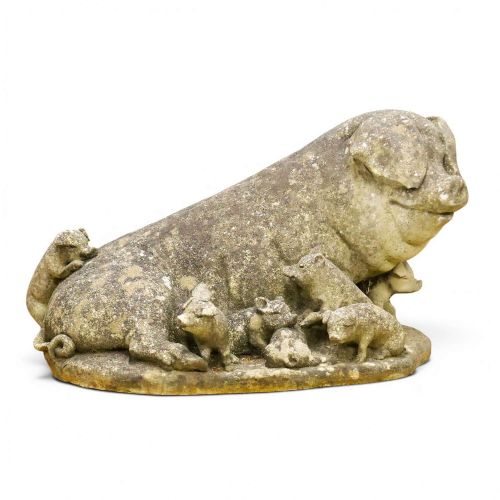
This technique allows complex sculptural forms like animals and human figures to be produced with great structural stability.