
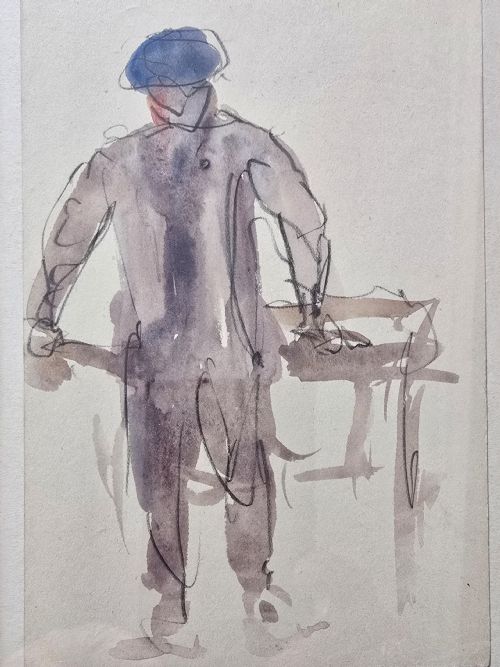


Grey Paper Figure Study
These grey paper figure study works capture the human form through subtle tones, offering collectors direct insight into the preparatory draftsmanship of past centuries.
Grey Paper Figure Study
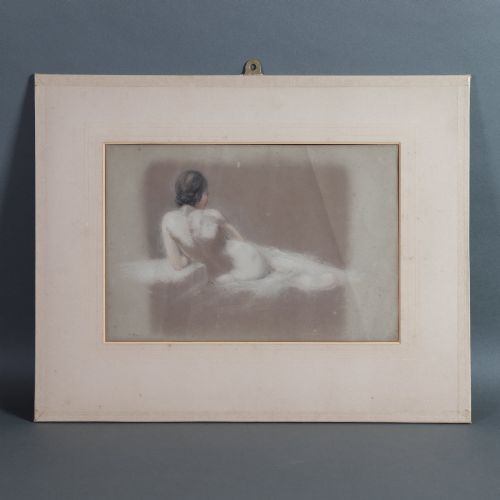
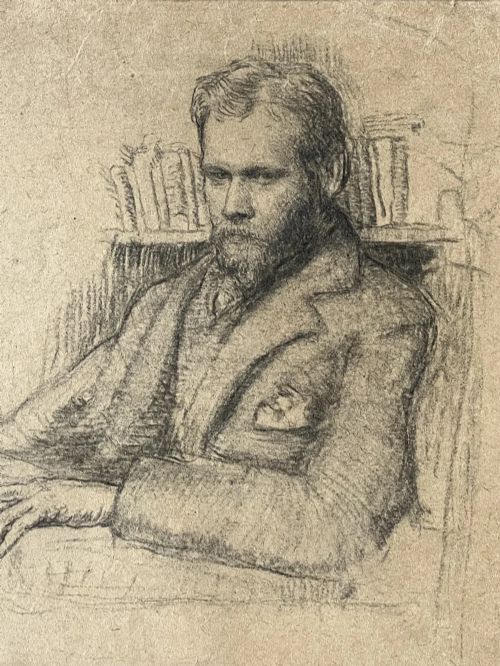
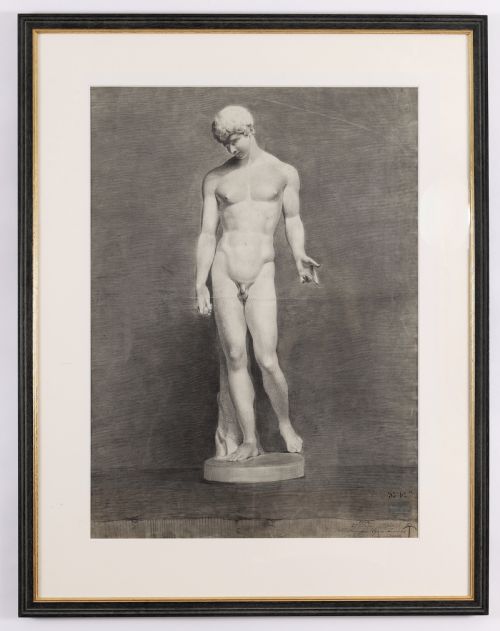
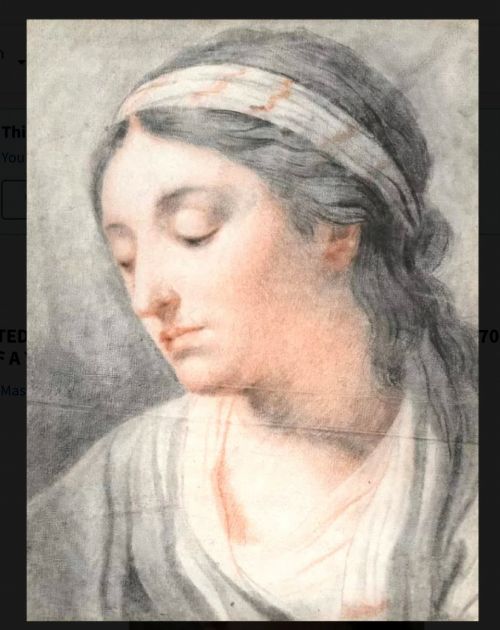
When you search for a grey paper figure study, you encounter original portrait drawings, nude studies, and academic works rendered on tinted grounds. These pieces range from seventeenth-century Italian drawings to twentieth-century British and Irish school compositions.
The selection includes framed artwork and unframed drawings spanning the eighteenth century, nineteenth century, Edwardian period, and early decades of the twentieth century. Artists utilised the mid-tone of the paper to build both highlights and shadows efficiently.
How they were made
Draftsmen employed charcoal, chalk, graphite, and pastel on sheets of paper, frequently working in mixed media to capture the contours of the human body. The natural tone of the grey paper served as a middle value, allowing artists to apply dark mediums for shadow and white chalk for illumination.
Many of these original works are housed behind glass in wooden frames, preserving the delicate friable nature of charcoal and pastel powders. The combination of graphite and chalk on tinted sheets formed a foundational technique for academic realism and neoclassical portraiture.
Some anonymous sitters spent hours holding difficult reclining poses while artists wrestled with chalk dust.
What varies in quality
The distinction between standard academic exercises and superior works lies in the confidence of the line and the anatomical precision achieved by the hand. Master draftsmen capture the weight and posture of a recumbent figure or the expression of a sitter with immense economy of mark-making.
Condition and preservation heavily influence the standing of each piece, particularly regarding foxing on the paper and stability of charcoal or pastel mediums. Works attributed to known academic traditions or documented artists naturally command greater attention from serious collectors.
William Etty·Augustus John·Frank Dobson·Francis Dodd·Cecil CP Lawson
The Grey Paper Figure Study Glossary
- Chalk
- A dry drawing material made from earthy minerals, prized for its ability to produce dense, opaque marks on tinted paper. White chalk is especially useful on grey sheets for adding bright highlights.
- Charcoal
- A form of dry carbonized wood used for sketching and drawing, known for yielding deep velvety blacks and easily smudged tones. Artists employ it for rapid gesture studies and robust figure work.
- Graphite
- A crystalline form of carbon utilised in pencils and sticks, offering precise control over fine lines and subtle tonal gradations. It provides the structural skeleton for many detailed portrait drawings.
- Neoclassical
- An artistic style inspired by the classical art and culture of ancient Greece and Rome, emphasising restraint, proportion, and clear linear definition. Works in this vein often display strict academic discipline.
- Pastel
- A powder pigment bound together with a gum resin and moulded into stick form, allowing artists to apply vibrant or muted colour directly to paper surfaces.
Grey Paper Figure Study: Frequently Asked Questions
What is a grey paper figure study?
A grey paper figure study is an original drawing or sketch that uses tinted grey paper as a mid-tone background for rendering the human body. Artists apply dark chalk or charcoal alongside white highlights to create depth quickly.
These works were often created as preparatory pieces for larger paintings or as academic exercises in portraiture and anatomy. The tinted paper eliminates the harshness of a pure white page.
How should I frame and display these drawings?
These works require framing behind glass with acid-free mounts to protect the fragile charcoal, chalk, and pastel mediums from atmospheric damage. UV-resistant glass helps prevent the grey paper from fading or discolouring over decades.
Keep them away from direct sunlight and high humidity areas like kitchens or bathrooms. Proper framing ensures the delicate powders applied to the paper remain undisturbed.
How do I identify the period of a drawing?
Dating relies on stylistic markers such as neoclassical restraint, romantic expression, or modernist abstraction, alongside the watermark and texture of the paper itself. Signatures, inscriptions, and framing remnants often provide clues to the exact era.
Early works from the seventeenth and eighteenth centuries typically exhibit distinct academic hatching techniques. Nineteenth and Edwardian pieces reflect changing attitudes towards realism and individual character.
Are these works original or reproductions?
The pieces available are original artworks executed by hand using graphite, chalk, charcoal, watercolour, or pastel directly onto paper. Each drawing contains unique hand-drawn lines, smudges, and artist corrections that distinguish them from printed reproductions.
Close inspection under magnification reveals the physical build-up of pigment grains on the paper fibres. This direct contact between artist and medium defines genuine historic drawings.