

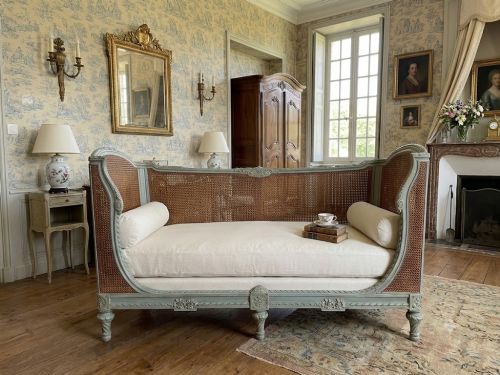


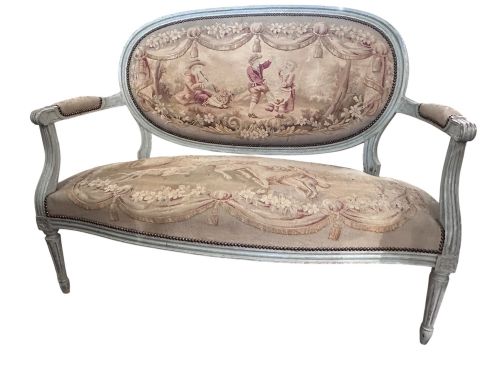


Grey Painted Sofa
A grey painted sofa brings a soft, muted tone to a room, offering classic seating shaped by French and Scandinavian traditions.
Grey Painted Sofa
A grey painted sofa encompasses seating from the eighteenth century onwards, drawing on French Louis XV and Louis XVI styles, Edwardian designs, and Scandinavian country traditions.
The versions met most frequently on this page include nineteenth-century French settees and canapés, alongside Swedish Gustavian pieces finished in pale paint.
Makers and designers across these periods utilised painted wood frames, sometimes pairing them with cane work, linen, or patterned fabric upholstery.
How they were made
Construction relies primarily on wood such as pine, beech, and other timbers, shaped into frames for settees, daybeds, and benches.
Surfaces are finished with paint, occasionally accompanied by gilt highlights, while seating areas incorporate fabric, linen, or cane panels.
Materials recorded across the selection include pine, beech, cane, linen, and fabric over painted wooden frames.
What varies in quality
The refinement of the carved woodwork and the fidelity to styles like Gustavian or Louis XVI shape the distinction between pieces.
The condition of original paint finishes, exposed wood frames, and structural joinery alters the overall character of each sofa.
The Grey Painted Sofa Glossary
- Canapé
- An upholstered sofa or settee, frequently encountered in French nineteenth-century designs. These pieces often feature exposed painted wooden frames.
- Gustavian
- A Swedish neoclassical style originating in the late eighteenth century. It typically employs light paint colours and restrained ornamentation.
- Bergère
- An enclosed upholstered armchair or sofa with wooden sides. The frame is usually painted or polished.
- Caning
- Woven rattan material utilised for seat bases and backrests. It provides a lightweight, textured surface on period frames.
Grey Painted Sofa: Frequently Asked Questions
How do I clean a grey painted sofa?
Dust the painted wooden frame gently with a dry cloth to protect the surface finish.
Vacuum upholstered fabric areas carefully using a low suction attachment.
Are these sofas suitable for daily use?
Period frames provide sturdy seating, though nineteenth-century and earlier pieces benefit from gentle treatment.
Upholstered sections can support regular sitting depending on the condition of the interior webbing.
What is a Gustavian sofa?
A Gustavian sofa reflects Swedish neoclassical design from the late eighteenth and early nineteenth centuries.
These pieces feature pale painted finishes and clean lines inspired by French aesthetics.
Can I place a painted sofa in a modern room?
The neutral grey tones and simple eighteenth- and nineteenth-century forms blend easily with contemporary interiors.
Their muted palettes complement both minimalist and traditional living spaces.