





Grey Occasional Table
A grey occasional table brings versatile utility and understated elegance to any room, offering a convenient surface for lamps, books, or drinks.
Grey Occasional Table
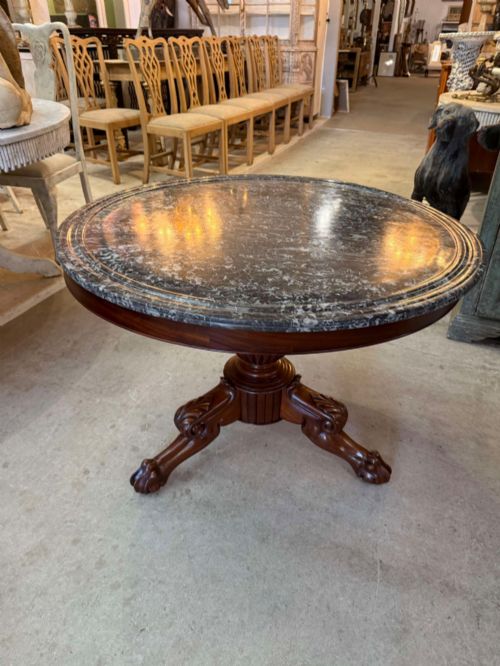
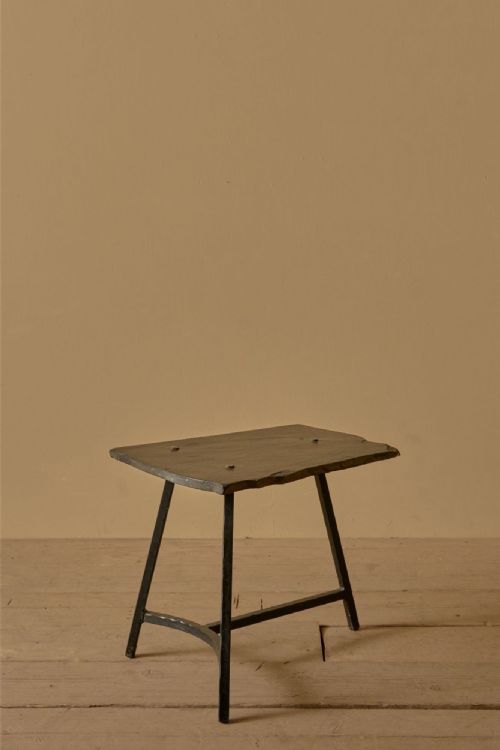
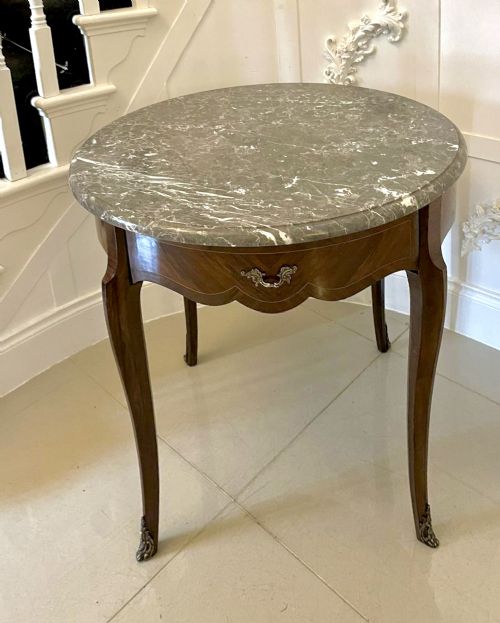
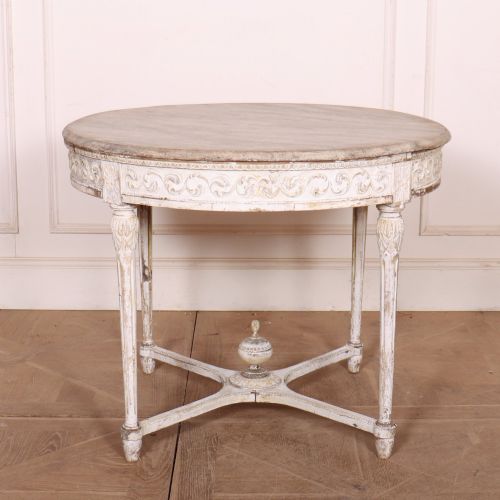
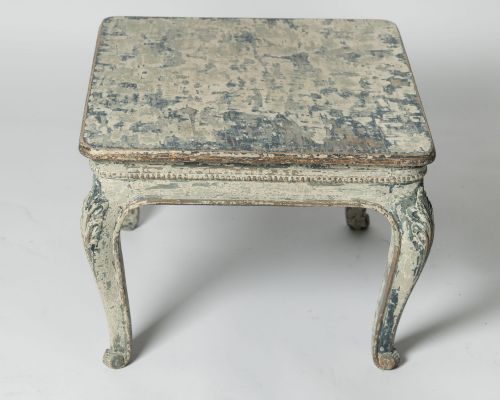
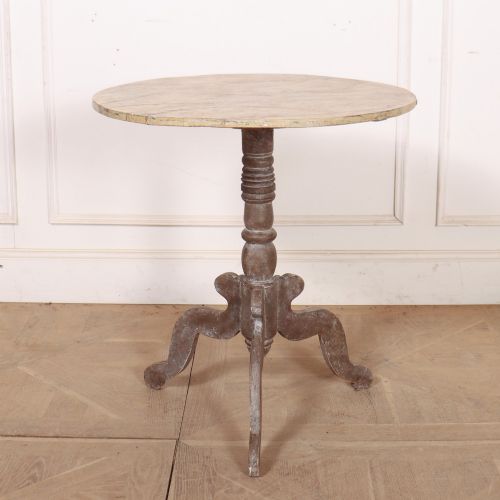
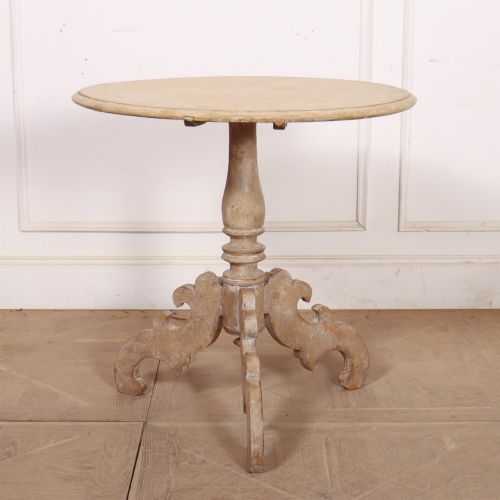
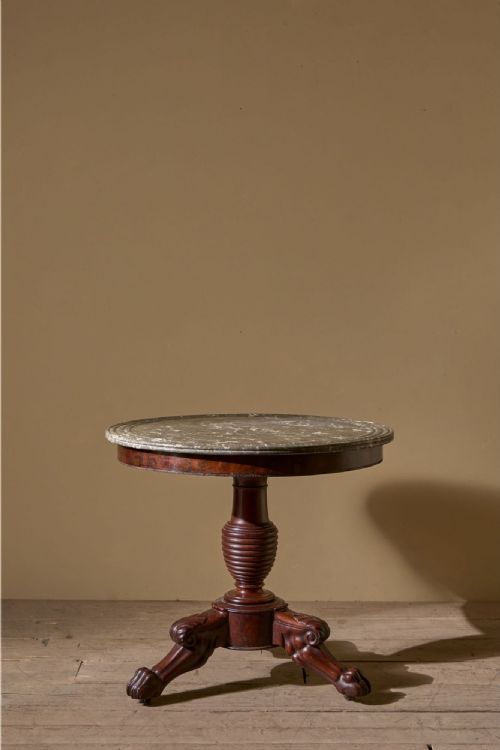
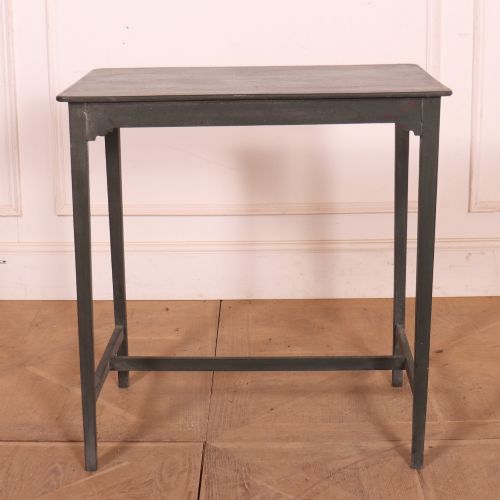
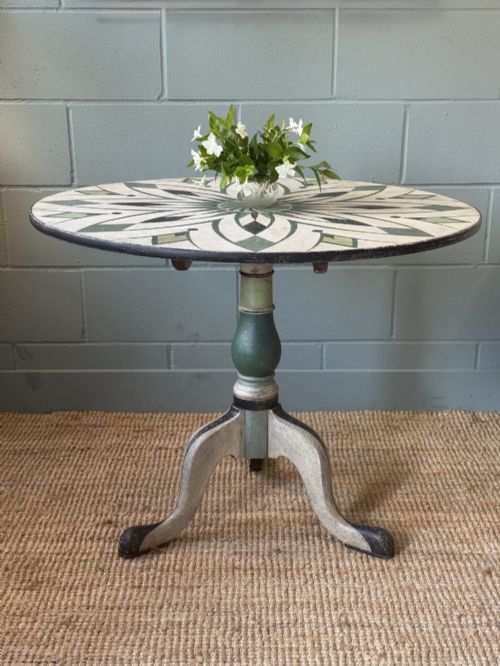
A grey occasional table encompasses a diverse group of compact furniture designed for flexible placement, frequently appearing as French gueridons, Swedish lamp tables, and Victorian side pieces. These items serve multiple functions around the home, operating as bedside stands, display surfaces, or small centrepieces in reception rooms. The selection includes painted pine and oak alongside more elaborate mahogany and walnut frames.
Pieces frequently date from the nineteenth century, drawing on specific regional aesthetics such as Gustavian pale finishes and French provincial styling. The physical forms vary from tripod bases to freestanding pedestal tables and low occasional stands. Buyers encounter variations that span simple country house painted pine to refined metropolitan interpretations with decorative carving.
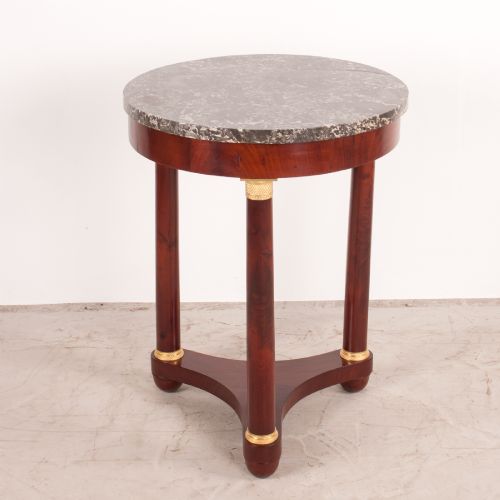
The integration of stone tops marks a significant portion of these items, notably white, veined, and fossil marble surfaces paired with painted or polished wooden bases. Such combinations provide durable working surfaces that contrast texture against structure. Whether sourcing an English country house piece or a continental lamp table, the fundamental utility remains consistent.
Construction and Materials
Carpenters utilised native and imported timbers, employing solid mahogany, walnut, oak, and pine to construct stable carcases and turned pillars. Paint layers, particularly muted greys and off-white tones, were applied over timber bases to achieve specific decorative effects suited to Swedish and English interiors. Secondary woods often support the structural framework beneath visible exterior surfaces.
Marble and slate served as primary tabletop materials for French gueridons and related continental forms, requiring precise stone-cutting and edge-profiling to fit wooden aprons. Ormolu, gilt-bronze, and brass mounts were cast and chased to embellish the corners and friezes of finer nineteenth-century examples. Inlaid details, including mother-of-pearl, introduced contrasting visual texture into the designs.
Grey Occasional Table Retail Price Guide 2026
Typical asking prices for grey occasional table among the pieces listed under this phrase on Sellingantiques today, from the lower quarter to the upper quarter. They describe what is for sale here now, not the wider market.
Materials span painted pine, solid mahogany, walnut, oak, brass, ormolu, slate, and veined marble.
Judging Quality and Execution
The integrity of the timber framing and the precision of the joinery dictate the foundational grade of each piece, distinguishing robust workshop production from hurried manufacture. Quality manifests in the stability of the central column and the exact fit of the tabletop within its surrounding gallery or wooden rim. Carved ornaments display depth and deliberate chisel work rather than uniform mechanical replication.
Material selection for the top surface elevates a piece, particularly the density, figuring, and original condition of the veined marble, fossil limestone, or slate. The application of paint finishes, whether layered historically or refreshed, determines visual harmony; finely preserved painted surfaces retain subtle tonal variation. Metal mounts demonstrate refinement through crisp casting and secure integration with the underlying wood.
Zwiener Jansen Sucesseur·Gillows
The Grey Occasional Table Glossary
- Gueridon
- A small French round table, typically supported by a single central pillar and tripod base, frequently fitted with a marble top. These tables gained popularity during the seventeenth century and remained a staple of interior decoration through the Victorian era.
- Ormolu
- Gilded bronze mounts applied to furniture for decorative effect, created using a mercury amalgamation process during the eighteenth and nineteenth centuries. This technique imparts a durable golden finish to decorative details.
- Derbyshire Fossil Marble
- A dark limestone quarried in England containing crinoid fossil fragments that polish to a smooth, lustrous surface. It appears on select nineteenth-century tables as a distinctive decorative top.
- Gustavian
- A Swedish neoclassical style popular during the late eighteenth and nineteenth centuries, characterised by pale painted finishes and restrained classical motifs. Pieces in this aesthetic often feature soft grey, white, or cream coloration.
- Tripod Table
- A small moveable table supported by a pillar resting on three spreading feet. This configuration ensures stability on uneven floors and allows compact placement beside seating.
Grey Occasional Table: Frequently Asked Questions
What is a gueridon table?
A gueridon is a traditional French round table supported by a single central pillar and three feet. They were originally designed to hold lighting but evolved into versatile occasional furniture.
Most examples feature stone tops, such as marble or slate, paired with mahogany, walnut, or painted wooden bases. Their compact footprint makes them practical for placement beside armchairs or in hallways.
How do I care for a marble top?
Marble surfaces require gentle cleaning with a damp cloth and mild, pH-neutral soap to preserve the stone. Avoid acidic liquids, harsh abrasives, and chemical cleaners that can etch the polish.
Using coasters and placemats protects the stone from moisture rings and stains. Periodic application of a neutral stone wax helps maintain the natural lustre.
Where should I place an occasional table?
These compact tables function effectively beside sofas, between armchairs, or as bedside stands. Their modest scale allows them to fit into tight corners and landings.
In living areas, they provide a convenient surface for task lighting, books, or small decorative objects. A painted grey finish coordinates easily with diverse interior colour schemes.
How do I identify a 19th-century piece?
Nineteenth-century tables exhibit construction characteristics specific to the period, such as hand-cut dovetails, secondary timbers like pine or oak, and traditional wood screws. Tool marks on the underside often reveal manual joinery methods.
Stylistic cues include French Rococo revival curves, Gustavian painted surfaces, or Aesthetic Movement designs. Examining the wear patterns on feet and edges helps confirm age.