




Grey Mount Framed Art
Grey mount framed art gathers works on paper and canvas enclosed by neutral borders, offering buyers a clean presentation that isolates historic drawing, watercolour, and print.
Grey Mount Framed Art
Grey mount framed art encompasses a diverse range of works on paper, architectural plans, watercolours, and photographs enclosed within protective borders and frames. Buyers looking at grey mount framed art encounter varied subjects spanning the eighteenth century through to the mid-twentieth century, including topographical watercolours, botanical illustrations, and figure studies.
The objects listed display multiple stylistic influences, from Victorian Romanticism and Edwardian Art Nouveau to mid-century modern photography and Qing dynasty ornamental displays. The framing typically provides a neutral visual barrier that separates the historical medium from the surrounding wall.
Origin points for these pieces cross Britain, France, Germany, Japan, and China, demonstrating wide geographic reach in domestic display traditions. Such works function primarily as wall art, offering historical depth through pencil drawings, lithographs, and ink studies.
Materials and technique
Works in this category rely heavily on traditional supports such as paper and canvas, combined with liquid and dry media including watercolour, oil, ink, pastel, chalk, and charcoal. Artists applied these pigments by hand or utilised early printing techniques such as lithography for architectural plans and first-edition prints.
Framing assemblies incorporate wood and glass to protect fragile works on paper from atmospheric moisture and handling damage. The internal mounts provide structural spacing between the delicate media and the protective glass surface.
Object types include wall art, oil paintings, drawings, framed prints, artwork, and pictures spanning several centuries of production.
Evaluating the pieces
Quality in these works rests on the precision of the draughtsmanship and the stability of the medium, whether dealing with delicate pencil lines, dense charcoal, or fluid watercolour washes. Pieces that retain their original colour saturation without excessive fading demonstrate superior preservation over time.
The integrity of the supporting frame and the quality of the internal paper mount affect the overall presentation and protection of the artwork. Finer examples show harmonious proportions between the outer wooden frame, the neutral mount, and the central image.
William Etty·Warwick Goble·Stanley Orchart·W Edward Grey·James Poole
The Grey Mount Framed Art Glossary
- Mount
- A cardboard or paper border placed inside a frame to surround an artwork. This component prevents the delicate surface of a watercolour or drawing from touching the glass.
- Lithograph
- A print produced from a flat stone or metal plate treated to repel ink except where required for the image. This technique was frequently utilised for architectural plans and illustrated plates.
- Mixed media
- An artwork combining two or more distinct artistic materials, such as pencil and watercolour used together on a single paper support.
- Seascape
- A painting or drawing depicting the sea, coastal views, or maritime activity. These works frequently capture specific geographical locations with identifiable landmarks.
- Recumbent
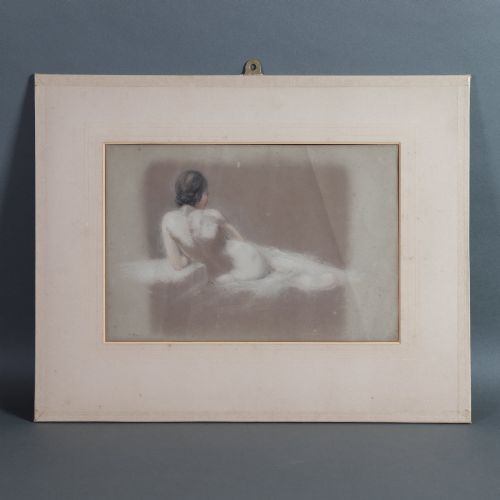
- Reclining or lying down, a common posture found in historical figure studies and life drawings.
Grey Mount Framed Art: Frequently Asked Questions
How are these framed pieces displayed?
These framed works are designed primarily for wall hanging in domestic interiors, utilising wood frames and glass to protect the underlying paper or canvas. The neutral mount surrounds the central image, creating a visual boundary that suits both period and modern settings.
When hanging these pieces, consider placing them away from direct sunlight to protect watercolours, drawings, and photographs from fading over time.
What periods do these artworks represent?
The pieces span multiple centuries, including eighteenth-century European watercolours, nineteenth-century architectural plans, and twentieth-century photographs and paintings. This chronological breadth reflects changing artistic tastes from Victorian Romanticism through to mid-century modernism.
Identifying the period relies on examining the paper stock, framing style, medium, and any accompanying artist signatures or biographical dates.
What media are used in these works?
Artists utilised a variety of media including watercolour, oil on canvas, pencil, charcoal, ink, chalk, and pastel. Additionally, some pieces incorporate lithographic printing techniques for architectural plans and book illustrations.
Each medium interacts differently with its paper or canvas support, requiring careful handling and protective glass mounting to ensure long-term preservation.
Where do these framed works originate?
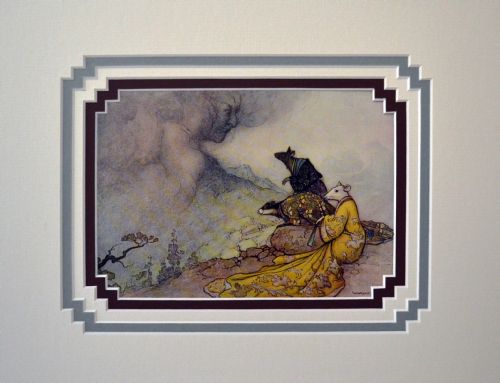
The collection includes works originating from Britain, France, Germany, Japan, and China, reflecting diverse international artistic traditions. These range from British topographical watercolours and French architectural lithographs to Japanese fairy tale prints and Chinese ink stone displays.
This geographic variety allows collectors to curate displays that combine European fine art traditions with Asian decorative and illustrative works.