
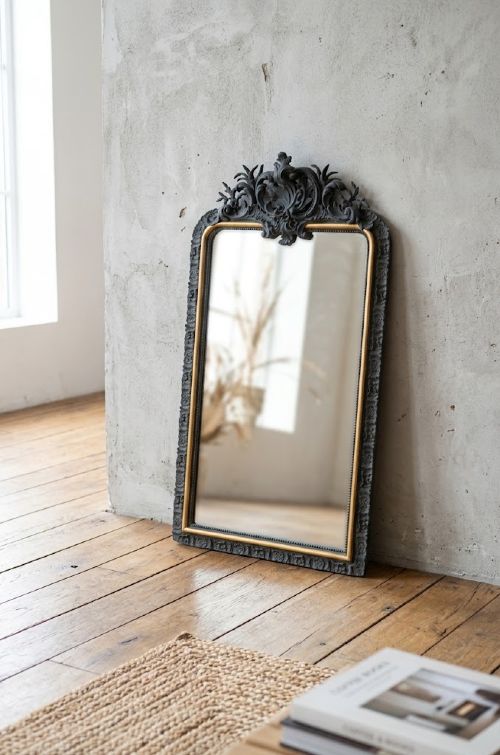

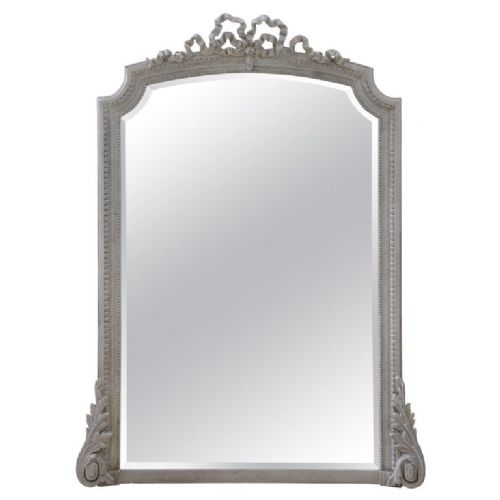


Grey French Mirror
A grey french mirror brings continental elegance to a room, combining soft neutral painted finishes with traditional decorative carving.
Grey French Mirror
When searching for a grey french mirror, collectors and decorators encounter pieces originating primarily from the nineteenth century, spanning various decades up to the early twentieth century. These items typically manifest as large overmantle mirrors, wall mirrors, trumeau panels, and occasionally dressing pieces or armoires.
The dominant aesthetic draws upon historic design idioms such as Louis Philippe, Louis XV, and French Provincial styles. Such objects serve both functional reflective purposes and architectural focal points within domestic interiors.
How they were made
Frames are constructed predominantly from carved wood, often enhanced with applied gesso to build up intricate surface details and relief ornamentation. Artisans then applied paint finishes, sometimes layering grey tones over older gilding or creating distressed surfaces.
Reflective panels rely on traditional glass techniques, with older examples incorporating authentic mercury glass or handmade sheets that exhibit subtle surface imperfections and depth.
Listings feature items dated across the nineteenth century, including specific years from 1850 to 1920 alongside broader period classifications.
What varies in quality
The sophistication of the carved wood and gesso ornamentation dictates much of the visual merit, with deeply sculpted floral, ribbon, or architectural motifs separating standard items from superior commissions. Hand-applied painted surfaces also differ significantly in texture, depth of colour, and the subtlety of natural wear.
Originality remains paramount, distinguishing mirrors retaining their initial glass and backboards from pieces subjected to modern restoration or later glass replacement.
The Grey French Mirror Glossary
- Trumeau
- A decorative wall mirror incorporating a painted panel or carved relief above the glass plate. These often integrated directly into classical interior wall panelling.
- Overmantle
- A large mirror designed specifically to hang above a fireplace mantelpiece. Their proportions are usually wider than they are tall to fit the chimney breast.
- Gesso
- A plaster-like mixture applied to wooden frames and carved to create crisp decorative mouldings. It provides a smooth base for subsequent painting and gilding.
- Louis Philippe
- A mid-nineteenth-century French style characterised by understated elegance, gentle curves, and often a rounded or arched top frame without excessive ornamentation.
- Pier mirror
- A tall, narrow mirror traditionally hung on the pier of wall space between two windows. They reflect additional light into darker historic rooms.
Grey French Mirror: Frequently Asked Questions
How do I hang a heavy overmantle mirror safely?
Large nineteenth-century mirrors carry substantial weight due to their wooden frames and thick glass plates. Secure fixings into wall studs or masonry using heavy-duty brackets are essential for safe installation.
Professional mirror hanging hardware distributes the load evenly across the frame structure. Avoid relying solely on decorative hanging loops attached to the original backboards.
What is mercury glass?
Historic mirrors frequently utilised a silvering process involving a mercury amalgam poured between double glass layers. This technique creates a distinctive dark, mottled reflection with characteristic speckling.
Such optical anomalies are valued by collectors as proof of authenticity. Modern replacements lack this specific depth and aged character.
How should I clean the antique frame and glass?
Dust wooden and gesso frames gently with a dry, soft brush to protect fragile painted surfaces. Moisture can soften aged gesso and damage delicate distressed paintwork.
Apply glass cleaner sparingly to a cloth rather than directly onto the mirror plate. This prevents liquid from seeping behind the glass and staining the silvered backing.
Are these mirrors suitable for bathrooms?
High humidity and fluctuating temperatures in bathrooms can damage historic wood, gesso, and painted finishes. Moisture penetrates aged joints and accelerates the deterioration of original mirror plates.
Dry living spaces, hallways, and bedrooms provide stable environments that preserve these antiques. Placing them away from direct steam sources ensures longevity.