


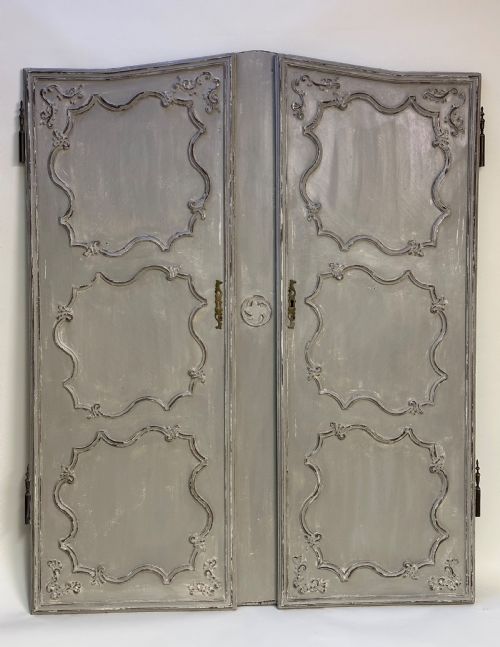


Grey French Armoire
A grey french armoire offers substantial storage wrapped in muted provincial elegance, bringing classic continental presence into modern rooms.
Grey French Armoire
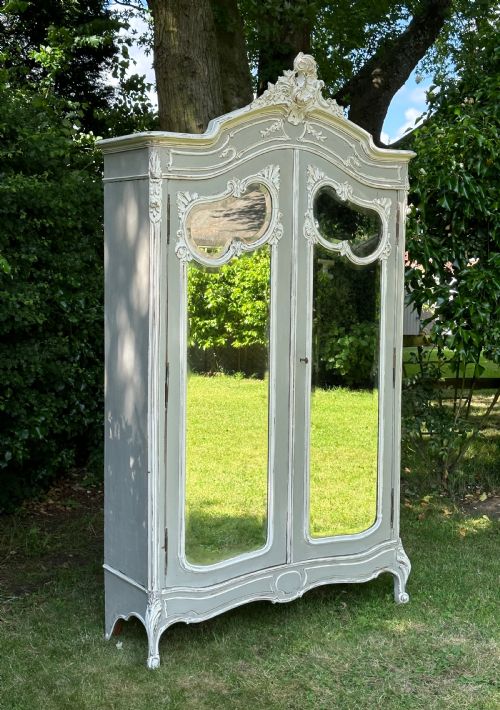
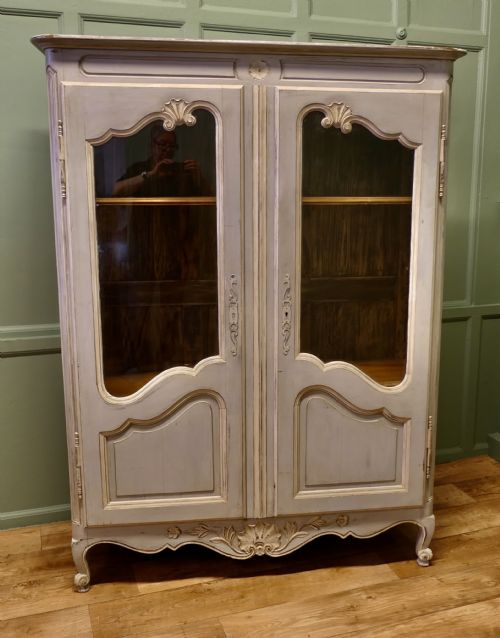
When you search for a grey french armoire, you encounter substantial storage pieces originating from continental workshops, primarily recorded across the eighteenth, nineteenth, and early twentieth centuries. These large items serve as wardrobe storage, linen cupboards, and display cabinets within domestic interiors.
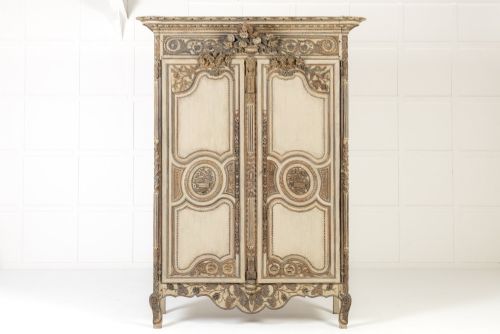
The versions most commonly met on this page span styles from rustic country and Victorian country to ornate rococo and chateau designs. Many examples feature painted wood surfaces, often finished in modern shades like downpipe grey or plummet grey alongside traditional painted finishes.
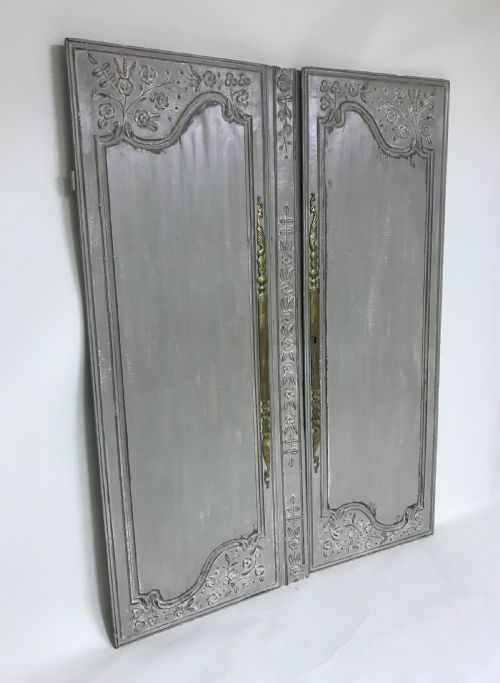
Alongside complete double and triple armoires, the category encompasses related storage furniture such as wide pine cupboards, chests of drawers, and architectural elements including carved wooden doors. Oak, cherrywood, walnut, and pine form the primary structural timbers supporting these painted and limed finishes.
How they were made
Traditional cabinetmakers constructed these large storage items using solid timbers such as oak, walnut, cherrywood, and pine, often employing hand-carved decorative details. Structural integrity relies on traditional joinery techniques suited to supporting heavy panelled doors and expansive cabinet bodies.
Surface treatments combine historic timber preparation with painted finishes, utilising brass hardware for hinges, locks, and detailed escutcheons. Glazed panels appear on vitrine and display variants, while others incorporate mirrored door plates or caned inserts.
Grey French Armoire Retail Price Guide 2026
Typical asking prices for grey french armoire among the pieces listed under this phrase on Sellingantiques today, from the lower quarter to the upper quarter. They describe what is for sale here now, not the wider market.
Some armoires hide deep secrets behind their doors, occasionally turning up with original hanging pegs that still smell faintly of old wool and floor wax.
What varies in quality
Quality in these large storage pieces rests upon the proportion and ambition of the original carpentry, distinguishing simple vernacular pine cupboards from deeply carved chateau armoires. The depth and execution of hand carving across panels and cornices define the upper tier of the range.
The integrity of the timber framing and the proportion of original hardware, such as brass detailing and operational locks, separate standard utility pieces from finer examples. Surface application also differs, ranging from naturally aged historic paint layers to contemporary decorative grey finishes.
The Grey French Armoire Glossary
- Armoire
- A large freestanding cupboard or wardrobe used primarily for hanging clothes or storing household linens. These substantial pieces typically feature one or more full-length doors.
- Vitrine
- A glass-fronted cabinet designed for displaying books, ceramics, or decorative objects. They often combine glazed upper doors with enclosed lower storage sections.
- Escutcheon
- A protective plate surrounding a keyhole, frequently cast in brass or bronze on finer continental furniture. This hardware element adds both functional reinforcement and decorative detail.
- Rococo
- An ornate design style characterised by asymmetrical scrolls, shell motifs, and flowing natural curves. Pieces from this tradition display lighter, more playful carving than earlier baroque furniture.
- Limed oak
- Timber treated with a specialised finish that highlights the open grain by depositing a lighter pigment within the pores. This technique creates a softened, weathered appearance on hardwood surfaces.
Grey French Armoire: Frequently Asked Questions
How do I fit a large armoire into a modern room?
These large storage units require careful measurement of ceiling height and doorway clearance before placement in a bedroom or hallway. Their neutral grey painted finishes allow them to sit comfortably against plain walls without dominating smaller spaces.
Positioning them away from direct heat sources protects the historic timber and painted surfaces from drying out. Interior configurations can often be adapted with shelving to suit modern folding storage needs.
What is the difference between an armoire and a linen cupboard?
Armoires are traditionally built with deep interior spaces designed primarily for hanging garments on rails. Linen cupboards focus instead on horizontal shelving configured specifically for stacking folded textiles and bedding.
Both forms utilise large panelled doors, but armoires frequently display more decorative exterior carving or mirrored glass plates. The internal layout remains the most reliable indicator of their original domestic purpose.
How do I care for painted wooden furniture?
Maintenance requires regular dusting with a soft, dry cloth to prevent particulate buildup on delicate painted surfaces. Avoid harsh chemical cleaners that can degrade historic paint layers or modern decorative finishes.
Maintaining stable room humidity prevents the solid timbers beneath the paint from expanding or contracting excessively. This protects both the joinery and the exterior coating from stress fractures.
How can I tell the period of a French armoire?
Dating relies on examining construction methods, timber selection, and stylistic details such as hardware and carving motifs. Eighteenth-century examples often display heavier structural oak and hand-wrought iron hinges, while Victorian and later pieces introduce pine carcasses and machine-cut elements.
Painted surfaces may combine original historic layers with later decorative updates applied in modern shades of grey. Comparing the internal woodwork to exterior decorative styles clarifies the evolution of the piece over time.