

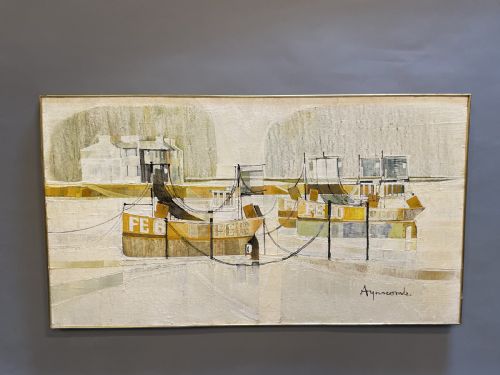


Grey Coastal Marine Art
Grey coastal marine art captures the rugged temper of shorelines and harbours through traditional maritime painting.
Grey Coastal Marine Art
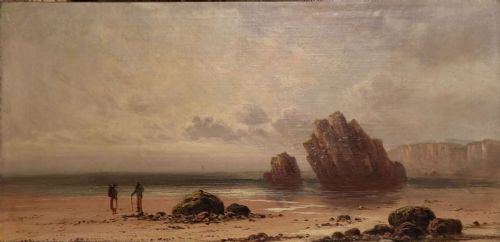
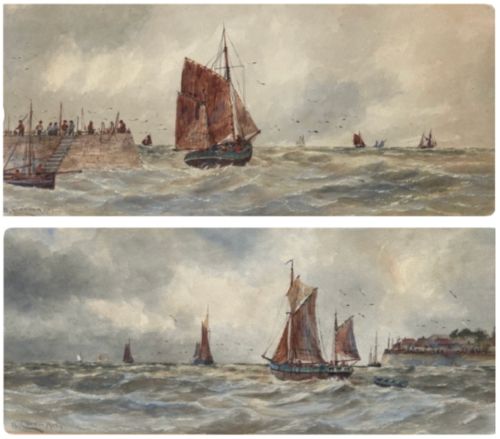
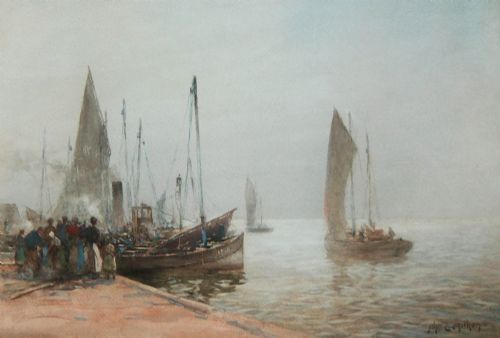
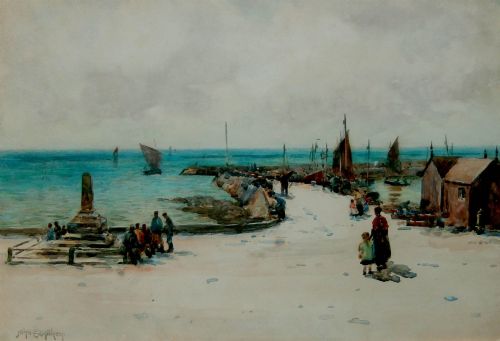
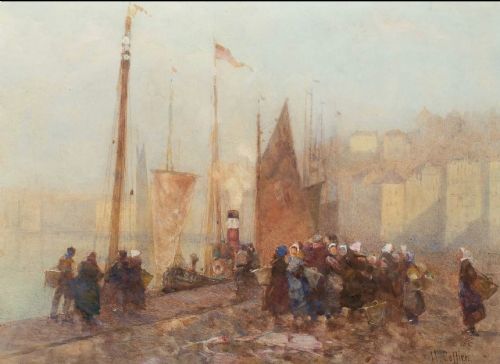
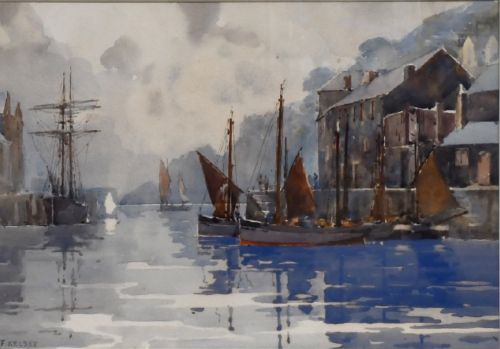
Grey coastal marine art encompasses paintings depicting the sea, shipping, and shorelines under muted atmospheric conditions. The selection ranges from Victorian watercolours of bustling harbours to mid-century British seascapes and continental oil paintings.
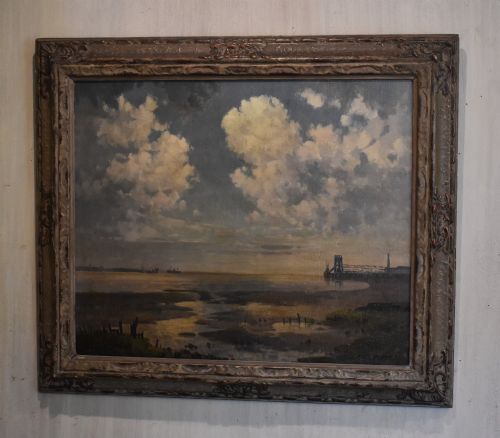
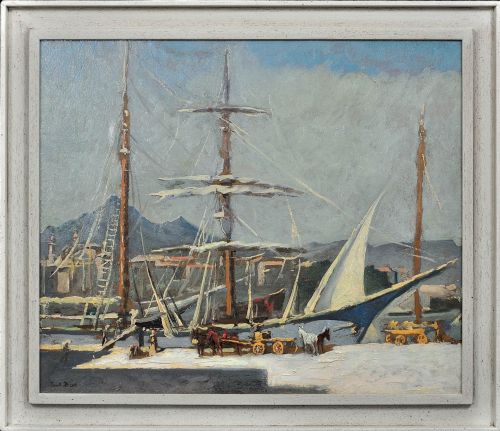
Most pieces date from the nineteenth and twentieth centuries, capturing maritime activity from fishing boats to large barques. Buyers will find works executed on paper, canvas, and board, reflecting changing stylistic approaches from traditional marine art to impressionism.
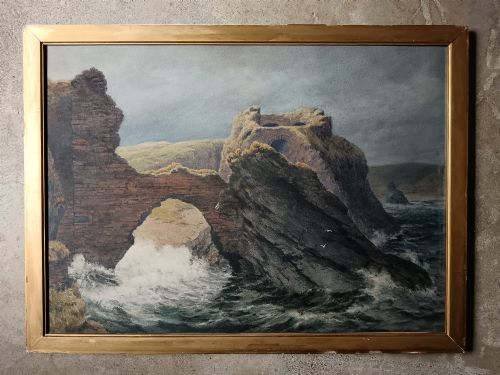
Subjects frequently centre on British and European coastal locations, including Yorkshire fishing ports, Scottish castles, and southern harbours. These works present maritime life and rocky shorelines through subdued tones and painterly brushwork.
How they were made
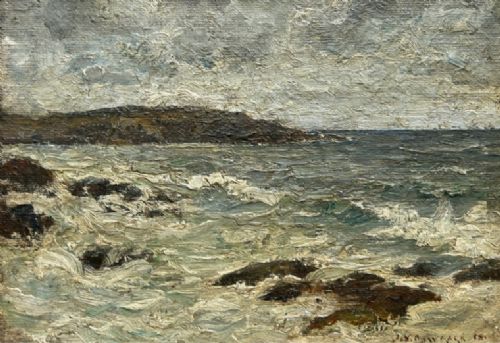
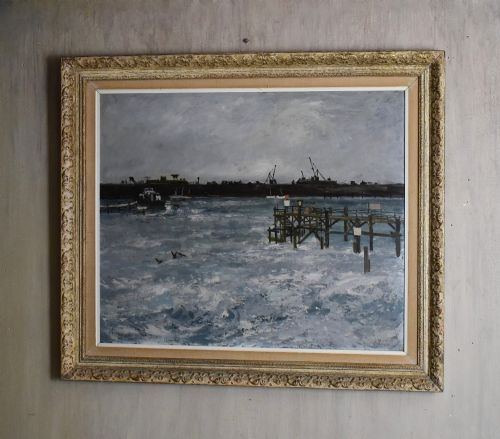
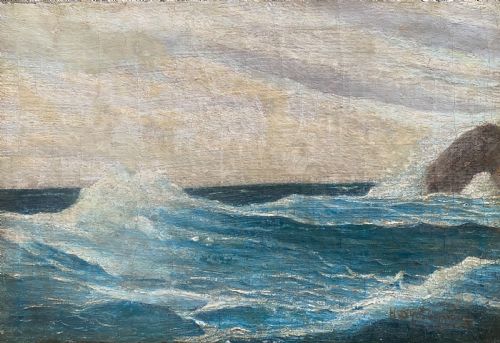
Watercolour pigment on paper was widely employed for coastal views, allowing artists to capture the translucent quality of sea spray and overcast skies. Painters also utilised oil paint on canvas or board to build up heavier textures, such as impasto waves and rocky cliffs.
Framed watercolours and oils often retain their period character through traditional wood and glass mountings. Artists applied their pigments with varying brush techniques, from fine washes in early works to broader, impressionistic strokes in later examples.
The selection includes British impressionism, Victorian maritime art, and mid-century modern interpretations of coastal landscapes.
What varies in quality
Quality rests upon the artist's handling of light and atmosphere, particularly in rendering the difficult tones of grey seas and overcast skies. Stronger compositions capture movement in the water and structural accuracy in the depiction of shipping vessels.
The degree of finish and the immediacy of the brushwork distinguish proficient regional works from more accomplished salon pieces. Provenance and clear attribution to documented marine painters also influence the standing of an individual artwork.
Kenneth Cozens·William Cannon·James E Aitken·John E Aitken·Clive Browne·Peter Brannan·Paul Bret·Hector Caffieri·Dubovsky·Frank Kelsey·John Moxon·Charles William Adderton·Raymond Picque·Thomas Bush Hardy·Ernest Dade·Edward Seago·Robert Leslie Howey·Tom Clough·George Hamilton Constantine·William Greaves·Charles Sim Mottram·Owen Bowen·John Mitchell·Samuel Owen·Ernest F Hill
The Grey Coastal Marine Art Glossary
- Impasto
- Paint applied thickly to a canvas or board so that it stands out from the surface. This technique gives physical texture to crashing waves or rugged cliffs.
- Seascape
- A work of art depicting the sea, ocean, or coastal views. These subjects formed a major focus for marine artists throughout the nineteenth and twentieth centuries.
- Watercolour
- A painting method in which the paints are made of pigments suspended in a water-based solution. It was a favoured medium for capturing transient atmospheric conditions on the coast.
- Barque
- A sailing vessel with three or more masts. Such ships frequently appear in maritime art documenting nineteenth-century commercial trade and port traffic.
- Provenance
- The chronology of the ownership and history of an item. A documented background helps confirm the authenticity and period of a painting.
Grey Coastal Marine Art: Frequently Asked Questions
What subjects appear in marine art?
These paintings depict fishing boats, merchant shipping, harbours, and rugged shorelines under various weather conditions. Artists focused on the daily life of ports as well as dramatic seas.
Subjects often record specific regional locations across Britain and Europe, reflecting local maritime industries and coastal geography.
How do I care for antique watercolours?
Watercolour paintings on paper require protection from direct sunlight to prevent fading of the pigments. Framing with acid-free materials helps preserve the paper over time.
Keeping works away from excessive moisture ensures the paper and any original framing remain stable.
How do I distinguish nineteenth-century styles?
Nineteenth-century works tend to feature meticulous detail in rigging and architecture, adhering to academic standards. Later pieces from the twentieth century often adopt freer brushwork and impressionistic interpretations of light.
Examining the handling of the medium and the treatment of the sky helps indicate the period of execution.
Where were these coastal scenes painted?
Artists worked at notable fishing ports and trading harbours, particularly along the British coast in places such as Yorkshire, Cornwall, and Scotland. Continental locations in France, Italy, and Norway also feature prominently in the selection.
Many painters lived near the coast or travelled specifically to record maritime commerce and coastal topography.