






Green Wool Wall Tapestry
These green wool wall tapestry pieces bring centuries of woven artistry indoors, offering texture and historic depth to your rooms.
Green Wool Wall Tapestry
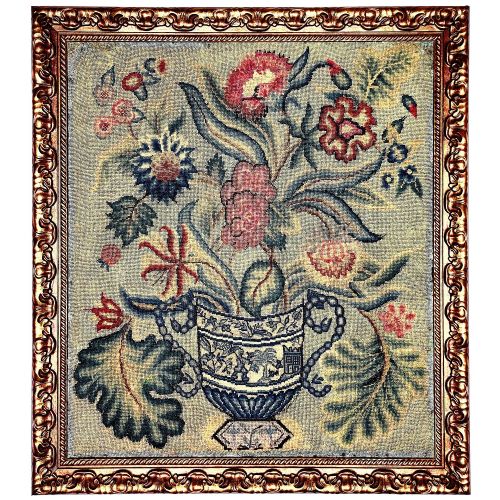
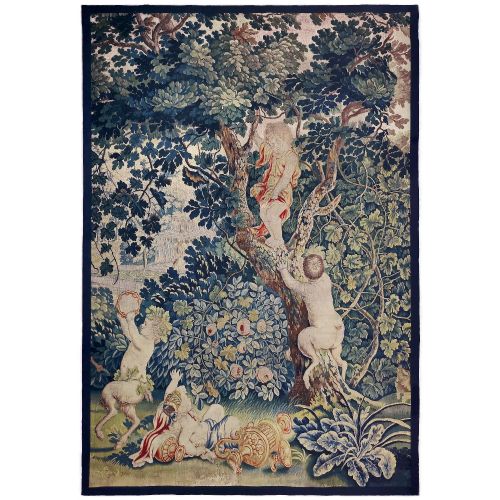
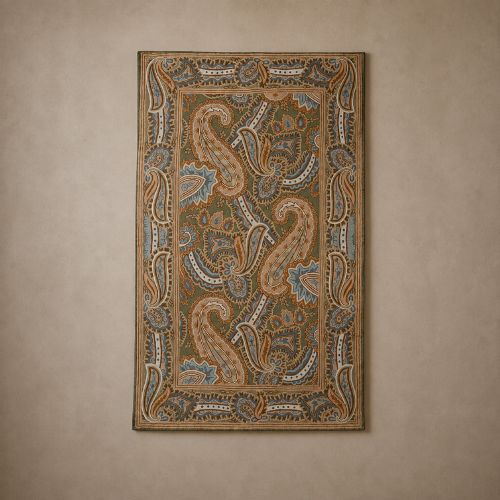
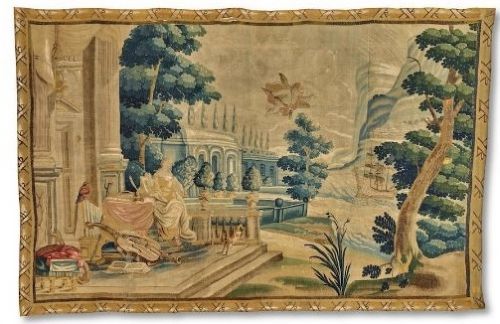
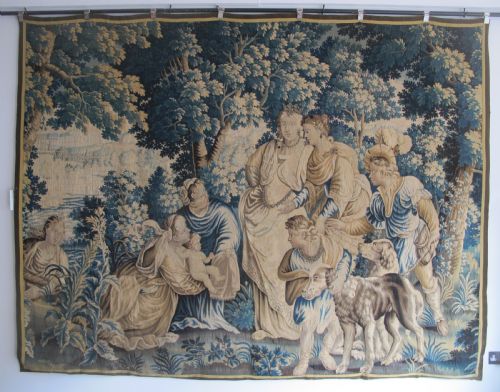
A green wool wall tapestry comprises woven textile panels and wall hangings produced across several centuries, frequently featuring verdure landscapes, mythological scenes, and pastoral motifs. Buyers searching this phrase most commonly encounter large Flemish and French Aubusson examples alongside later nineteenth and twentieth century interpretations.
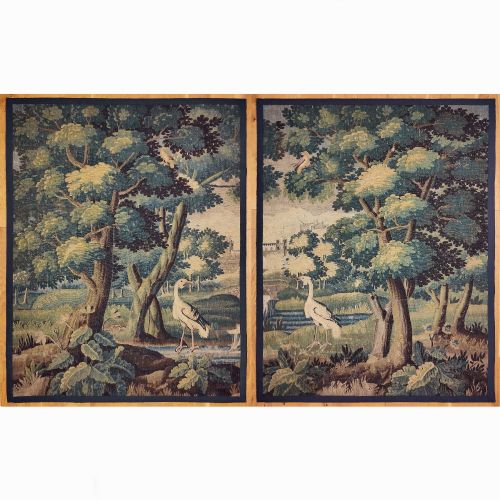
The surviving pieces span the sixteenth century through to the twentieth century, appearing as grand scale panels, framed woven artworks, and fragment pairs. Flemish verdure works and French pastoral designs dominate the available forms on this page.
Many items incorporate foliage, game parks, and biblical narratives woven into substantial wall hangings. These textiles served historically to insulate stone walls while displaying wealth and narrative themes.
What varies in quality
The density of the weave and the complexity of the pictorial design distinguish superior examples from simpler panels. Finer works employ intricate colour blending in the wool and silk threads to create depth within foliage and figures.
Condition and completeness influence the character of each textile panel, as surviving fragments differ from grand scale intact works. The precision of the original loom technique and the preservation of the natural dyes determine the visual impact of the hanging.
Green Wool Wall Tapestry Retail Price Guide 2026
Typical asking prices for green wool wall tapestry among the pieces listed under this phrase on Sellingantiques today, from the lower quarter to the upper quarter. They describe what is for sale here now, not the wider market.
The selection includes Flemish verdure panels, French Aubusson landscapes, and Scandinavian folk art pieces.
The Green Wool Wall Tapestry Glossary
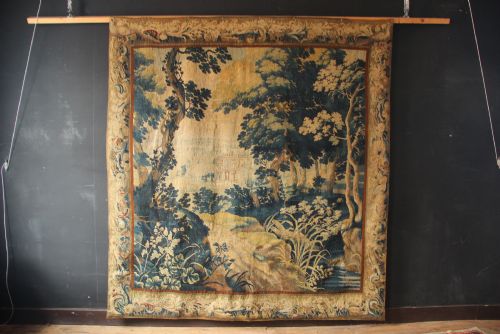
- Verdure
- A tapestry type dominated by plant and foliage motifs, often depicting trees, leaves, and woodland scenes. These landscapes frequently include small animals or distant architectural elements.
- Aubusson
- Woven textiles originating from the town of Aubusson in France, known for pastoral and floral designs. These pieces date from the seventeenth century onwards.
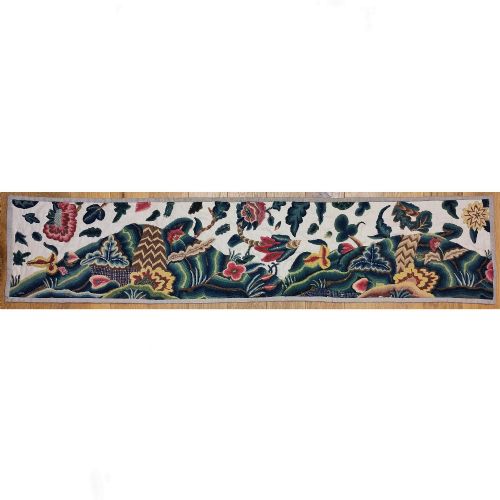
- Crewelwork
- Embroidery executed in wool yarn on a plain weave fabric foundation, typically linen or cotton. This technique appears on historic English panels and wall hangings.
- Rya
- A traditional Scandinavian piled rug or wall hanging constructed with knotted wool fibres. These textiles display distinct folk art patterns from the early twentieth century.
- Fragment
- A surviving portion of a larger historic textile or wall hanging. Pairs and individual sections often retain the original seventeenth or eighteenth century woven details.
Green Wool Wall Tapestry: Frequently Asked Questions
How do I hang a heavy tapestry?
Large woven panels require a weight-distributing support system such as a wooden batten or a concealed metal rod. Sewing a supportive linen sleeve along the top reverse edge helps distribute the vertical tension evenly across the textile.
Avoid hanging heavy wool textiles by direct nailing or pinning, as this stresses the individual fibres. Ensure the wall fixing secures firmly into solid masonry or studwork to support the scale of the piece.
Where were these tapestries made?
The pieces originate from major European weaving centres including Flanders, France, and England, alongside Scandinavian and German workshops. Historic production centres such as Aubusson and Audenarde specialised in large-scale verdure and pastoral designs.
Regional variations appear in both the materials and the specific weaving techniques employed. Later twentieth century interpretations reflect traditional European styles adapted for domestic interiors.
How do I clean old wool wall hangings?
Regular maintenance involves gentle surface dusting using a soft brush or low-suction vacuum applied through a protective mesh screen. Professional textile conservators should handle deep cleaning or structural repairs to prevent fibre damage.
Water and standard detergents cause shrinkage and dye bleeding in antique wool and silk yarns. Keep textiles away from direct sunlight to preserve the original green and natural pigment tones.
How can I tell the period of a tapestry?
Dating relies on stylistic clues within the woven design, including border motifs, costume details, and landscape perspective. Seventeenth century Flemish works often feature dense foliage and heavy verdure borders, while eighteenth century French pieces display lighter rococo curves.
Material analysis and structural examination of the backing linen or wool threads provide further verification. Comparing the weave density with documented examples helps narrow down the century of production.