






Green Woodland Painting
A green woodland painting captures the quiet depth of trees and shaded paths through oil or watercolour on canvas, paper and wood.
Green Woodland Painting
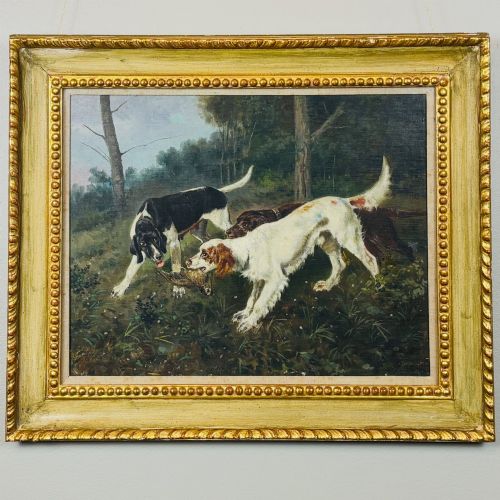
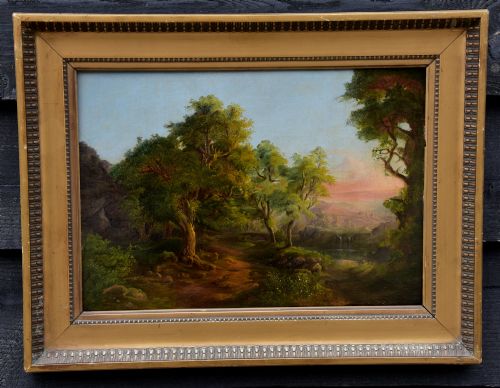
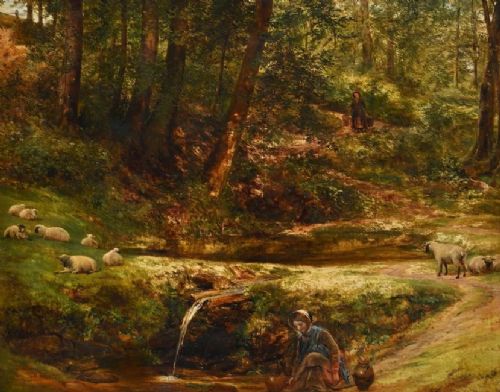
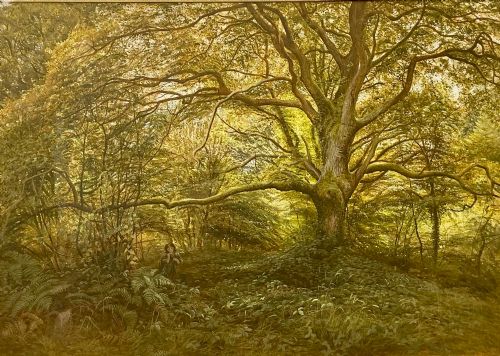
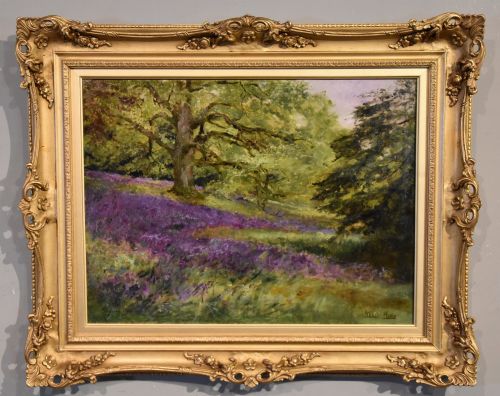
When buyers search for a green woodland painting, they encounter landscape works spanning the nineteenth and twentieth centuries, produced by British, Irish and continental artists. These pieces range from intimate watercolours of bluebell woods to large oil paintings depicting pastoral scenes and cattle watering beneath a canopy.
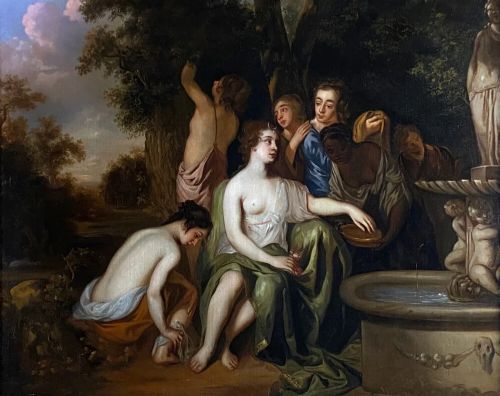
The selection on this page leans heavily towards Victorian and Edwardian interpretations, alongside examples from the Barbizon School and mid-twentieth-century impressionism. Forms include framed watercolours on paper and substantial oils on canvas and board, reflecting diverse regional landscapes across Britain and Europe.
Materials and Methods
Artists relied primarily on oil paint applied to canvas, board or wood panels, as well as watercolour pigments worked onto paper. Gold leaf occasionally appears on frames or highlights, complementing the natural pigments used to render foliage and earth.
Techniques vary from the tight realism of Victorian academic painters to the looser brushwork associated with the Barbizon School and British impressionism. Pigments were layered to build the dense shadows and dappled light characteristic of forest floors and tree-lined paths.
Green Woodland Painting Retail Price Guide 2026
Typical asking prices for green woodland painting among the pieces listed under this phrase on Sellingantiques today, from the lower quarter to the upper quarter. They describe what is for sale here now, not the wider market.
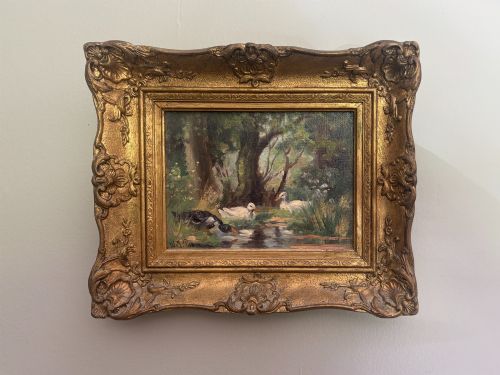
A duck swimming on a woodland pool watches quietly as artists through the centuries try to capture the exact shade of green.
Judging the Work
Quality rests upon the artist's ability to handle light and atmosphere, particularly in the rendering of complex foliage, dappled shade and spatial depth. Stronger pieces demonstrate confident brushwork or precise watercolour control that brings vitality to the natural setting.
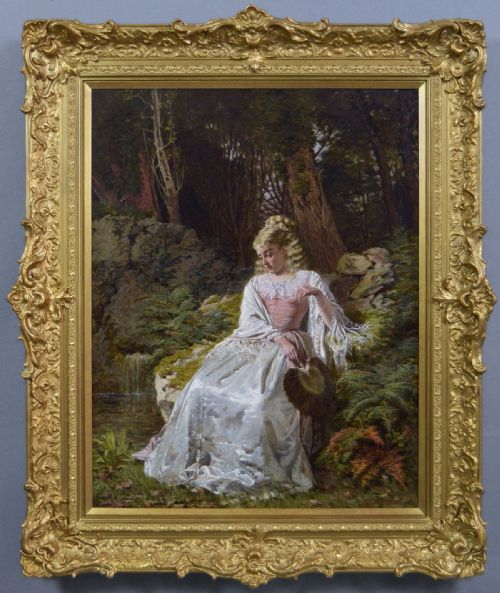
The integration of figures or animals, such as cattle, children gathering firewood or figures walking along a woodland way, often determines the sophistication of the composition. Weaker examples rely on formulaic repetition of tree forms without a convincing sense of light or atmosphere.
Willem J Palman·William H Myers·Paul Desire Trouillebert·Henry Yeen King·Thomas Bromley Blacklock·William Hoggatt·Thomas Edward Roberts·James Mallard Bromley·Alfred Grey RHA·Henri Joseph Harpignies·John Wright Oakes·James Proudfoot·Rowland Henry Hill·Abraham Hulk Jnr·Alfred W Parsons·Harold Swanwick·Thomas Hollingsworth·Ernest Higgins Rigg·Edward H Holder·George F Wetherbee·Beatrice Parsons
The Green Woodland Painting Glossary
- Canvas
- A heavy woven fabric stretched across a wooden frame to serve as a support for oil paint. It provides a flexible yet durable surface that holds thick impasto and delicate glazes alike.
- Watercolour
- A painting method where water-soluble pigments are suspended in a water-based solution, typically applied to paper. It allows for translucent washes that capture soft daylight.
- Barbizon School
- A mid-nineteenth-century French art movement dedicated to naturalistic landscape painting. Artists painted directly from nature, focusing on the rustic textures of forests and fields.
- Board
- A rigid flat panel, often made of wood or wood pulp, used as an alternative to canvas. It offers a firm, unyielding surface for oil or mixed media works.
Green Woodland Painting: Frequently Asked Questions
What periods do these paintings cover?
The works span from the seventeenth century through the Victorian and Edwardian eras into the mid-twentieth century.
Most pieces originate from the nineteenth and early twentieth centuries, reflecting the height of landscape painting in Britain and Europe.
How were these woodland scenes painted?
Artists used oil paint on canvas, board or wood panels, alongside watercolours on paper.
Techniques range from detailed realism to impressionistic brushwork designed to capture changing light beneath a forest canopy.
Where do the subjects originate?
The listings feature British, Irish and continental European landscapes, including specific locations in England, Scotland and France.
Artists often painted local woods, country lanes, riversides and estates such as Stourhead.
How should I care for these works?
Keep oil paintings and watercolours away from direct sunlight and high humidity to protect the canvas, paper and pigments.
Frame works securely and avoid damp environments that can warp wooden panels or damage paper supports.