



Green Wood Dresser
A green wood dresser brings rustic utility and character into a room, combining solid timber storage with deep heritage.
Green Wood Dresser
A green wood dresser or related sideboard combines practical storage with period craftsmanship, originating primarily from the Georgian, Victorian, and nineteenth-century eras. These pieces frequently appear in regional styles such as English Country, Rustic Farmhouse, and Jacobean Revival.
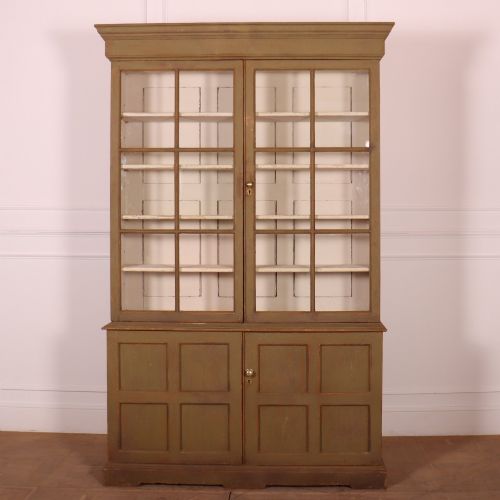
Forms span from dresser bases and potboard dressers to sideboards, chests of drawers, and serving tables. Oak and pine dominate the material list, often finished with painted timber or original paint.
Buyers encountering these pieces will find substantial construction intended for utilitarian domestic use, whether executed in heavy carved oak or softer painted pine.
Materials and construction methods
Construction relies heavily on sturdy timbers like oak and pine, frequently shaped into heavy sideboards, potboard dressers, and chests of drawers. Cabinetmakers utilised traditional joinery alongside hand-carved decorative elements.
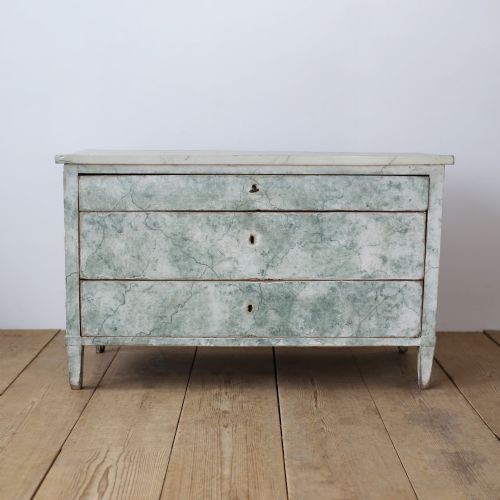
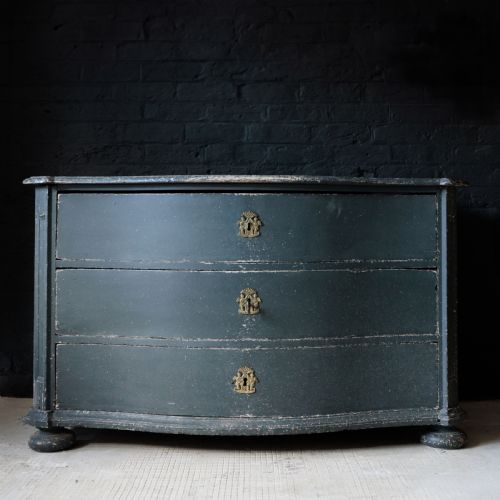
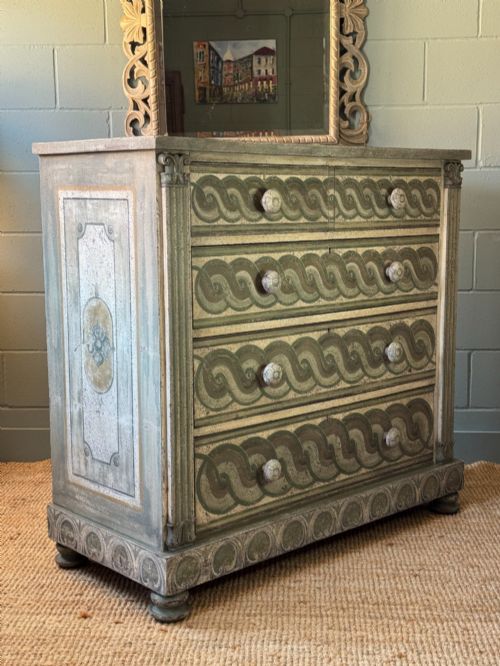
Surface finishes include natural wax over grain and applied paint, particularly seen on painted commodes and regional dressers. Brass hardware often secures drawers and doors on pieces ranging from the Regency period to the late nineteenth century.
Green Wood Dresser Retail Price Guide 2026
Typical asking prices for green wood dresser among the pieces listed under this phrase on Sellingantiques today, from the lower quarter to the upper quarter. They describe what is for sale here now, not the wider market.
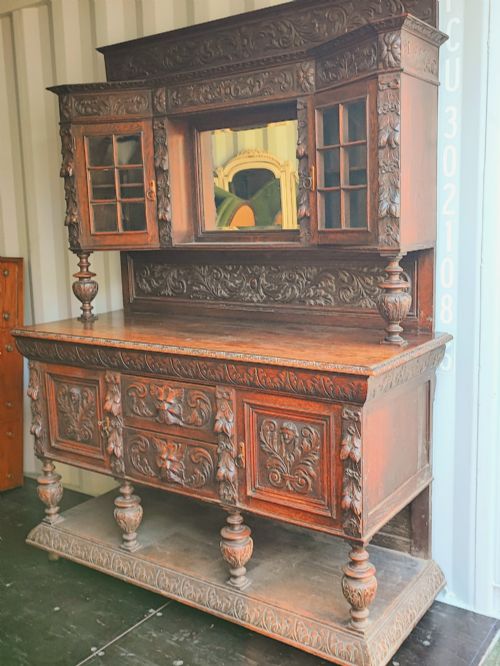
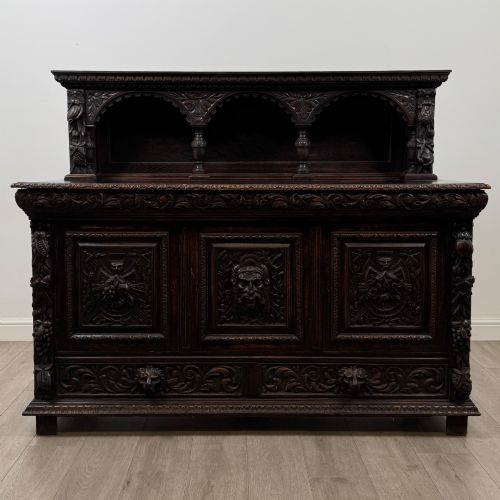
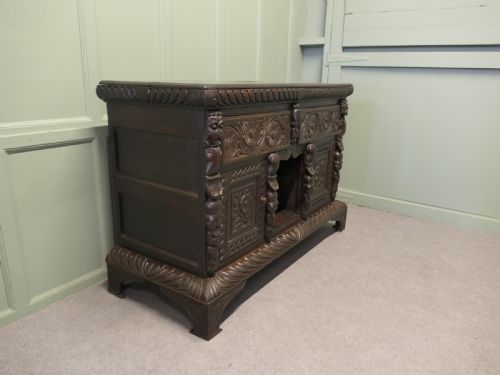
Several heavy oak sideboards feature carved Green Man masks, peering out from the foliage with surprisingly cheerful expressions.
Distinctions in quality
The standard of a piece rests upon the depth and crispness of its timber carving, particularly on items featuring Green Man motifs or Jacobean Revival detailing. Timber selection and grain figure also dictate the visual weight of an oak sideboard or potboard dresser.
Originality of surface finish remains paramount, distinguishing untouched painted timber or period paint applications from later alterations. Structural integrity in load-bearing components like potboards and drawer runners separates utilitarian workshop output from finer cabinet work.
The Green Wood Dresser Glossary
- Potboard dresser
- A traditional dining room storage unit featuring an open lower shelf, known as a potboard, positioned beneath the main counter or drawers.
- Green Man
- A sculptural architectural ornament depicting a human face disgorging foliage, frequently found carved into nineteenth-century oak furniture.
- Bow front
- A convex curved cabinet front that swells outward in the centre, popular during the Georgian and Regency periods.
- Serpentine commode
- A chest of drawers or commode featuring a front with a concave central section flanked by two convex sweeps, or vice versa.
- Commode
- A low cabinet or chest of drawers, often of French or Italian origin, standing on relatively short legs.
Green Wood Dresser: Frequently Asked Questions
What is a potboard dresser?
A potboard dresser is a traditional storage form featuring an open lower shelf beneath the main surface. This shelf was historically utilised for storing heavy pots and culinary vessels.
Today, these pieces serve well in kitchens and dining rooms to display ceramics or store everyday tableware.
How do I date an oak sideboard?
Dating relies upon examining the timber preparation, tool marks, and stylistic indicators such as Jacobean Revival carving or Victorian proportions. Hardware and secondary woods inside drawers also offer clues to the manufacturing decade.
Comparing construction methods against known regional cabinet-making traditions helps narrow down the period.
Where should I place a painted chest of drawers?
A painted chest of drawers or commode works effectively in bedrooms, hallways, or living spaces as a focal storage piece. The painted surface adds colour and texture to a room while providing practical drawer capacity.
Keep such timber pieces away from direct heat sources and strong sunlight to protect the finish.
What distinguishes a sideboard from a serving table?
A sideboard typically incorporates enclosed cupboards and drawers designed for storing dining room accessories. A serving table generally offers a more open framework, such as a potboard base, intended for presenting food or displaying objects.
Both forms belong to the broader family of dining furniture developed across the eighteenth and nineteenth centuries.