
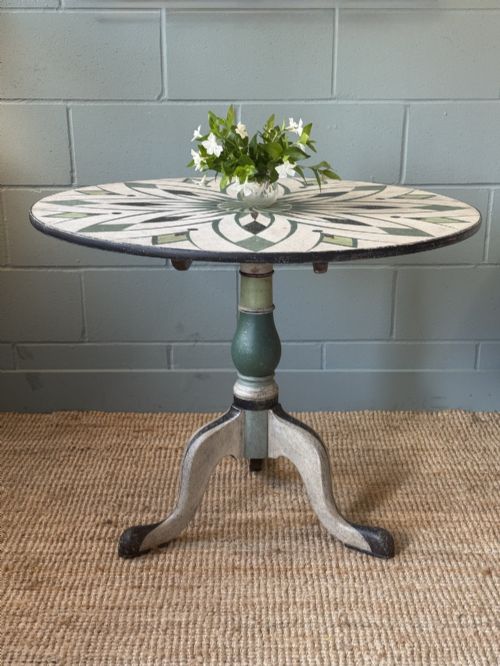


Green Wood Accent Table
These green wood accent table examples bring characterful timber, paint, and marble into a room as practical surfaces with distinct period presence.
Green Wood Accent Table
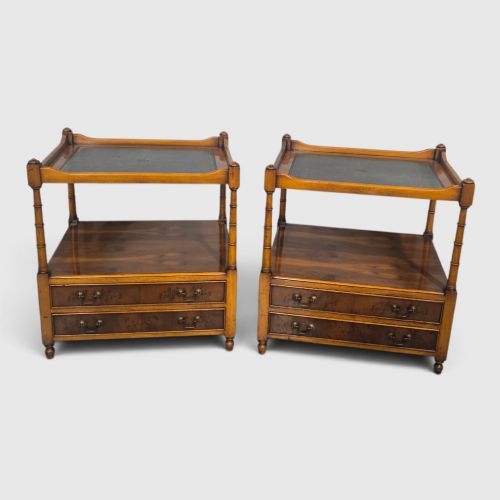
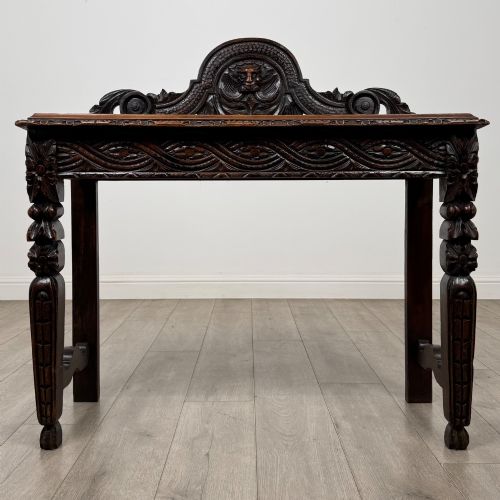
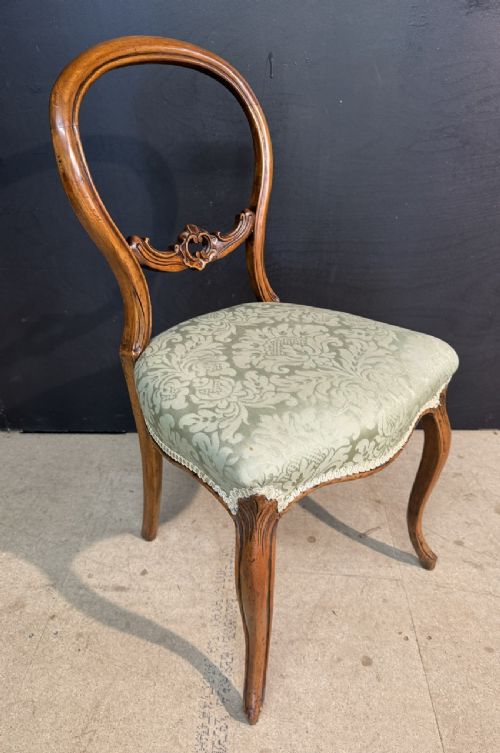
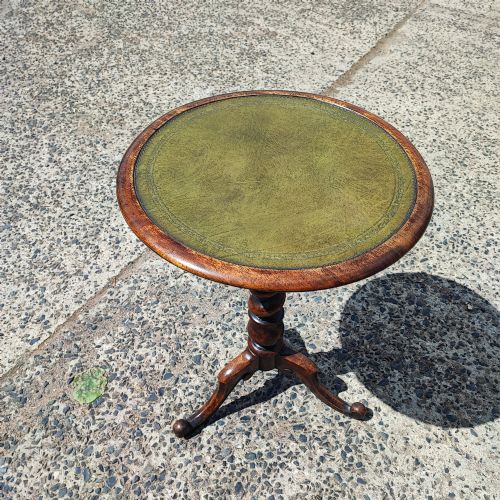
A green wood accent table fulfills the need for a compact surface beside seating or in a corner, often taking the form of lamp tables, occasional tables, and side tables. Buyers seeking a green wood accent table will encounter pieces spanning from the eighteenth century through to the twentieth century, with nineteenth-century examples appearing frequently.
The assortment on this page draws on diverse stylistic traditions, including Victorian, English Country, and French Neoclassical aesthetics. Forms range from tilt-top designs to pedestal stands and tray top tables, offering varied silhouettes for domestic interiors.
Materials and Construction Methods
Construction relies primarily on traditional timber varieties such as oak, mahogany, yew, and general wood or timber. Artisans shaped these materials into sturdy frames, legs, and surfaces suited to daily use.
Surface decoration frequently incorporates paint, parcel-gilt, and giltwood embellishments alongside carved details. Certain pieces also feature inset marble tops or brass accents, combining structural timber with contrasting decorative elements.
Carved wooden dolphins occasionally support the tabletop, bringing a touch of playful marine sculpture directly into the parlour.
Distinguishing Quality Across the Range
Quality reveals itself in the crispness of carved elements, such as dolphins or foliate motifs, and the cohesion of painted or gilt finishes. Superior examples display harmonious proportions and careful integration of decorative additions like floral designs or marble inserts.
The selection of timber and the execution of structural joints further separate standard production from finer craftsmanship. Age-related patination on wood and paint surfaces contributes to the overall character of each piece.
The Green Wood Accent Table Glossary
- Tilt-top table
- A small table with a hinged top that can be tilted vertically when not in use. This mechanism saved space in historic domestic interiors.
- Giltwood
- Wood that has been coated with gold leaf or a gold-coloured finish. It provides a reflective, ornate surface typical of formal European styles.
- Gueridon
- A small French table supported by one or more columns or figures. The form originated in the seventeenth century and remained popular for occasional use.
- Tray top table
- A table featuring a raised rim around the edge of the surface, resembling a serving tray. This design prevented items from sliding off the table.
Green Wood Accent Table: Frequently Asked Questions
Where should I place a lamp table?
These compact tables fit naturally beside armchairs, sofas, or in neglected corners where a small surface is useful.
Their proportions allow them to hold lighting, books, or decorative objects without dominating the room.
How do I care for marble top tables?
Marble surfaces require gentle cleaning with mild soap and water, avoiding acidic substances that can etch the stone.
Using coasters and mats helps protect both the marble and any polished timber elements from moisture.
What is the difference between an occasional table and a side table?
Both terms describe movable, small-scale tables used for general convenience around a living space.
Occasional tables often imply lighter, more decorative forms that can be moved easily as needed.
How do I identify a Victorian piece?
Victorian items often display heavier carving, darker woods, or eclectic revivals of earlier historical styles.
Examining the construction methods and material patination helps confirm the nineteenth-century origins of the piece.