
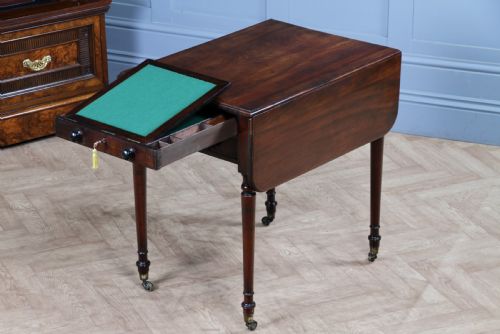
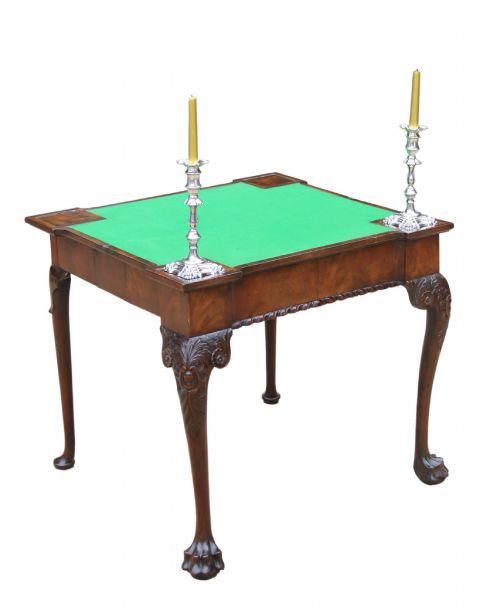


18th Century Green Table
An 18th century green table brings authentic Georgian and continental colour and surface age directly into a room.
18th Century Green Table
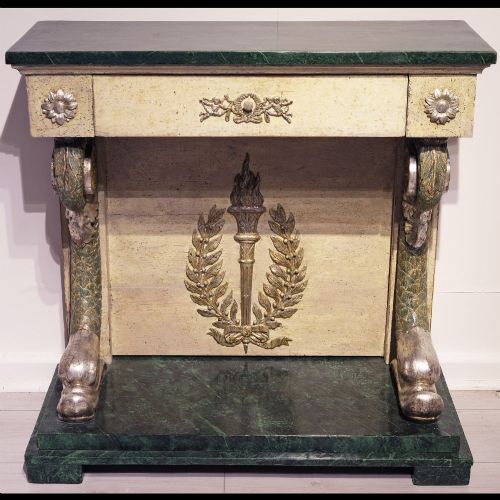
When searching for an 18th century green table, you encounter console tables, lamp tables, and painted surfaces originating from Georgian England, Gustavian Sweden, and Italy. These forms serve functional roles as side pieces, display surfaces, and writing furniture while carrying aged polychrome or lacquered finishes.
The selection includes pieces finished in painted wood, giltwood, and lacquer alongside unpainted mahogany, walnut, and oak furniture bearing green elements or patination. Console tables and lamp tables dominate the forms, reflecting the period preference for decorative perimeter furniture.
Origins stretch across English workshops, Venetian palazzos, and Scandinavian neoclassical interiors. Each piece displays the construction methods of its region, from carved giltwood frames to simple painted softwood lamp tables.
How they were made
Makers utilised timber substrates such as oak, mahogany, and pine, applying layered paint, lacquer, or gilding to create green surfaces. Pigments were bound to the wood and sealed, developing craquelure and softening over centuries of exposure.
Carved wooden details and applied mouldings define the structural enrichment on console and lamp tables. Joinery relied on traditional pegged and tenoned joints, while decorative surfaces received hand-applied pigments and metallic leaf.
What varies in quality
Quality rests in the integrity of the original surface and the crispness of the timber carving or painted detail. Tables retaining their unblemished polychrome or genuine giltwood enrichment command greater attention than later repainted surfaces.
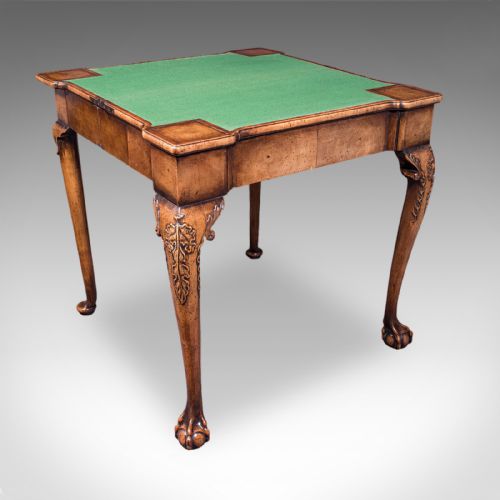
Proportion and structural balance distinguish provincial utility items from high-style metropolitan commissions. The refinement of the cabriole leg, console apron, or turned support dictates the visual success of the piece.
Chater And Son
The 18th Century Green Table Glossary
- Console table
- A wall-mounted or freestanding table designed to stand against a vertical surface, frequently featuring decorative legs and an ornamented apron.
- Giltwood
- Timber that has been coated with a thin layer of gold leaf or metallic powder, commonly seen on ornate 18th century frames and console tables.
- Gustavian
- The Swedish neoclassical style characterised by lighter colour palettes, restrained carving, and painted finishes popular in the late 18th century.
- Polychrome
- Decoration employing several colours on a single piece of wooden furniture or ceramic object, typical of painted 18th century tables.
- Serpentine
- A furniture front or table edge curved in a wave-like shape with a convex centre flanked by concave sides.
18th Century Green Table: Frequently Asked Questions
Where should I place an 18th century green table?
These tables suit hallways, living rooms, and reception spaces where their surface colour and historical form can act as a focal point. They function effectively against neutral walls that highlight aged painted or lacquered finishes.
Avoid positioning antique wood and painted surfaces in direct sunlight or beside intense heat sources to protect the historic finish from drying and cracking.
How do I care for a painted antique table?
Dust the surface regularly with a soft, dry cloth and avoid commercial polishes that can damage fragile historical pigments or wax layers.
Keep humidity levels stable in the room to prevent the underlying timber from expanding or contracting, which directly threatens the stability of painted finishes.
What is a Gustavian green table?
A Gustavian green table originates from late 18th century Sweden, drawing inspiration from French neoclassical design but rendered with a cooler, lighter aesthetic. These pieces often feature muted painted finishes and restrained classical carving.
They offer a distinct alternative to darker English mahogany furniture, bringing brighter painted surfaces to interior schemes.
Are these tables suitable for daily use?
Most 18th century tables function well for general display and light surface tasks, provided they are treated with appropriate care.
Heavier duties should be avoided on delicate lamp tables or antique console surfaces to preserve their structural joints and historic patination.