



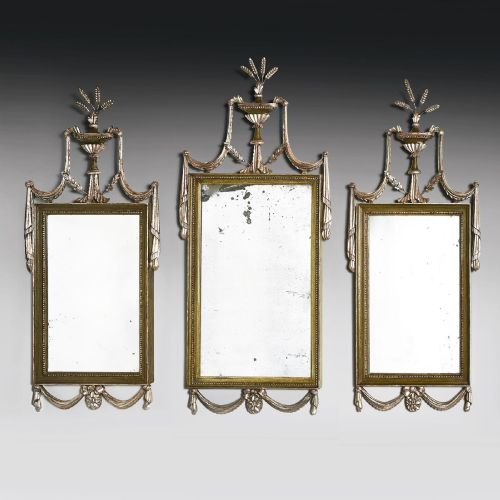
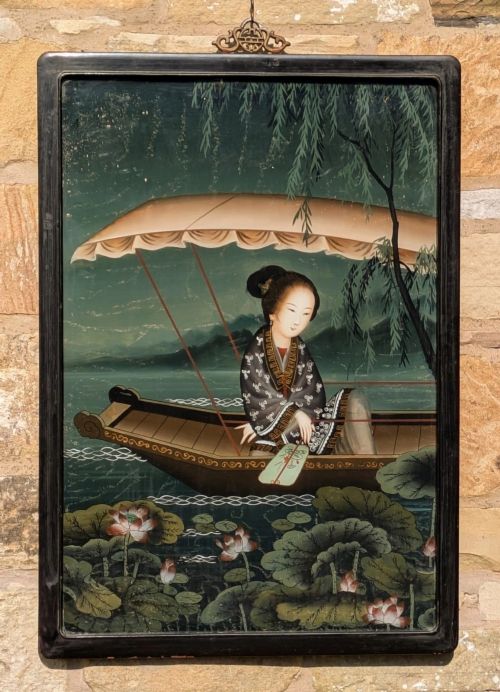
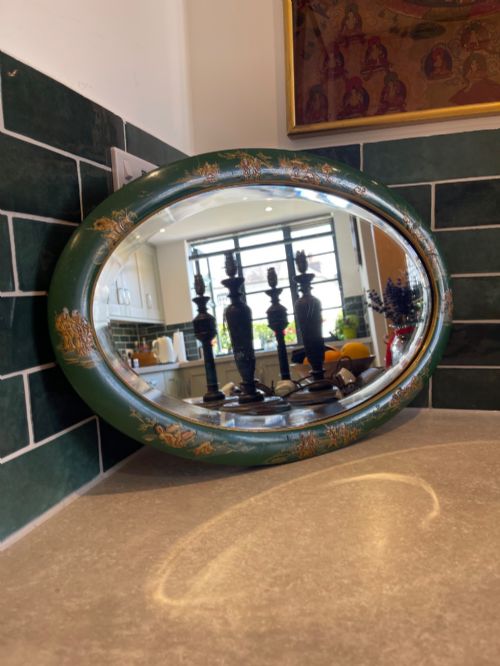
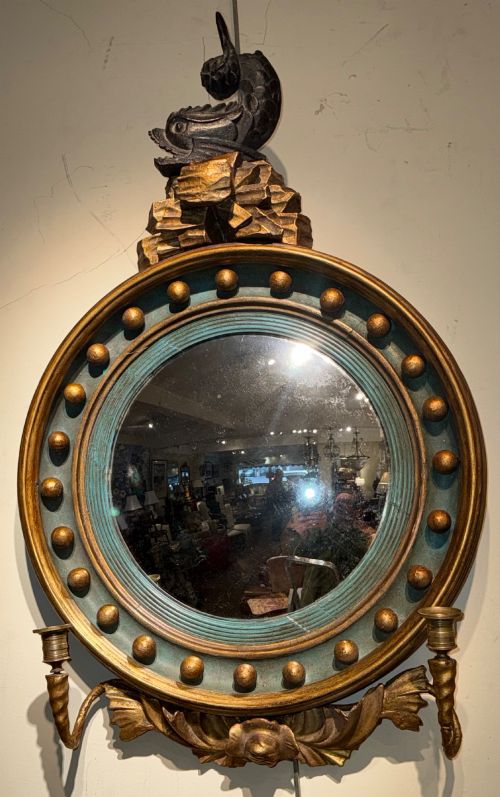

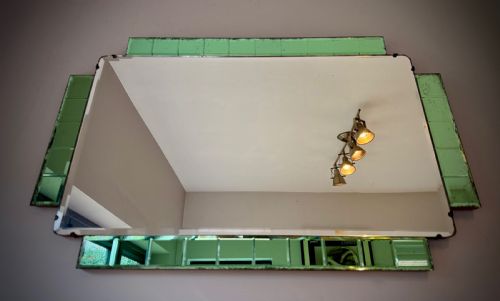
Green Wall Mirror
A green wall mirror brings colour and reflection together, ranging from painted Edwardian satinwood to Art Deco emerald glass.
Green Wall Mirror
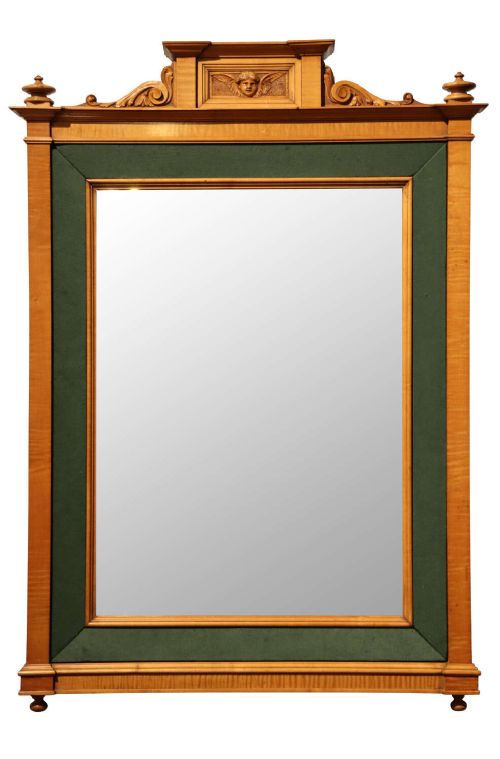
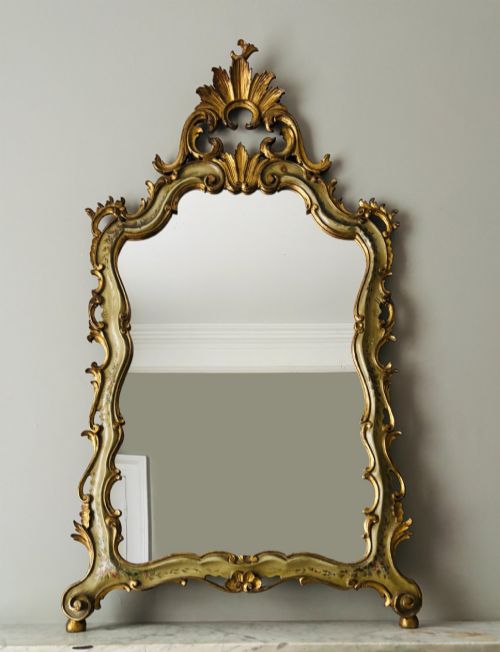
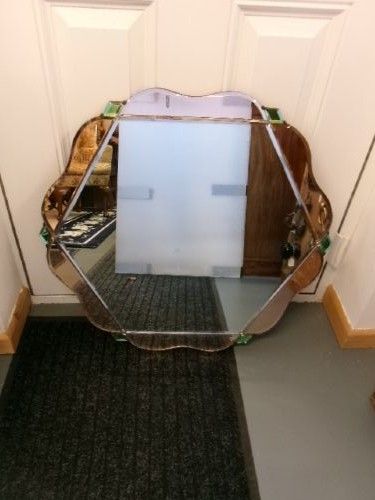
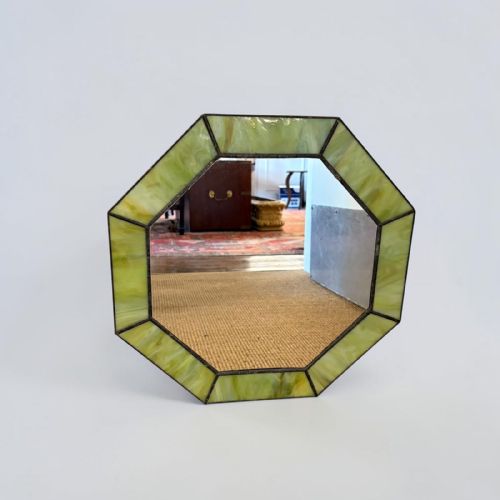
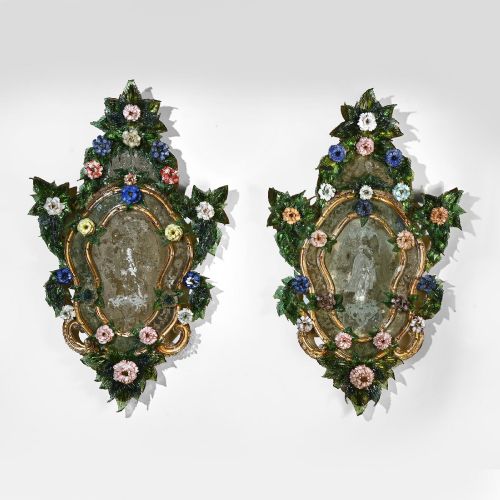
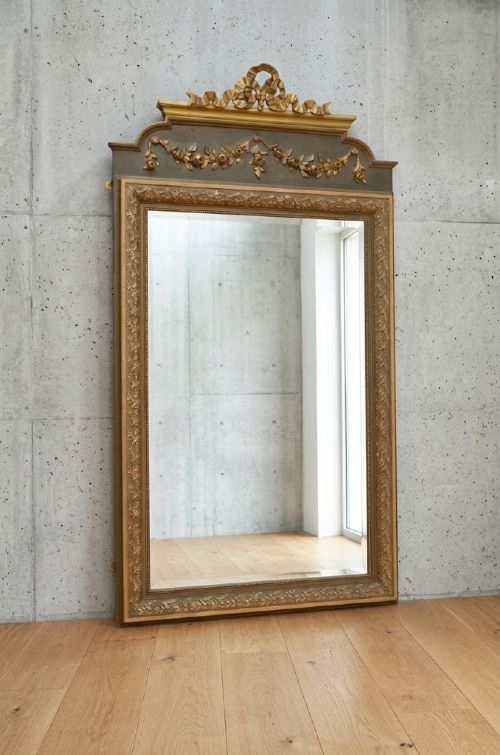
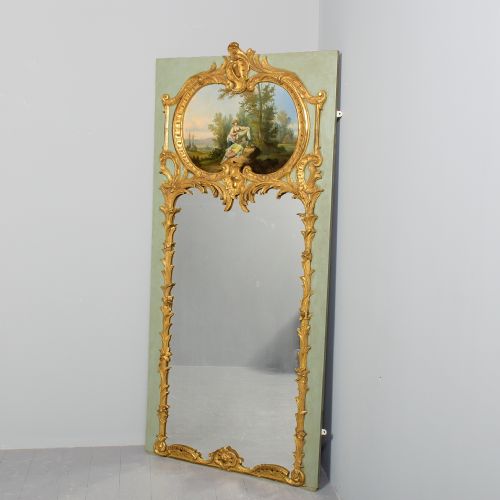
A green wall mirror encompasses hanging reflective glass framed by painted timber, giltwood, or tinted panels. Buyers seeking a green wall mirror encounter French painted trumeau designs, Venetian polychrome pieces, and geometric Art Deco multi-tone frameless examples.
The selection ranges from nineteenth-century Neoclassical and Louis XV style overmantels to twentieth-century octagonal and fairground variants. Painted wood surfaces display olive, sage, and emerald tones across various centuries.
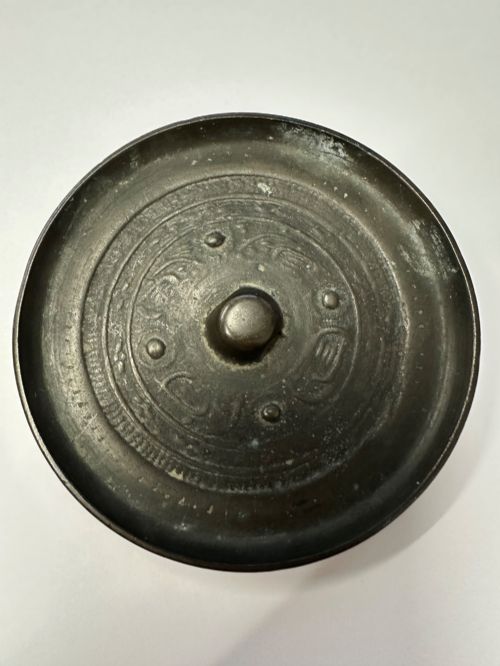
Most items function primarily as domestic wall art or functional overmantel fixtures. Formats span small chinoiserie hanging frames to large architectural panels.
Materials and construction methods
Makers utilised wood, glass, gesso, and gold leaf to construct these frames. Painted finishes rely on layers of pigment applied over timber substrates such as satinwood and oak, sometimes complemented by carved cherub crests or gilded detailing.
Mirror glass sits within rebated frames or forms part of layered composite structures. Advanced techniques involve bevel linseed oil putty, reverse painting on glass, and applied polychrome decoration.
Green Wall Mirror Retail Price Guide 2026
Typical asking prices for green wall mirror among the pieces listed under this phrase on Sellingantiques today, from the lower quarter to the upper quarter. They describe what is for sale here now, not the wider market.
Listings feature periods spanning from the nineteenth century to the mid-twentieth century alongside materials like giltwood, brass, and painted wood.
Distinctions in craftsmanship and finish
Quality separates through the crispness of carved wooden ornament and the depth of the painted surface. Finely cast brass or intricate carved gesso displays superior definition compared to simpler commercial mouldings.
The preservation of original painted pigment and authentic mercury or aged mirror plate distinguishes workshop pieces from later utility items. Maker attribution, such as documented Gillows production, elevates a piece through verified provenance.
Gillows Of Lancaster
The Green Wall Mirror Glossary
- Trumeau
- A decorative wall mirror featuring an upper panel containing a painting or carving above the reflective glass. These pieces originate largely from French neoclassical and provincial traditions.
- Gesso
- A plaster-like mixture applied to wood frames to provide a smooth surface for gilding or painting. Artisans carve and stamp fine details directly into this ground layer.
- Polychrome
- Decoration utilising multiple colours applied to wood, metal, or plaster surfaces. This technique defines many Venetian and continental European mirrors.
- Overmantel
- A large mirror designed to hang specifically above a fireplace mantelpiece. They often share proportions with nineteenth-century architectural chimney breasts.
Green Wall Mirror: Frequently Asked Questions
How do I date a green wall mirror?
Dating relies on examining the construction joints, backing boards, and the characteristics of the glass plate. Bevelling techniques and screw types provide additional chronological clues.
Style indicators such as Art Deco geometry or Edwardian satinwood inlay align pieces with specific design eras from the nineteenth and twentieth centuries.
Where should I hang a trumeau mirror?
Trumeau mirrors suit prominent positions above fireplaces, console tables, or principal reception room walls. Their vertical proportions draw the eye upward.
Ensure adequate wall fixings support the weight of timber frames and integrated upper panels.
What is Venetian glass?
Venetian glass refers to decorative mirrors and panels produced on islands such as Murano, renowned for intricate hand-cut details and tinted elements. These items often feature etched floral motifs and applied glass borders.
Master artisans shaped the molten material using historic island techniques passed down through generations.
Are painted wooden frames original?
Original painted surfaces exhibit natural wear, craquelure, and pigment patination consistent with age. Under-magnification reveals layer buildup rather than modern synthetic emulsions.
Documentation and historic inventories help verify whether polychrome or monochrome finishes remain undisturbed.