


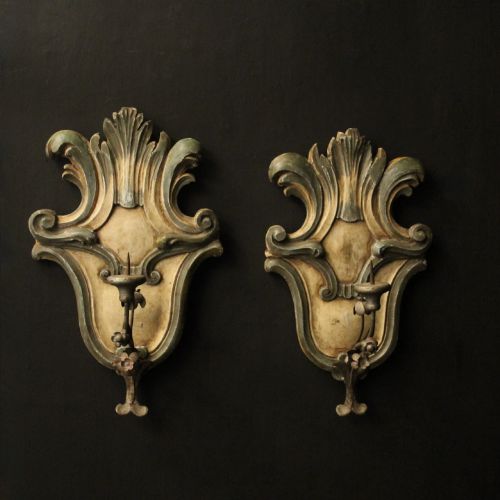


Green Wall Lights
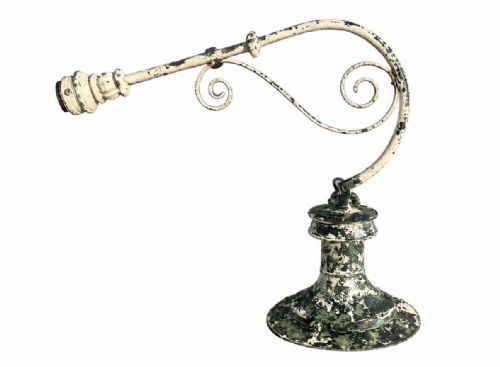
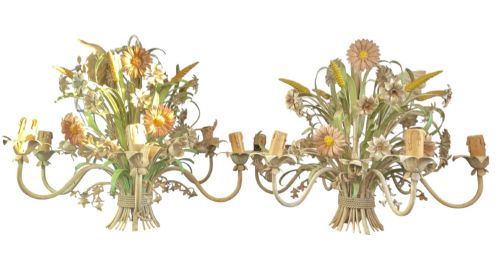
Green wall lights bring historic illumination to a room, ranging from French toleware florals to industrial enamel pieces.
Green Wall Lights
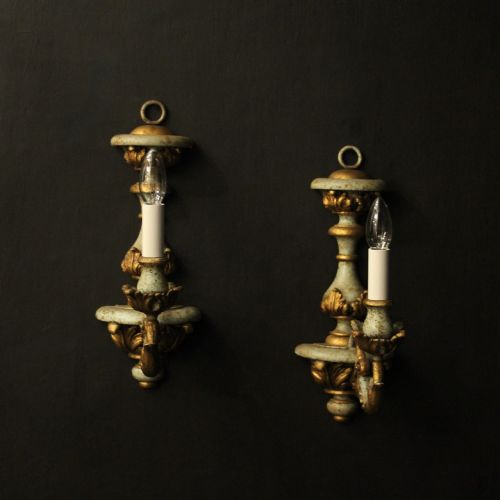
Green wall lights encompass various wall-mounted fixtures from the nineteenth and twentieth centuries, including pairs and sets designed for domestic spaces. Buyers seeking green wall lights encounter items executed in French chateau, Art Deco, and Florentine styles, spanning forms from single-arm sconces to triple-arm fixtures.
The selection includes painted tôleware, verdigris copper, and enamel finishes, often paired with brass or iron structures. Many examples originate from France and Italy, reflecting distinct regional aesthetics from the eighteen-eighties through the nineteen-forties.
Materials and construction methods
Metalwork dominates the construction of these fixtures, utilising brass, wrought iron, and copper shaped into arms, backplates, and lanterns. Verdigris patination and enamel coatings provide the characteristic green surfaces, applied to protect the metal and deliver specific decorative tones.
Painted finishes such as polychrome decoration and tôleware leaf motifs require careful application by hand, particularly on floral and figurative components. Giltwood and carved wood elements appear alongside metal structures in certain neoclassical and rococo revival designs.
Green Wall Lights Retail Price Guide 2026
Typical asking prices for green wall lights among the pieces listed under this phrase on Sellingantiques today, from the lower quarter to the upper quarter. They describe what is for sale here now, not the wider market.
The listings feature glass, metal, iron, wood, brass, and giltwood across nineteenth and twentieth-century periods.
Factors influencing quality
The refinement of surface finishes distinguishes superior examples, such as hand-painted tôleware petals with subtle tonal variation versus flat industrial paint. The crispness of casting in brass or iron elements reveals the skill of the original workshop.
Completeness of matching sets and original patination carry significant weight, as matched pairs or sets of four maintain greater visual balance than assembled groups. The integration of structural mounts with decorative components shows the underlying engineering standard of the period.
Revo Tipton·Kershaw Schofield·Robert A Nottingham
The Green Wall Lights Glossary
- Tôleware
- Painted or lacquered sheet metal items popular in French and Italian lighting design. The technique allows for vibrant floral and foliar decoration.
- Verdigris
- A green patina formed naturally or chemically on copper, brass, or bronze surfaces. It results from weathering or deliberate treatment to simulate age.
- Sconce
- A wall-mounted light fixture designed to hold candles or electric bulbs. These often feature backplates that reflect light into the room.
- Polychrome
- Painted in several colours, typically describing decorated woodwork, plaster, or metal surfaces. This finish adds depth and visual interest to period pieces.
Green Wall Lights: Frequently Asked Questions
What periods do these lights come from?
The pieces span the late nineteenth century through the nineteen-forties, covering Victorian, Edwardian, and Art Deco eras.
Designs reflect the shifting tastes of these decades, moving from ornate revival styles to streamlined industrial forms.
How were tôleware lights made?
Tôleware fixtures start with shaped sheet metal, which is then painted and lacquered to achieve a durable coloured surface.
Artisans often added hand-painted floral motifs and gilt highlights to mimic natural foliage.
Where should I place wall sconces?
These fixtures suit hallways, living rooms, and bedrooms, often flanking mirrors, fireplaces, or architectural doorways.
Placement height depends on ceiling clearance and the intended diffusion of light across the wall surface.
How do I identify French pieces?
French lighting often displays characteristic tôleware floral arrangements, bouillotte shade designs, or rococo revival curves.
Materials like giltwood and painted brass frequently accompany these distinctive continental silhouettes.