

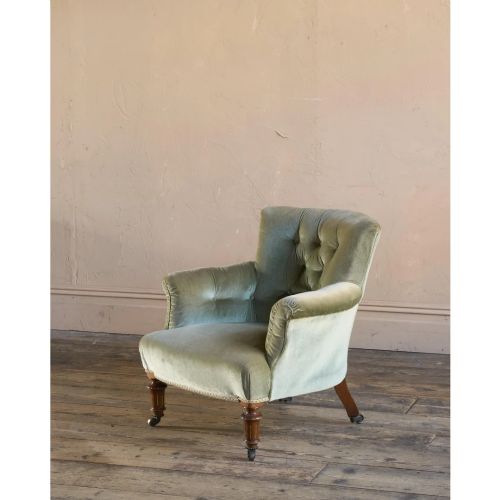
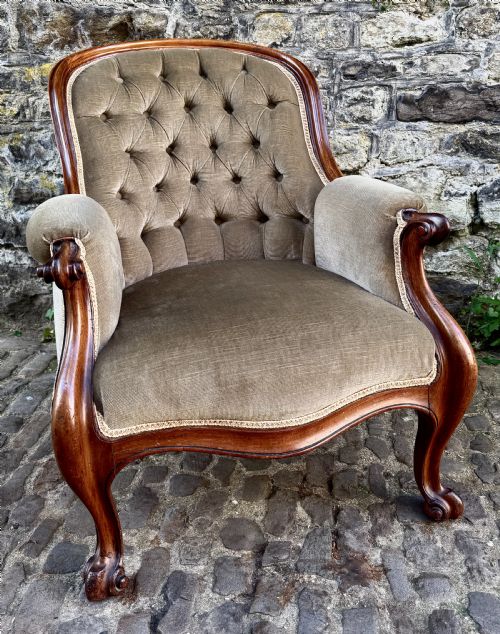


Green Velvet Easy Chair
A green velvet easy chair brings together tactile comfort and period character, offering deep upholstery paired with rich timber frames.
Green Velvet Easy Chair
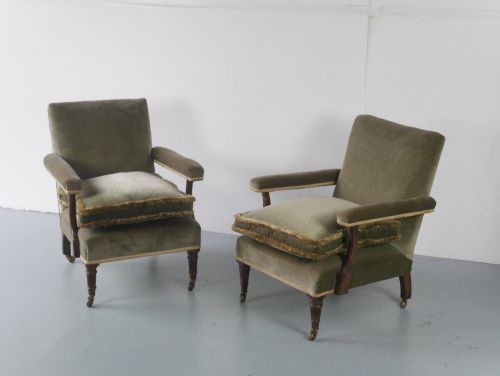
When you search for a green velvet easy chair, you encounter a variety of upholstered seating spanning the eighteenth century through to the Edwardian era and the nineteen-thirties. The examples on this page primarily take the form of armchairs, wing chairs, and library chairs built to support relaxed sitting.
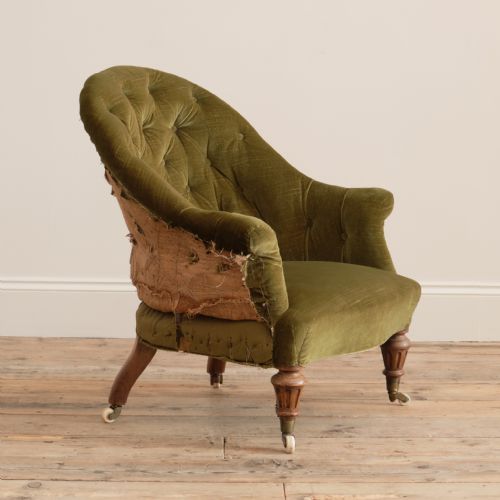
The materials recorded across these pieces combine plush velvet upholstery with substantial wooden frames fashioned from mahogany, walnut, oak, and rosewood. Certain models incorporate decorative brass elements or traditional passementerie trim to finish the edges of the fabric.
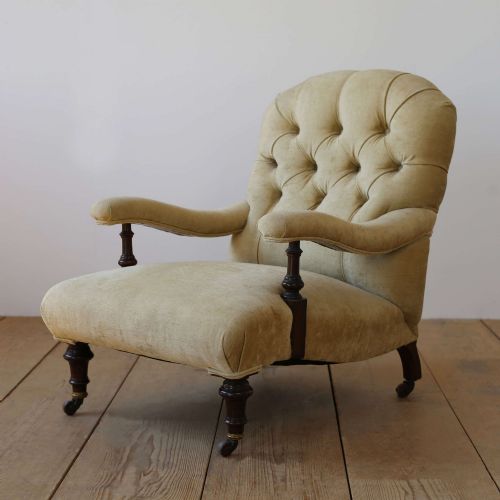
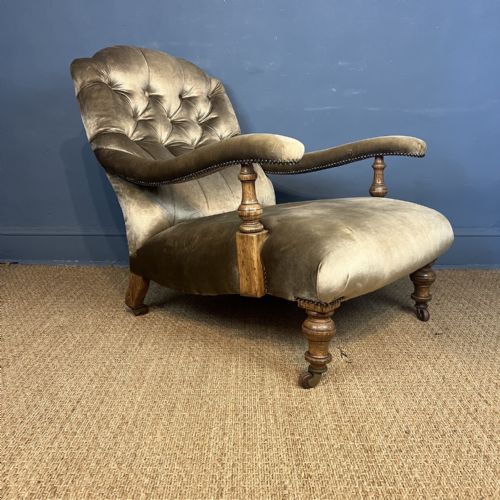
Stylistically, these pieces draw upon Georgian, Regency, William IV, Victorian, and Edwardian design traditions. You will find both open armchairs and enclosed wingback forms designed for domestic comfort in parlours and libraries.
How they were made
Cabinetmakers constructed the supportive skeletons using durable hardwoods including mahogany, walnut, oak, and rosewood. These timbers were shaped into structural frames, cabriole or turned legs, and supportive armrests designed to bear regular weight.
The upholstery technique relied on traditional stuffing methods contained beneath velvet textiles. Finishers often applied passementerie trim or brass details to secure the edges and accentuate the contours of the chair.
Listings span the eighteenth, nineteenth, and early twentieth centuries, featuring walnut, mahogany, oak, and rosewood frames.
What varies in quality
The distinction between standard and superior pieces rests on the weight of the timber frame and the refinement of its carved details. Heavier woods like rosewood and mahogany, combined with expert joinery, mark out the more ambitious workshops.
Proportion and scale also separate everyday items from exceptional examples, such as diminutive seating or large library wing chairs with harmonious lines. The integration of maker attributions further elevates the standing of an individual piece.
Gillows·Hampton and Sons·Howard and Sons
The Green Velvet Easy Chair Glossary
- Passementerie
- Decorative trims such as edgings, braids, and fringes applied to upholstery. These woven details were utilised to conceal tacks and finish seams.
- Wingback
- An armchair featuring protective side panels attached to the arms and back. This traditional form was originally designed to shield occupants from drafts.
- Open armchair
- A seat featuring un-upholstered wooden armrests that expose the grain and carving of the frame. These pieces often highlight walnut or mahogany construction.
- Regency
- A stylistic period spanning the early nineteenth century defined by neoclassical restraint and classical revival motifs. Furniture from this era often incorporates rosewood or mahogany.
- Napoleon III
- A French design style of the mid-nineteenth century noted for eclectic revivals and luxurious upholstery. Pieces from this period were frequently prepared for custom recovering.
Green Velvet Easy Chair: Frequently Asked Questions
How do I date a green velvet easy chair?
Dating relies on identifying the underlying timber species, leg turning styles, and overall frame proportions associated with periods like the Regency or Victorian eras. Examining construction methods inside the seat frame reveals workshop practices of the time.
Makers' marks or stamps on the wood or webbing can also confirm the exact period of manufacture.
Are these chairs suitable for daily use?
Most of these pieces were constructed by period cabinetmakers using sturdy hardwoods like mahogany, walnut, and oak to endure regular domestic sitting. Their robust frames remain practical for modern living spaces.
Checking the internal webbing and padding ensures the support matches your comfort requirements.
What is the difference between an open armchair and a wing chair?
Open armchairs feature exposed wooden armrests made from materials such as mahogany or walnut, offering a lighter visual profile. Wing chairs include upholstered side panels designed to enclose the upper body.
Both styles provide varied seating experiences depending on room placement.
How should I clean green velvet upholstery?
Velvet textiles require gentle brushing with the nap to lift dust and prevent the pile from crushing. Professional cleaning is recommended for deep marks to preserve the fabric.
Keeping velvet away from direct sunlight prevents fading of the green dye over time.