





Green Vase Painting
These green vase painting works unite ceramic vessels and oil canvases spanning several centuries.
Green Vase Painting
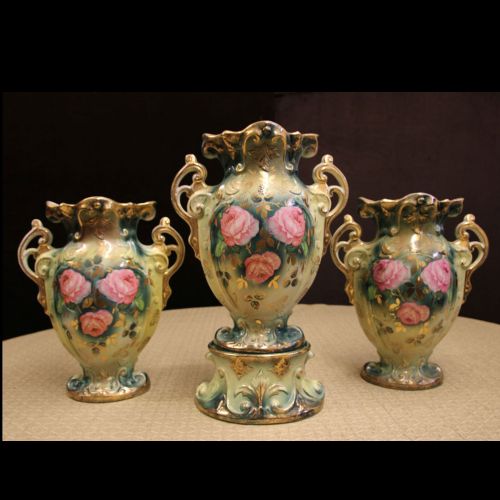
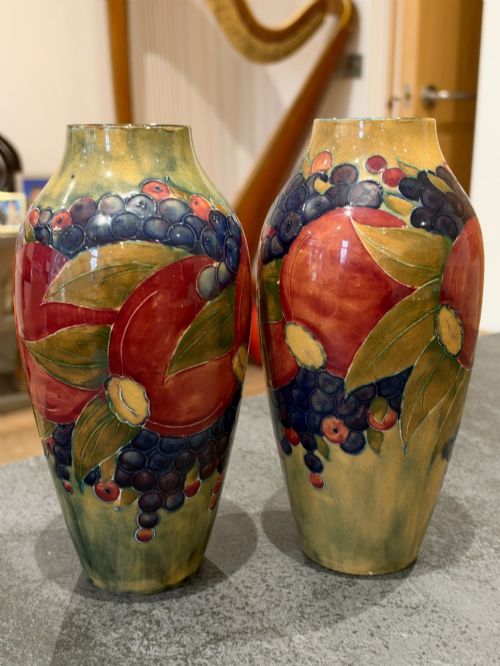
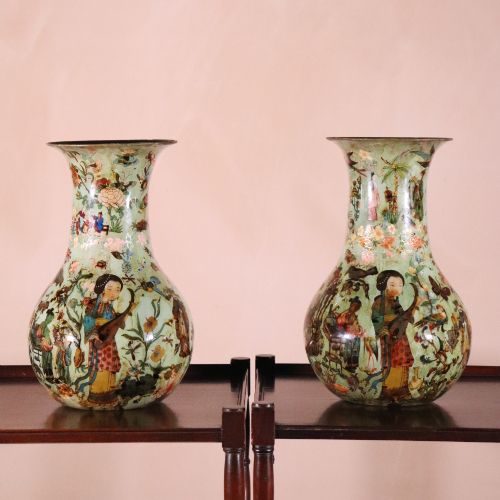
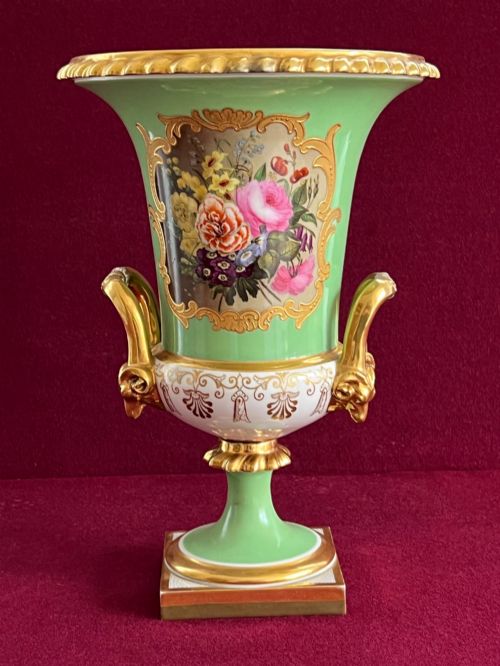
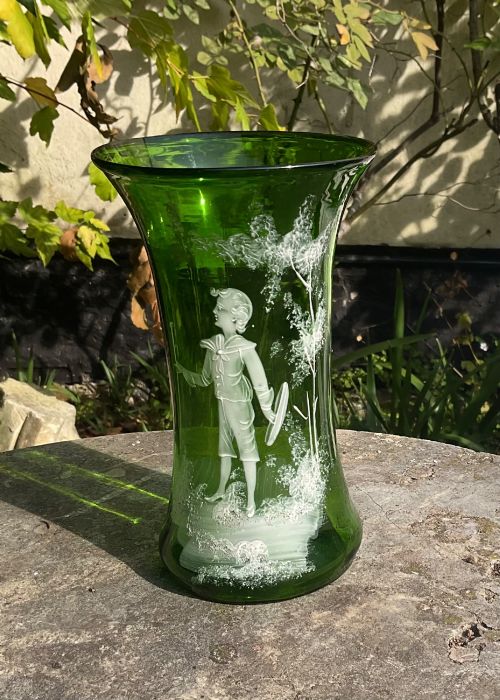
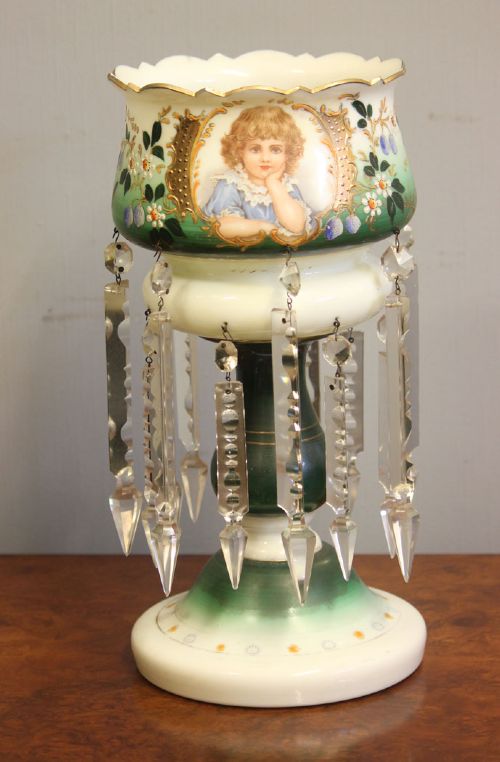
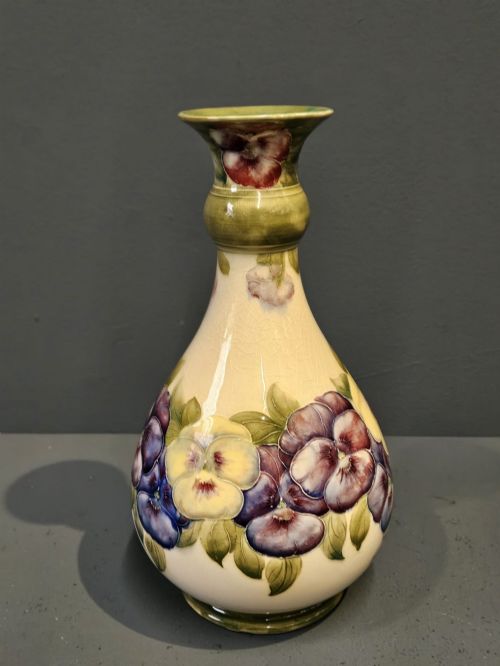
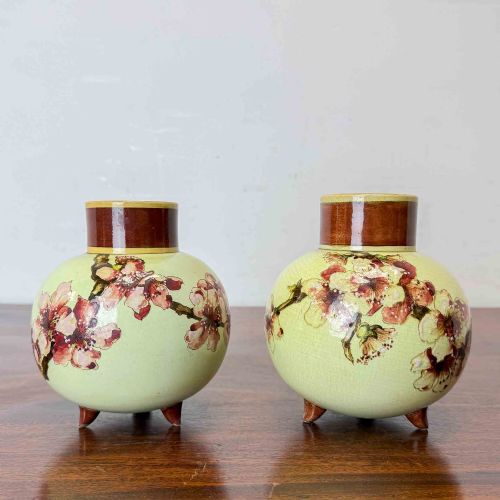
A buyer seeking a green vase painting encounters a dual landscape of physical ceramic vessels decorated with hand-painted scenes and flat pictorial representations of floral arrangements in glass or earthenware containers. The physical ceramic items include porcelain and earthenware vessels from English potteries, Bohemian glass, and Chinese export pieces bearing enamel decoration.
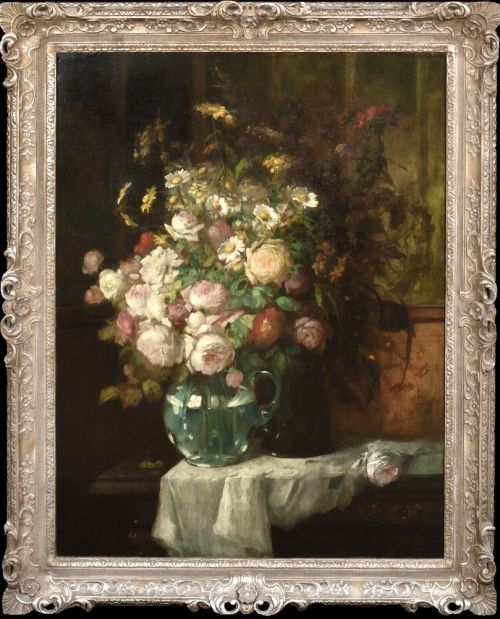
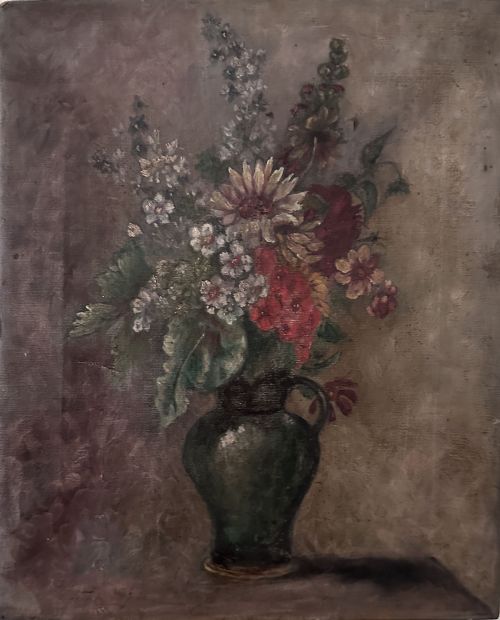
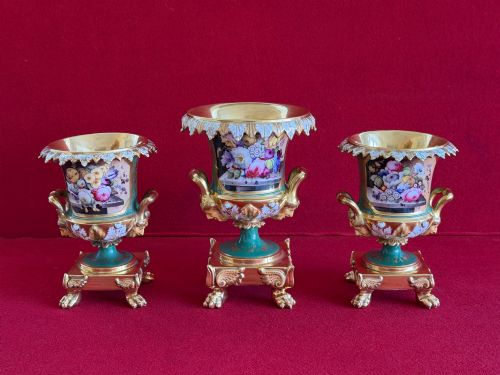
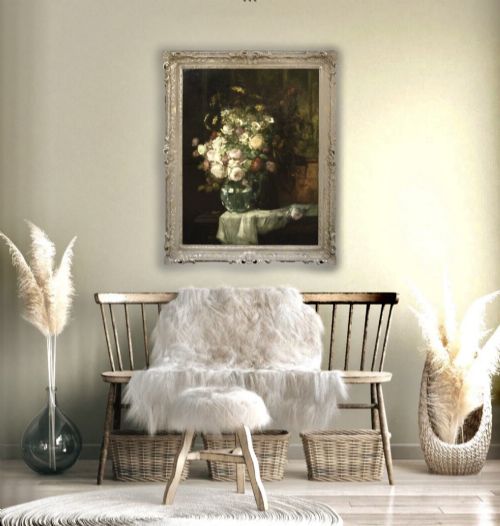
The painted canvas and watercolour works present still life studies of flowers and botanical subjects, often placing the vessel firmly at the centre of the composition. Regency porcelain campana shapes, Victorian glass table lustres, and twentieth-century oil canvases form the core of the items available under this category.
The selection ranges across multiple centuries, moving from seventeenth-century oil panels to twentieth-century pottery and watercolours. Buyers find both standalone decorative objects and matched pairs suitable for mantelpieces and display tables.
Materials and technique
The physical ceramic and glass objects rely on skilled hand-blowing, moulding, and glazing techniques executed in specialised European and Asian kilns and workshops. Enamel paints and gold leaf provide the surface detail on glass and porcelain, requiring precise firing to bond the pigments to the body.
The pictorial works employ oil paint or watercolour applied to canvas or paper, capturing light and texture in floral still life subjects. Cast iron and brass appear alongside ceramic materials in supporting hardware and garden urns.
Green Vase Painting Retail Price Guide 2026
Typical asking prices for green vase painting among the pieces listed under this phrase on Sellingantiques today, from the lower quarter to the upper quarter. They describe what is for sale here now, not the wider market.
Listings span periods from the 17th Century to the 1920s, featuring porcelain, enamel, glass, and canvas.
Evaluating craftsmanship
The distinction between standard production items and superior pieces lies in the precision and complexity of the hand-painted decoration. Finer ceramic pieces display intricate enamel work, controlled brushstrokes in botanical studies, and harmonious integration of glaze and colour.
Canvas works separate through the handling of light, depth, and the naturalistic rendering of petals and foliage by recognised painters. The crispness of moulded detail on glass and iron vessels further distinguishes workshop outputs.
Moorcroft·Minton·Flight Barr And Barr·H And R Daniel·Doulton Lambeth·Ulisse Cantagalli
The Green Vase Painting Glossary
- Campana
- A bell-shaped vessel form popular during the Regency period, often utilised for porcelain vases and decorative urns.
- Enamel
- Opaque glass paste fused to metal, porcelain, or glass surfaces through high-temperature firing to create coloured decoration.
- Famille-Rose
- A Chinese ceramic palette characterised by opaque pink enamel introduced during the Qing Dynasty.
- Majolica
- Tin-glazed earthenware featuring colourful opaque glazes, produced across European potteries during the nineteenth century.
- Lustre
- A type of ceramic or glass vessel featuring a metallic or glossy glaze finish designed to catch the light on mantelpieces.
Green Vase Painting: Frequently Asked Questions
How do I care for antique glass and porcelain vases?
Keep painted vessels out of direct sunlight to prevent enamel fading. Dust gently with a soft dry cloth.
Avoid using liquid cleaners on hand-painted surfaces, as chemical solvents can damage delicate gold leaf and historical pigments.
What is the difference between table lustres and standard vases?
Table lustres feature hanging glass prisms designed to reflect candle or gas light around a room. Standard vases serve purely to hold floral arrangements or display painted surfaces.
Lustres date primarily to the Victorian era, while vases span a much broader chronological range.
How do I identify a Regency period porcelain vase?
Regency pieces often display classical vessel forms such as campana shapes and incorporate fine hand-painted botanical or landscape motifs. Look for refined porcelain bodies produced by documented English factories of the early nineteenth century.
Base markings, where present, assist in confirming the exact factory origin and approximate date of manufacture.
Where should I display a still life oil painting of flowers?
Hang oil canvases on interior walls away from direct heat sources and excessive moisture. Adequate indirect lighting enhances the depth of the brushwork and the tones of the painted vessel.
Pairing a canvas with physical ceramic vessels of a similar period creates a cohesive historical display within a room.