

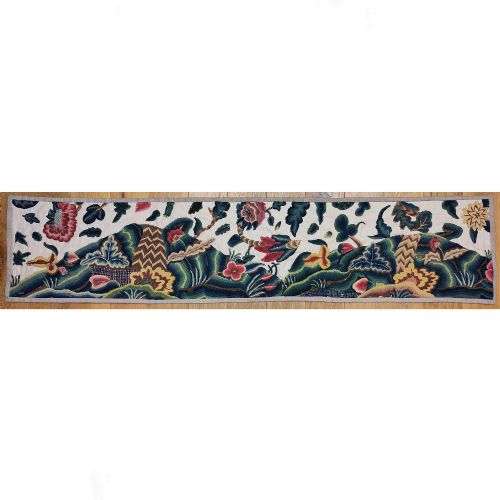
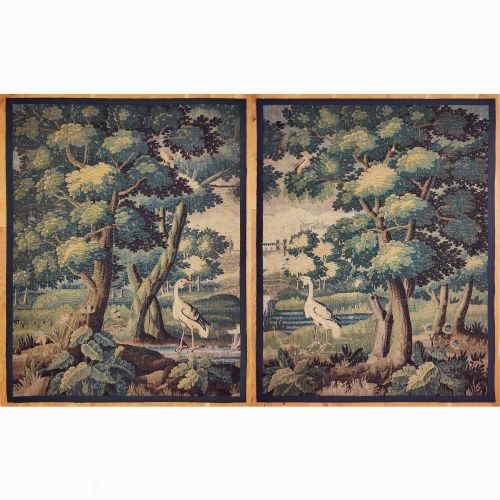

Green Textile Tapestry
Green textile tapestry panels bring centuries of woven artistry, verdant landscapes and historic needlework directly into modern rooms.
Green Textile Tapestry
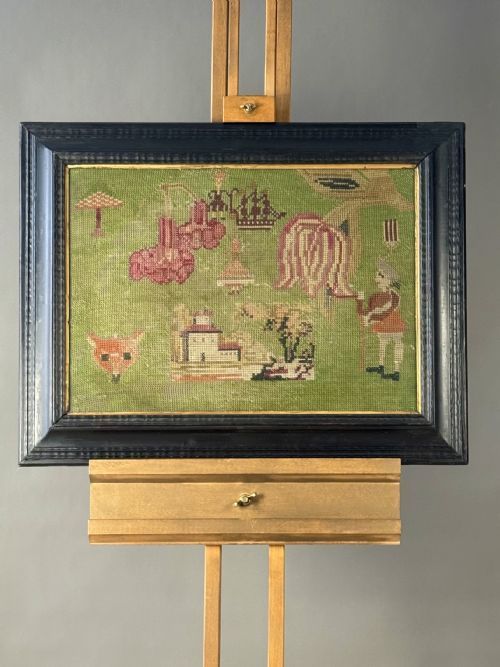
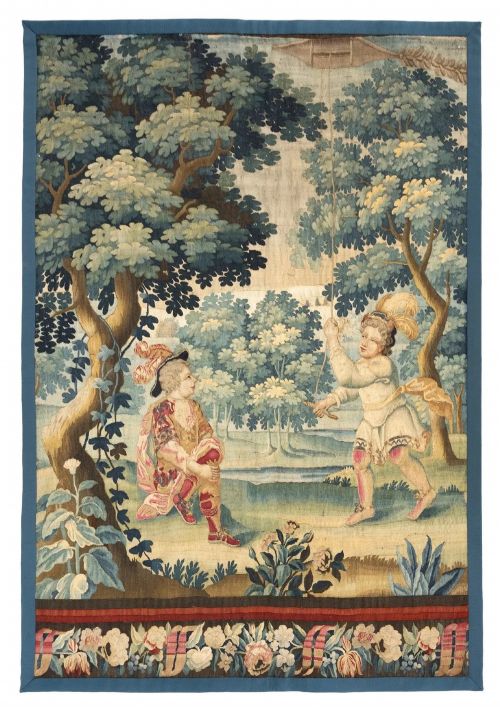
A green textile tapestry spans woven wall hangings, framed needlework fragments and embroidered panels originating from seventeenth-century Flemish looms up to twentieth-century workshops. Buyers exploring this category encounter large verdant scenes, pastoral landscapes and detailed textile art designed to cover substantial wall spaces.
How they were made
Weavers constructed these pieces using wool, silk, cotton and linen threads on canvas and wooden frames, employing traditional needlework, crewelwork, beadwork and weaving techniques. Artisans combined wool and silk yarns to build rich textures and complex chromatic gradations within verdant forest scenes.
Dyers utilised natural agents to produce deep green hues that form the leafy backdrops of Flemish and French verdure panels. Skilled hands executed intricate needlepoint and embroidery stitchwork across linen and cotton foundations to complete pictorial panels and samplers.
Listings feature textiles spanning from the 17th century through the 1920s, utilising wool, silk, cotton, linen, wood and glass.
What varies in quality
Quality rests upon the fineness of the thread work, the preservation of the original green dyes and the structural integrity of the woven fabric. Pieces featuring dense wool and silk yarns maintain greater pictorial depth and resilience than simpler cotton or canvas constructions.
The nuance of the verdure foliage and the complexity of the figural or landscape composition distinguish standard decorative panels from works of superior artistic execution. Intact borders and well-preserved seventeenth-century Flemish weaves command particular attention from knowledgeable collectors.
The Green Textile Tapestry Glossary
- Verdure tapestry
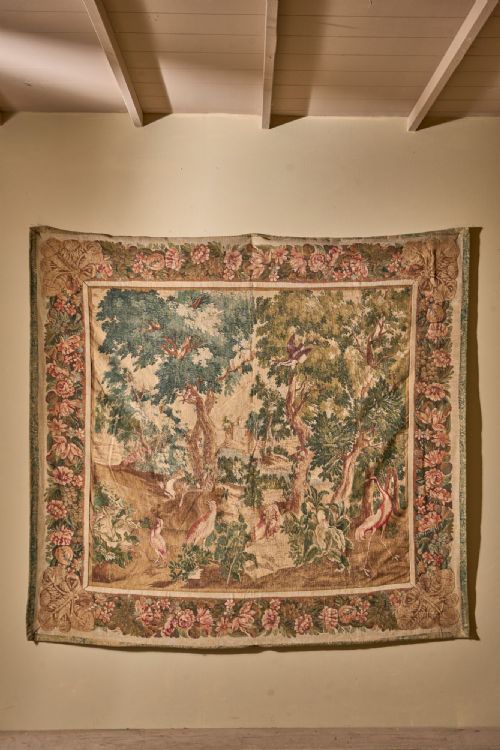
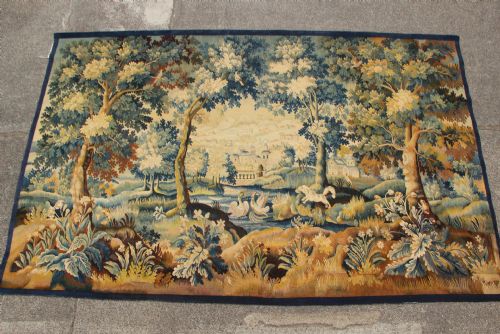
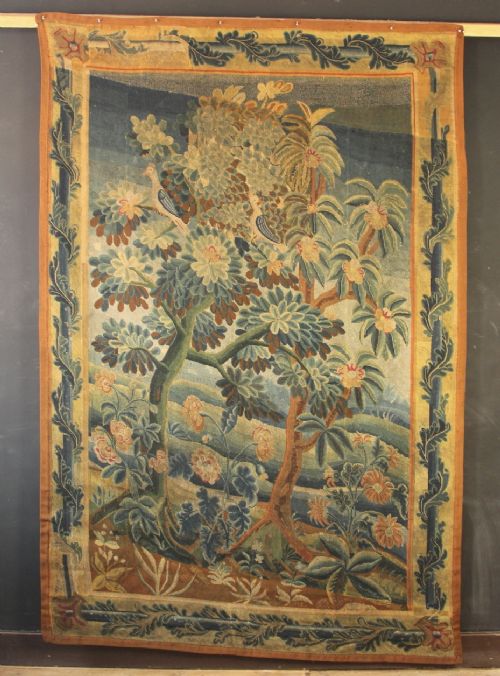
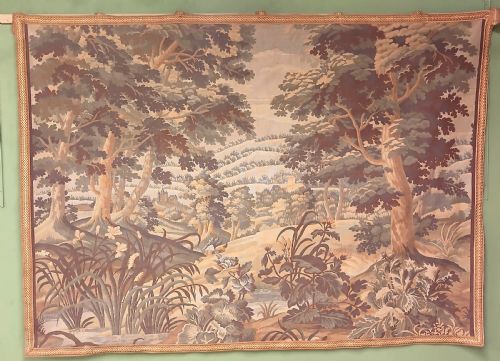
- A woven wall hanging dominated by lush foliage, trees and garden landscapes, frequently produced in seventeenth and eighteenth-century Flemish and French workshops. These pieces often incorporate varied shades of green wool and silk.
- Aubusson
- A style of tapestry originating from the French town of Aubusson, known for pastoral scenes and floral motifs. These works date from the seventeenth century onwards.
- Crewelwork
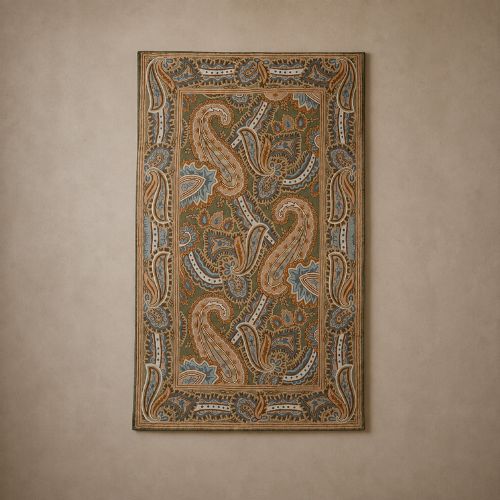
- A type of embroidery executed with wool yarn on a linen or cotton ground, seen in historic English and European textile panels. This technique creates textured floral and ornamental designs.
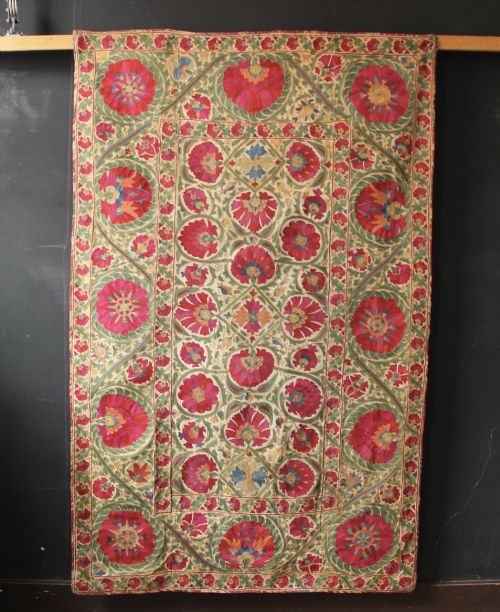
- Suzani
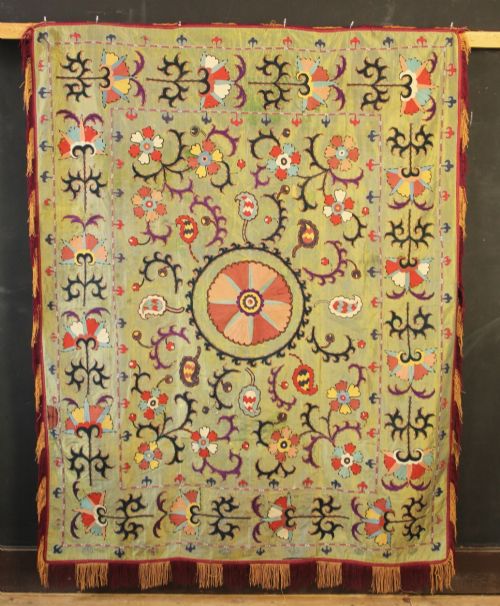
- A type of embroidered Central Asian textile featuring silk thread on silk or cotton foundations, often displaying vibrant botanical patterns. Examples include Nim Suzani variations from the nineteenth century.
- Needlepoint
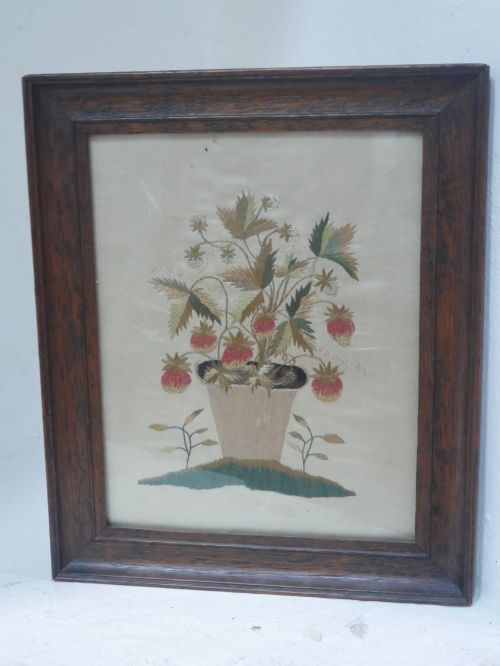
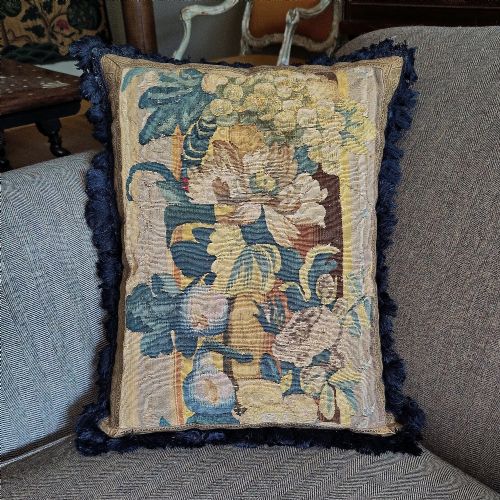
- Stitched textile art worked through a canvas mesh using wool or silk thread to form dense pictorial images. This method appears across framed fragments and samplers.
Green Textile Tapestry: Frequently Asked Questions
How do I hang a heavy textile tapestry safely?
Support heavy wool and silk wall hangings by distributing the weight evenly across a wooden batten or a concealed metal hanging rod. Sew a supportive cotton or linen backing sleeve along the top edge of the textile to prevent direct pulling on the ancient fibres.
Avoid using direct nails or clips that pinch and weaken the historic weave over time. Ensure the display wall remains free from direct sunlight and excessive moisture to protect the green dyes.
What is a verdure tapestry?
A verdure tapestry is a woven wall panel featuring a dominant landscape of trees, foliage, plants and sometimes birds or game animals. These pieces were widely produced in Flemish and French workshops during the seventeenth and eighteenth centuries.
The green palette typically derives from aged wool and silk threads that evoke woodland scenes. They served historically to insulate stone walls while bringing outdoor nature indoors.
How do I tell seventeenth-century Flemish work apart?
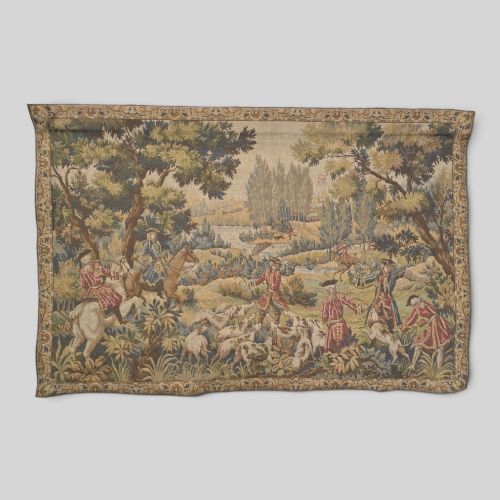
Seventeenth-century Flemish works typically display dense botanical weaving, robust verdure foliage in deep greens, and often include mythological or hunting scenes. The combination of heavy wool and silk yarns creates a distinct tactile depth characteristic of this period's looms.
Examination of the borders and the specific botanical motifs helps separate these earlier panels from later nineteenth-century French revival pieces.