
Green Still Life Painting
When collectors search for green still life painting, they seek canvases and watercolours capturing botanical studies and domestic arrangements through varied historical lenses.
Green Still Life Painting
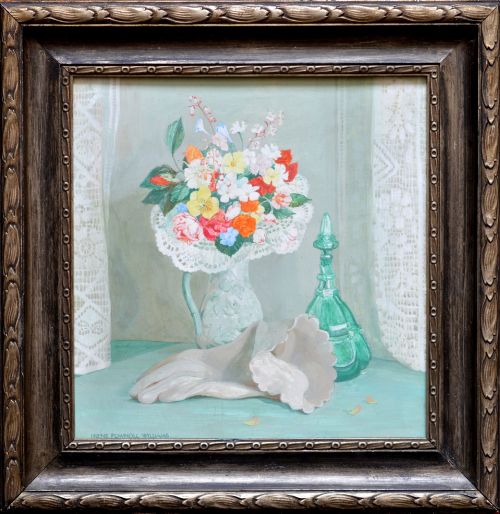
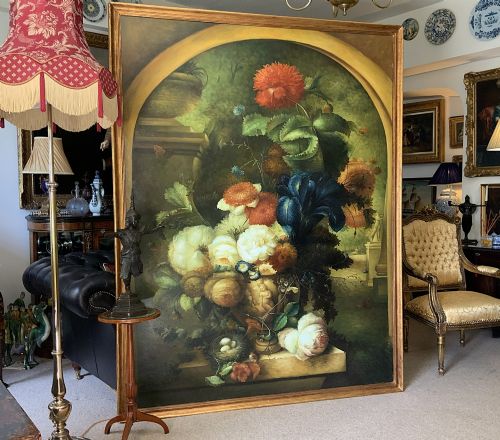
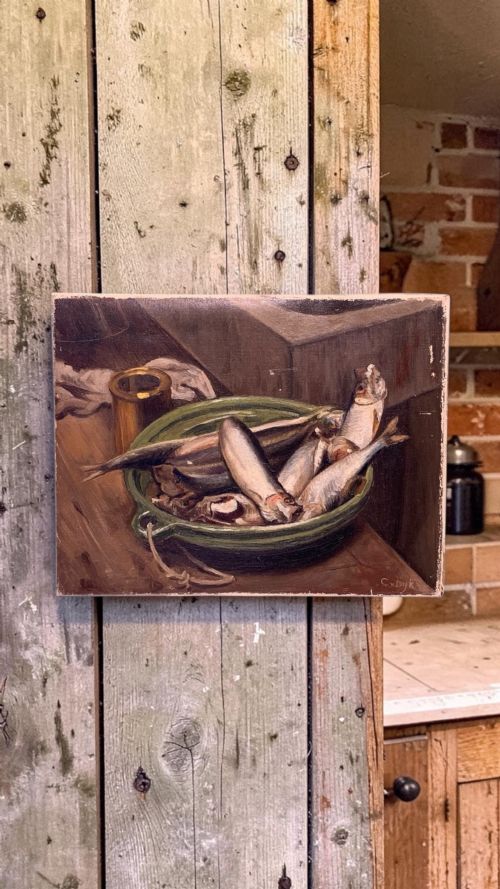
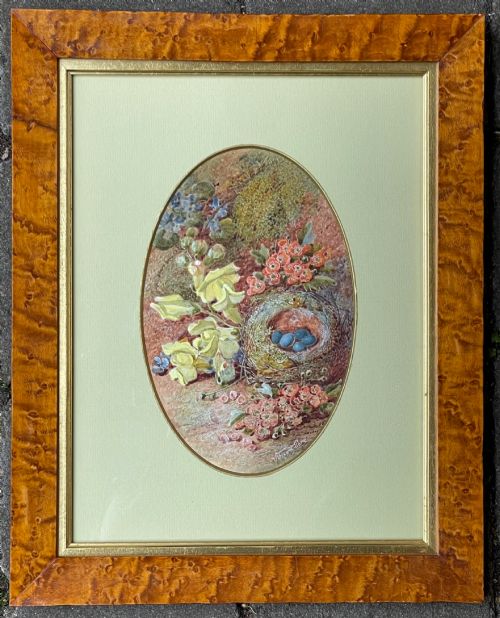
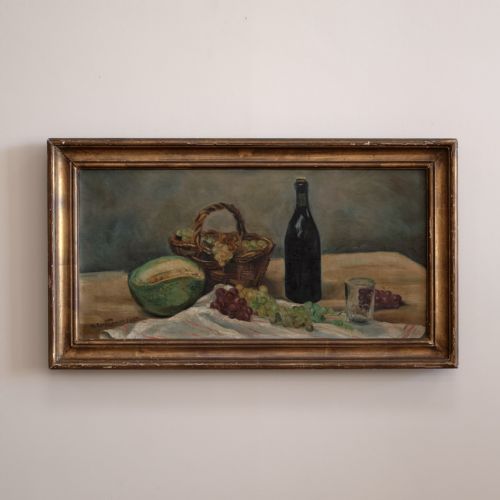
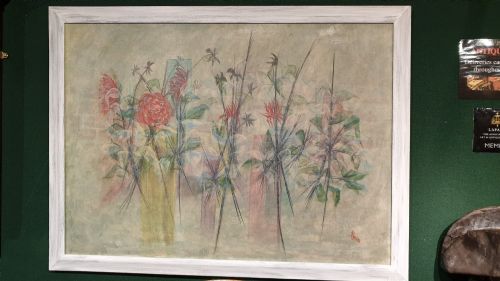
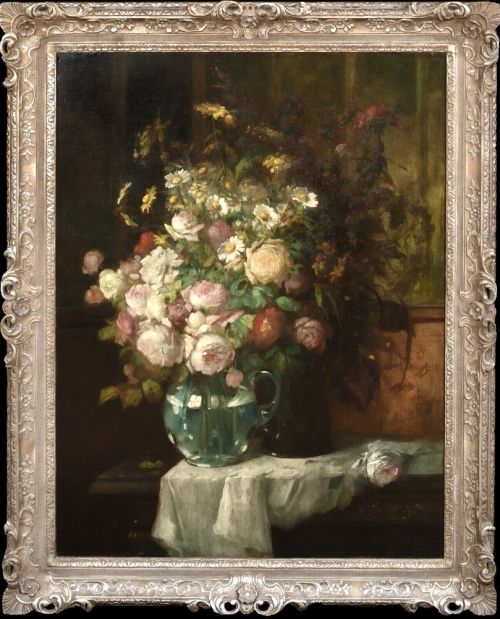
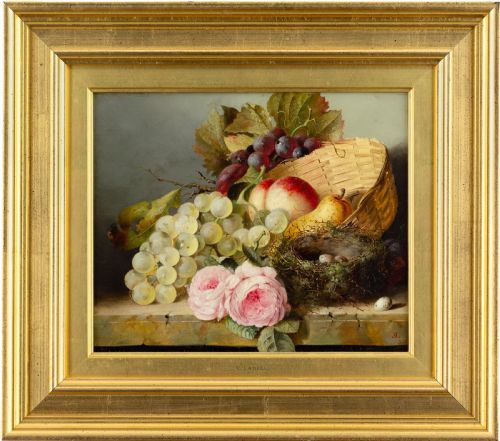
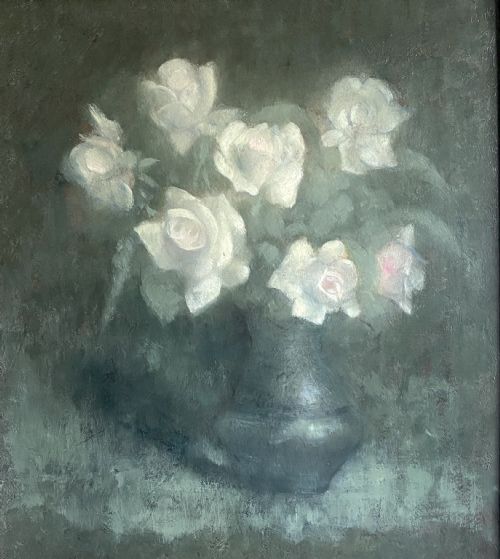
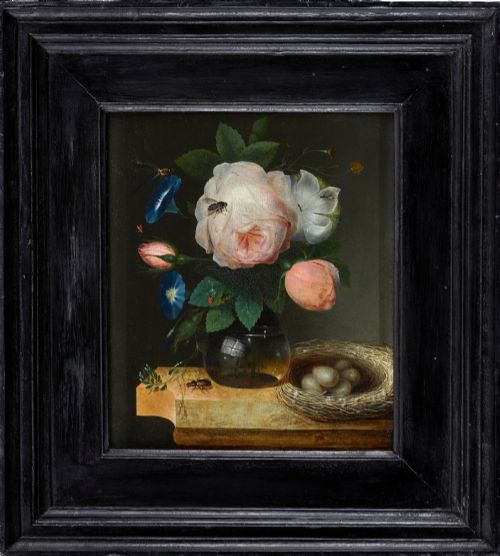
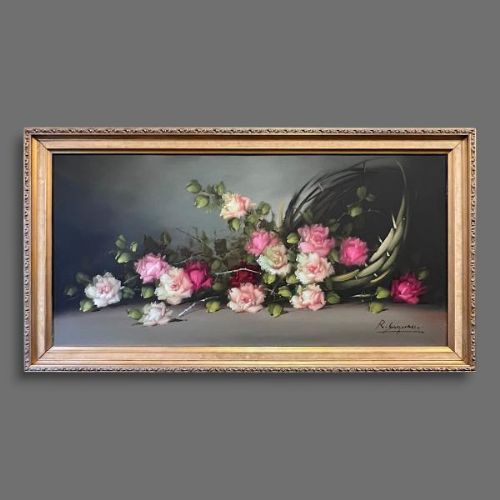
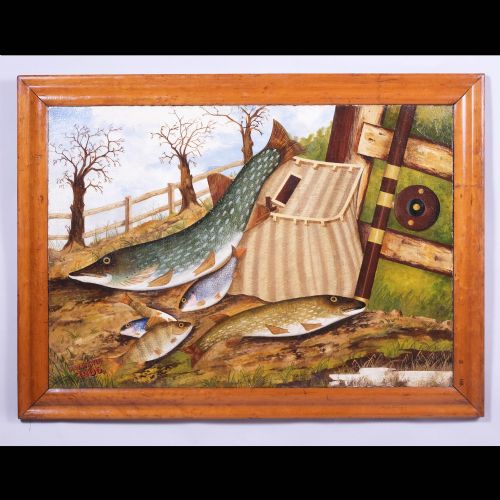
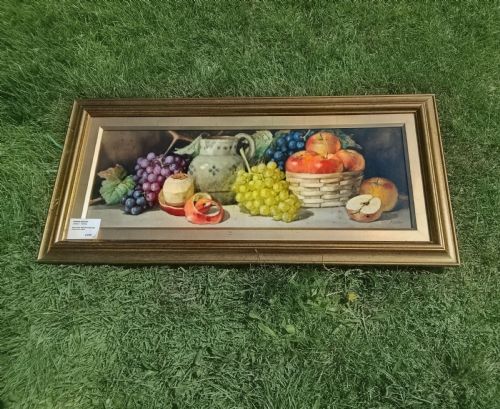
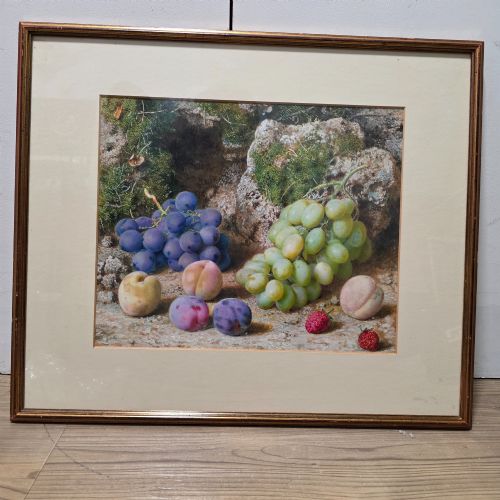
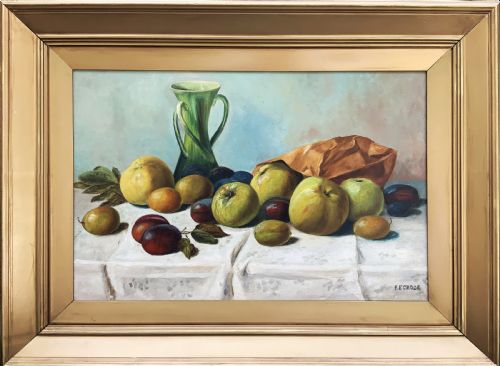
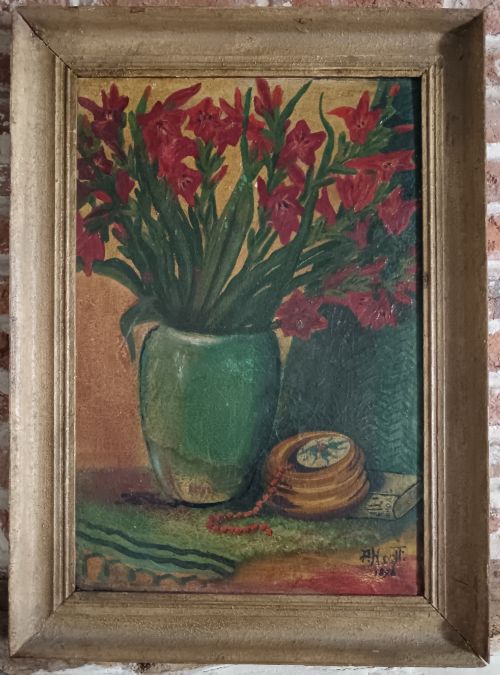
A green still life painting presents domestic arrangements, floral compositions, and botanical subjects rendered across diverse periods ranging from the nineteenth century through the mid-twentieth century. The works on this page encompass oil on canvas, board, and panel, alongside delicate watercolours and gouache on paper.
Buyers encounter Victorian naturalism, Edwardian floral studies, and post-impressionist or mid-century modern interpretations. These pieces often feature glass vases, wicker baskets, and ceramic jugs containing foliage, fruit, or flowers set against muted or vibrant backdrops.
How they were made
Artists built these compositions primarily using oil paint applied to prepared canvas, wood panel, or board, allowing for rich texture and depth of colour. Others utilised watercolour and gouache on paper, capturing light through transparent washes and fine brushwork.
Many works retain their original solid wood frames, occasionally embellished with gold leaf. Support materials range from stretched canvas to sturdy wooden boards that preserve the integrity of the paint layers over decades.
Several artists clearly held a strong preference for green vessels, immortalising ceramic and glass jugs in numerous botanical studies.
What varies in quality
Quality rests in the confidence of the brushwork and the artist's ability to render light, shadow, and spatial depth within a confined domestic arrangement. Superior pieces display deliberate composition and assured handling of pigments rather than rigid adherence to academic formula.
The relationship between the subject and its container, such as foliage within a glass vase or fruit spilling from a basket, reveals the creator's draughtsmanship. Original framing and well-preserved surfaces without heavy restoration further distinguish finer examples.
Vincent Clare·Konstantin Stoitzner·Edward Ladell·Gaspar Peeter Verbruggen·Arthur Dudley·John Sherrin·Owen Bowen·Denis Mitchell·Barbara Hepworth·James Tower·Winifred Turner·Henrietta Creswell·Henri Joseph Pauwels·William Duffield·William Hough·Harry Davis·Henry Schouten·Richard Budd·Olive Higginbottom·John M Green
The Green Still Life Painting Glossary
- Oil paint
- A slow-drying medium consisting of pigments suspended in a drying oil, typically linseed, allowing for smooth blending and rich tonal depth. This medium dominates the historical canvas selections on this page.
- Watercolour
- A painting method in which natural pigments are suspended in a water-soluble vehicle, applied to paper to create translucent washes of colour. It offers a lighter, more immediate recording of botanical subjects.
- Panel
- A flat piece of wood used as a rigid support for painting, frequently utilised in earlier centuries before stretched canvas became standard practice. It provides a stable surface for detailed brushwork.
- Gouache
- An opaque water-based paint that includes a white pigment filler, resulting in solid, matte colour fields. It bridges the gap between watercolour transparency and oil opacity.
- Post-Impressionism
- A predominantly French art movement developing roughly between the late nineteenth century and the early twentieth century, extending impressionism while rejecting its limitations. Artists prioritised symbolic content and expressive use of colour.
Green Still Life Painting: Frequently Asked Questions
How do I date a still life painting?
Dating relies heavily on stylistic markers, framing techniques, and the type of canvas or panel support used by the artist. Signatures and exhibition labels on the reverse also provide concrete chronological anchors.
Changes in pigment composition and prevailing artistic movements across the nineteenth and twentieth centuries help narrow down the decade of creation.
Where should I hang a botanical painting?
These works suit dining rooms, studies, and drawing rooms where traditional domestic arrangements complement interior furnishings. Placing them away from direct sunlight preserves the integrity of oil pigments and paper supports.
Pairing pieces with antique wood furniture or neutral walls allows the tonal qualities of the foliage and fruit to stand out.
What is the difference between oil and watercolour?
Oil paintings utilise heavy, viscous pigments on canvas or panel that permit rich texture and layered reworking. Watercolours employ translucent washes on paper, yielding a lighter and more delicate finish.
Both mediums offer distinct visual textures suited to different domestic spaces and lighting conditions.
How do I care for antique canvas art?
Maintenance requires stable indoor humidity and temperature levels to prevent the canvas from slackening or the wooden panel from warping. Dusting should occur gently with a dry, soft brush without applying liquid cleaners.
Professional conservators should handle any structural repairs or surface cleaning to protect the historical paint layers.