






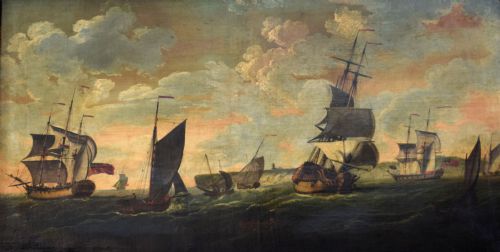
Green Sea Maritime Art
Green sea maritime art captures stormy coastal waters and working vessels through 19th-century oil paintings and delicate watercolours.
Green Sea Maritime Art
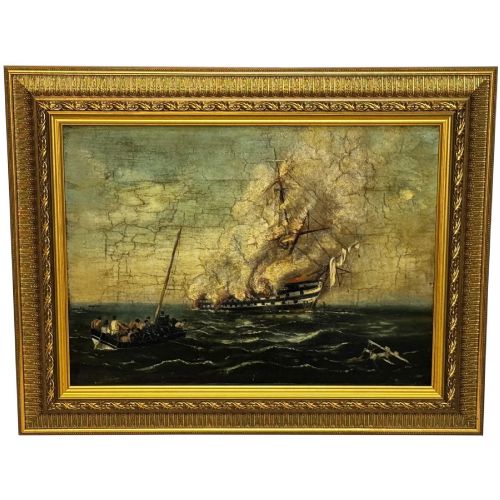
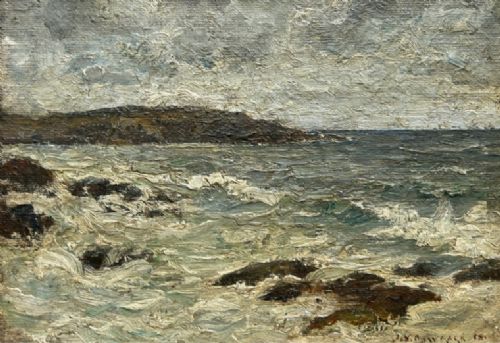
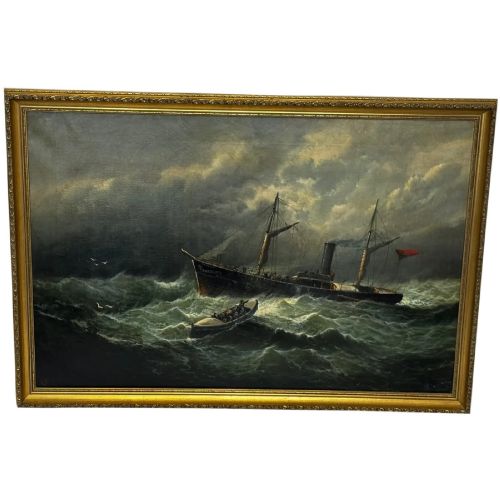
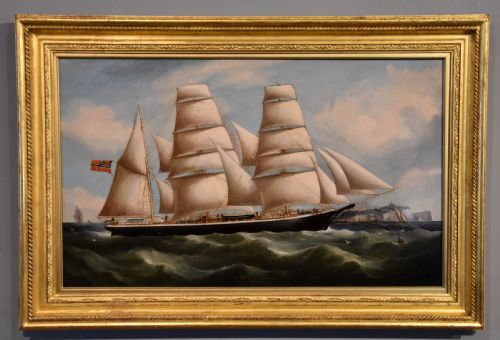
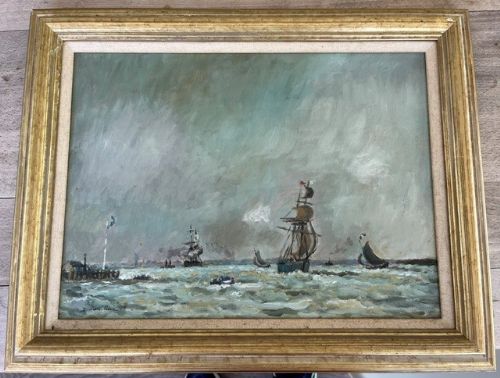
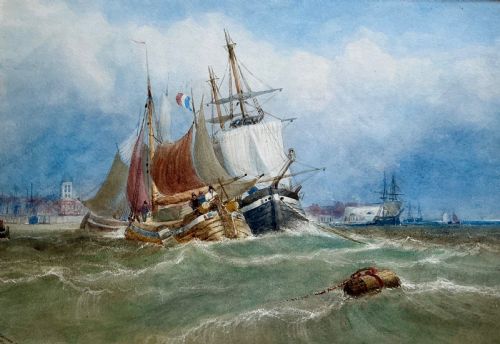
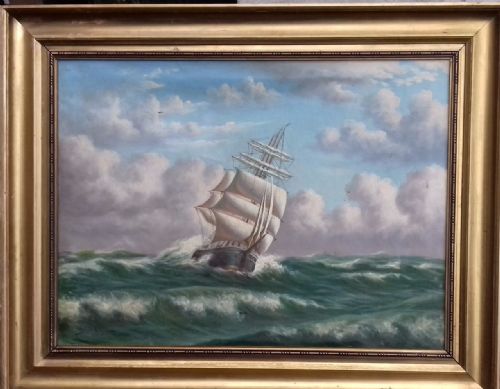
When you search for green sea maritime art, you encounter historical oil paintings, watercolours, and scratch-built ship models depicting coastal scenes and open waters. These works span periods from the mid-18th century through to the mid-20th century, capturing rocky seascapes, harbours, and naval schooners.
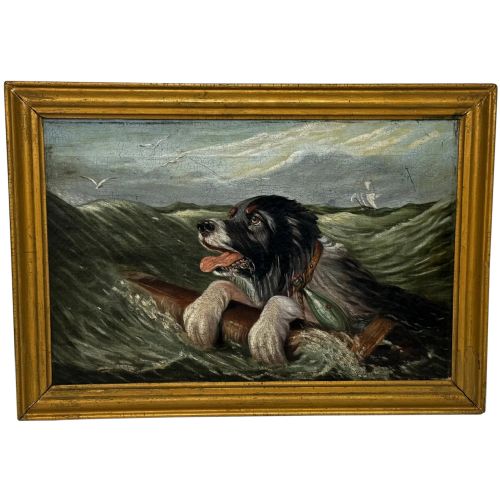
The most common pieces on this page are 19th-century oil paintings on canvas and board, alongside early 20th-century watercolours. Subjects range from Dutch fishing boats and British coastal shipping to dramatic narratives like shipwrecked Saint Bernard dogs.
Materials and methods
Artists rendering green sea maritime art relied primarily on oil paint applied to canvas or wood panels, utilising impasto techniques to build up the heavy texture of choppy waves. Others worked in watercolour pigment on paper, capturing lighter atmospheric effects along Yorkshire and Manx coasts.
Frames often incorporate gilt and gold leaf to complement the maritime subjects. Folk art examples utilise carved wood and mixed media for scratch-built ship models.
Listings span multiple eras, including Victorian marine works, Edwardian watercolours, and mid-century French and British paintings on canvas, board, and paper.
Factors of quality
Quality in green sea maritime art rests upon the artist's ability to render water convincingly and capture the movement of vessels under sail. Stronger pieces demonstrate confident brushwork, accurate rigging detail, and harmonious tonal control across turbulent waves.
Attribution to documented painters or signed works generally elevate a piece above anonymous examples. The handling of light, particularly in moonlit or stormy compositions, distinguishes superior canvases from simpler decorative works.
William Broome·Richard B. Spencer·Henry Barlow Carter·F A Roylance·V Dybdal·Walter Meegan·Charles Martin Powell·Francis Holman·J W Carey
The Green Sea Maritime Art Glossary
- Impasto
- Paint applied thickly to a canvas or panel, standing out in relief from the surface. This technique allows artists to give physical weight to churning green sea waves.
- Watercolour pigment
- Finely ground colour suspended in a water-soluble binder, applied to paper. It creates transparent washes well-suited to luminous skies and coastal water.
- Diorama
- A three-dimensional partial scene, often depicting a ship model within a constructed coastal or marine environment. These pieces combine model-making with painted backgrounds.
- Gilt
- A thin layer of gold applied to wood frames to ornament the perimeter of a painting. It adds reflective warmth that frames dark oceanic palettes.
- Scratch-built
- A model constructed entirely from raw materials rather than from a commercial kit. Folk art examples showcase this laborious handmade construction.
Green Sea Maritime Art: Frequently Asked Questions
What subjects appear in green sea maritime art?
Paintings depict rocky coastal seascapes, fishing boats, naval schooners, and merchant barques navigating open water. Scenes range from Dutch coastal shipping to specific locations like Scarborough and Garwick Bay.
Artists also recorded dramatic narratives, including shipwreck rescues and moonlit harbours, capturing the changing moods of the sea across different historical periods.
How do I care for antique oil paintings?
Keep paintings away from direct sunlight and fluctuating temperatures to prevent canvas distortion and paint cracking. Dust frames gently with a dry, soft brush.
Avoid using water or chemical cleaners on the painted surface. Consult a professional conservator if cleaning or varnish removal becomes necessary.
Are watercolours as durable as oil paintings?
Watercolours on paper are more sensitive to light and moisture than oil paintings on canvas or wood. Framing them behind glass with acid-free mounts protects the pigment from degradation.
Display watercolours on interior walls away from direct sunlight to preserve the original vibrancy of the pigments.
What is folk art in maritime collections?
Maritime folk art encompasses pieces made by makers outside the formal academic academies, such as scratch-built ship models. These objects reflect traditional craftsmanship and personal ingenuity.
Such pieces prioritize functional representation and direct observation over strict adherence to academic proportion, lending them distinct character.