




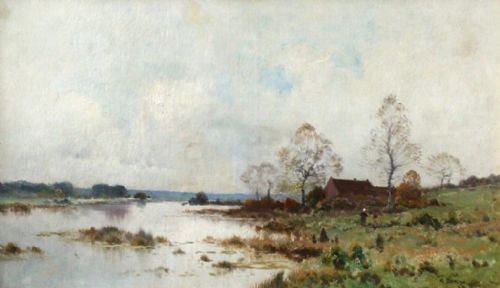


Green Riverbank Oil Painting
A green riverbank oil painting captures quiet water and pastoral life, offering a lasting window into nineteenth and twentieth-century landscapes.
Green Riverbank Oil Painting
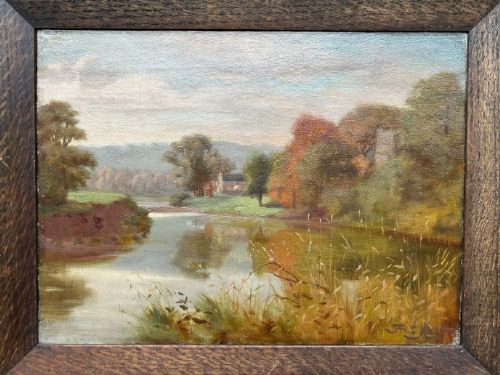
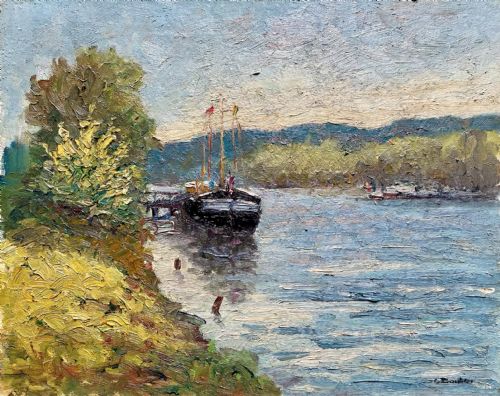
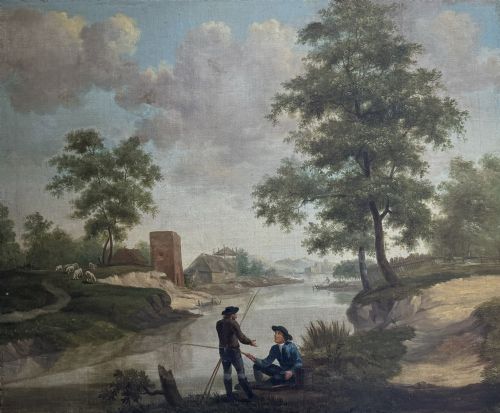
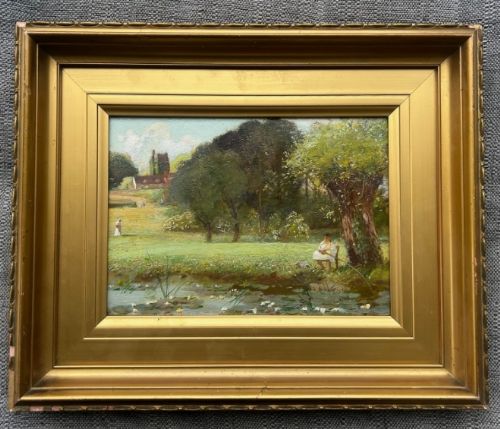
A green riverbank oil painting depicts waterways, meadows, and pastoral scenes created across the eighteenth, nineteenth, and twentieth centuries. These works range from intimate studies on wood panel to large canvases showing rivers, cattle, anglers, and figures gathering flowers.
Most examples encountered here span the nineteenth century up to mid-century modern interpretations. Painters worked in styles from Victorian realism and the Barbizon school to British and French impressionism, recording specific named waterways like the Seine, the Teme, and the Wharfedale.
The subjects focus on rural tranquility, featuring boats, ducks, fishermen, and grazing livestock beside flowing water. Works originate from English, Scottish, and French schools, reflecting diverse regional interpretations of natural light and landscape.
How they were made
Artists applied oil paint using brushes and palette knives onto stretched canvas or prepared wood panels. The combination of oil pigments allowed for rich blending and varied texture, capturing the shifting light on water and foliage.
Many works retain their original gilt frames, which complement the depth of the painted surface. Support materials range from traditional woven canvas to solid wood panels, each dictating how the paint layer ages and holds its pigment.
Listings feature oil paintings on canvas and wood panel from British, Scottish, and French schools spanning the eighteenth to mid-twentieth centuries.
What varies in quality
Quality rests in the artist's handling of light, atmosphere, and brushwork rather than the subject matter alone. Masterful works show confident command over tonal variation in the greenery and water reflections, bringing movement to static scenes.
The depth of composition and the subtlety of colour mixing separate standard decorative water scenes from accomplished impressionist and realist paintings. Stronger pieces demonstrate careful attention to anatomical detail in animals and figures alongside balanced landscape proportions.
Frederick Marriott·Honore Cavaroc·Archibald Kay·Sir David Murray·Pierre Emmanuel Eugene Damoye·Constant Ludovic Artz·Henry Cheadle·T.B. Garvie·Augustus William Ennes·Sonia Mervyn·Thomas E Francis·George Neil
The Green Riverbank Oil Painting Glossary
- Barbizon school
- A nineteenth-century French art movement dedicated to naturalistic landscape painting. Artists painted outdoors to capture realistic light and atmosphere.
- Wood panel
- A rigid wooden support used instead of canvas for oil paintings. Panels provide a firm surface that preserves fine brushwork.
- Impressionism
- A style of painting focusing on everyday subjects, loose brushstrokes, and accurate depiction of light in its changing qualities.
- Gilt frame
- A wooden picture frame covered with a thin layer of gold leaf or gilt finish. These frames often accompany period oil paintings to enhance the artwork.
- Canvas
- A heavy woven fabric stretched over a wooden frame to serve as a support for oil paint. It remains the most common surface for traditional paintings.
Green Riverbank Oil Painting: Frequently Asked Questions
What periods do these paintings cover?
The works span from the eighteenth century through the nineteenth century and into the mid-twentieth century. Artists from various British and French schools contributed to this timeline.
Styles shift from traditional realist depictions to impressionist and post-impressionist interpretations as the decades progress.
Are these paintings signed by artists?
Many of the listed works feature original signatures by the artists who painted them. Some pieces also attribute their creation to specific regional British or French schools.
Signatures provide helpful attribution when researching the provenance and background of individual landscape paintings.
What surfaces were used for painting?
Artists painted primarily on stretched canvas or solid wood panels. Both materials were standard supports during the nineteenth and twentieth centuries.
The choice of support often relates to the period and whether the artist worked outdoors on location or within a studio.
How do I care for an oil painting?
Keep oil paintings away from direct sunlight and dramatic fluctuations in room temperature. Displaying them in stable indoor environments protects the canvas and wood panels.
Dust the surface gently with a soft, dry brush and avoid applying liquids or chemical cleaners to the paint.