
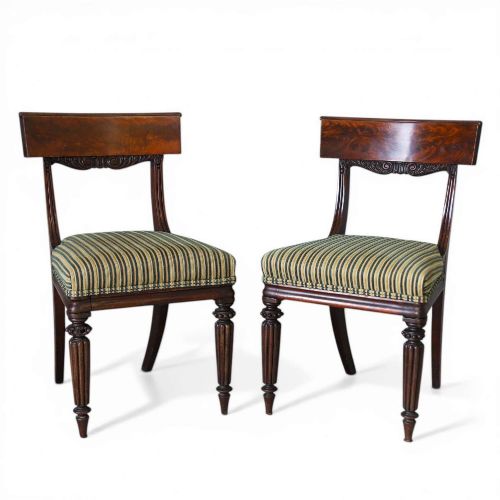

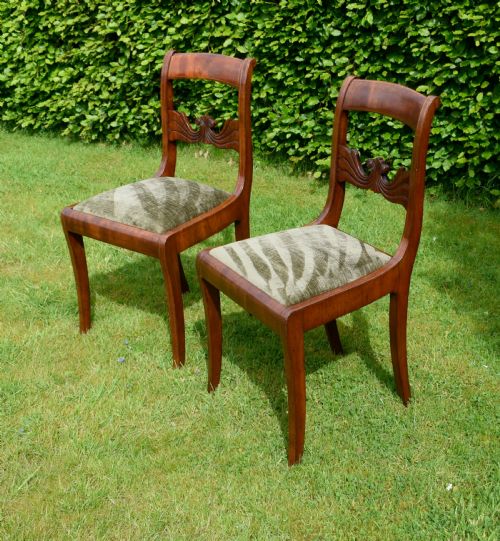


Green Regency Side Chairs
Green regency side chairs bring sharp lines and rich upholstery into a room, offering functional seating rooted in early nineteenth-century design.
Green Regency Side Chairs
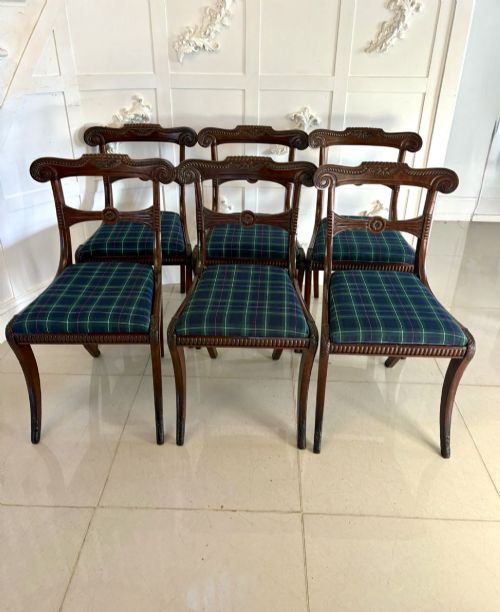
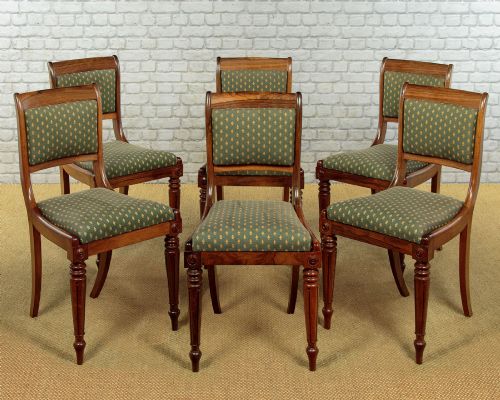
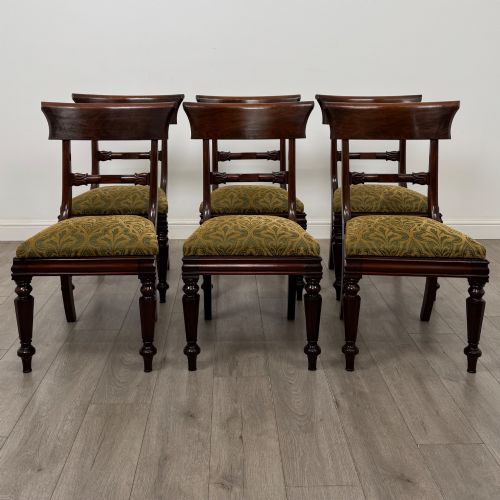
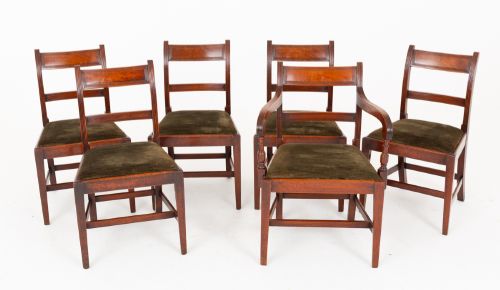
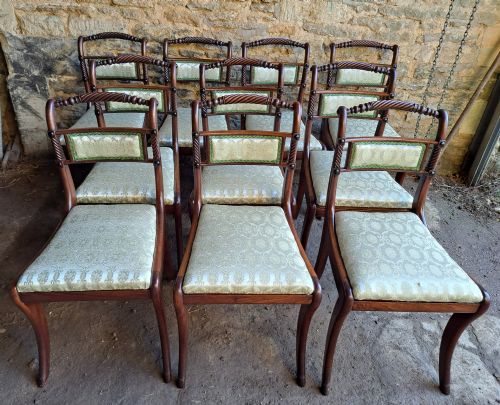
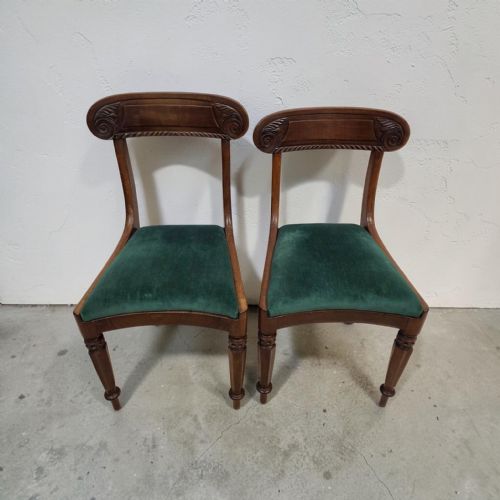
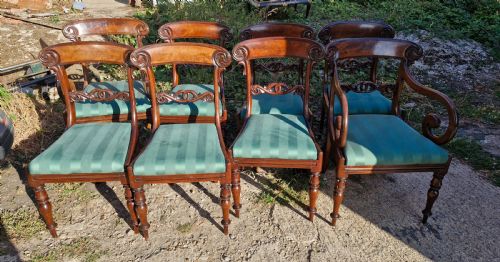
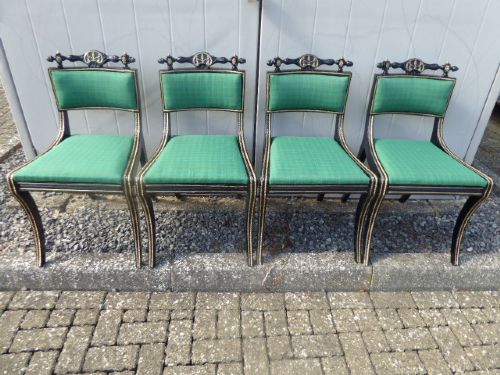
Green regency side chairs represent a specific intersection of early nineteenth-century seating, drawing on Georgian foundations and developing through the regency period into william iv and victorian revivals. When searching for green regency side chairs, buyers encounter pieces defined by slender proportions, upright backs, and fabric coverings in various shades of green.
The evidence on this page shows dining chairs and side chairs spanning the eighteenth century to the late nineteenth century, alongside later revival pieces. Mahogany and rosewood form the structural core of these items, often paired with velvet, leather, or fabric upholstery.
While single chairs and pairs appear, larger dining sets also surface, showing how these seats were produced for formal spaces. The distinct green upholstery distinguishes specific examples from standard timber finishes, introducing colour through velvet or stripe patterns.
Materials and construction
Cabinetmakers utilised dense timbers such as mahogany and rosewood to build the frames, ensuring structural stability for slender legs and curved back rails. Wood selection dictated the carving capabilities, allowing craftsmen to execute reeded legs, rope backs, and bar backs with precision.
Upholstery completed the seating, employing materials like green velvet, leather, and fabric upholstery secured over webbing and stuffing. Brass details sometimes augmented the timber framework, while inlay added surface pattern to select mahogany structures.
Evaluating craftsmanship and condition
Quality rests in the crispness of the timber carving and the integrity of the joinery connecting the legs to the seat frame. Superior examples demonstrate refined proportions in the reeded or turned elements, whereas lesser pieces show heavier, less articulated timber work.
The choice of primary wood also marks distinction, with finely figured rosewood and dense mahogany sitting at the upper end compared to standard woods. Original or sympathetic upholstery treatments maintain the visual harmony intended by the period design.
The Green Regency Side Chairs Glossary
- Regency
- A stylistic period spanning the early nineteenth century, characterised by classical restraint and neoclassical influences. It draws inspiration from ancient Greek, Roman, and Egyptian design vocabulary.
- Side chair
- A chair without arms, designed primarily for dining or occasional use around a room. These pieces feature upright backs and compact footprints.
- Mahogany
- A durable, reddish-brown tropical hardwood favoured by period cabinetmakers for its stability and grain. It took fine carving and polish exceptionally well.
- Rosewood
- A heavily grained, dark timber utilised for high-status furniture during the nineteenth century. Its natural oil content allowed for a deep, polished lustre.
- Reeded
- A decorative moulding consisting of parallel convex strips carved directly into the timber leg or rail. It provides a textural contrast to smooth surfaces.
Green Regency Side Chairs: Frequently Asked Questions
How do I date a regency chair?
Dating relies on observing structural shifts, such as the transition from straight neoclassical legs to curved saber legs and reeded framing during the early nineteenth century. Secondary woods and construction methods also help confirm the period of manufacture.
Later nineteenth-century revivals often mimic these earlier silhouettes, meaning detailed inspection of the timber ageing and joinery remains essential for accurate attribution.
Where should I place a side chair?
Side chairs function effectively around a dining table, where their narrow proportions allow multiple seats to fit comfortably. They also serve well against hallway walls or in bedrooms as occasional seating.
Purchasing them as pairs or sets permits coordinated placement across formal and living spaces.
Are these chairs comfortable for daily use?
Period side chairs feature upright backs designed for formal dining etiquette rather than lounging. Their supportive frames and padded upholstery provide stable seating for meals or desk work.
Modern comfort levels depend on the condition of the internal webbing and padding beneath the green fabric or velvet.
What timber was used most often?
Mahogany served as the primary timber for the majority of these chairs, valued for its strength and deep red-brown colour. Rosewood also appears on finer examples from the nineteenth century.
Ebonised finishes and alternative woods feature occasionally, reflecting specific stylistic preferences within the broader regency aesthetic.