




Green Porcelain Tray
A green porcelain tray brings a vivid splash of colour and fine craftsmanship to a dressing table or desk.
Green Porcelain Tray
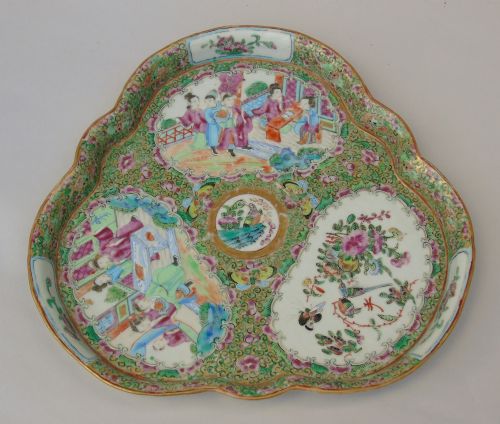
A green porcelain tray encompasses a variety of functional and decorative vessels designed for the desk, dressing table, or display cabinet. The selections found here range from nineteenth-century Chinese export wares to early twentieth-century English cabinet pieces.
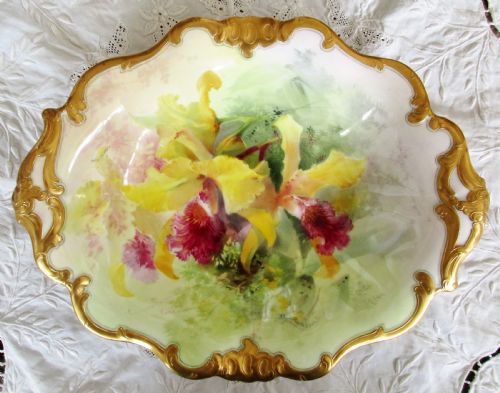
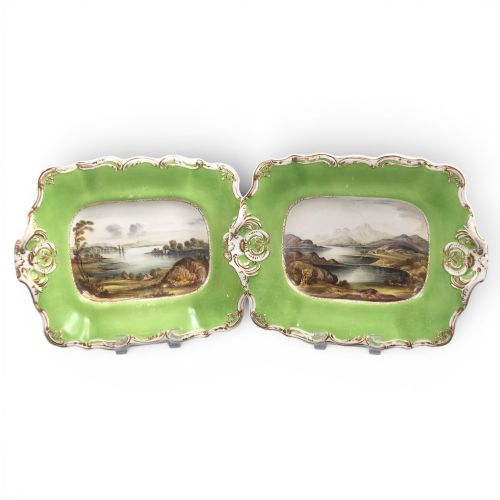
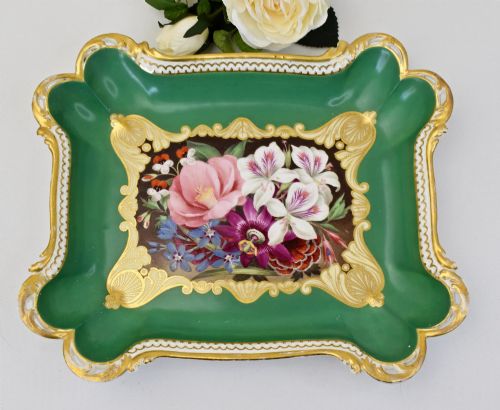
The green porcelain tray most frequently encountered on this page takes the form of a cabinet dish, a dressing table set component, or a desk accessory such as an inkstand. These items combine utility with intricate hand-painted detail, often featuring botanical motifs or classical scenes.
Originating across periods from the Georgian era through to Edwardian times, these pieces demonstrate diverse cultural influences including Continental, Chinese Export, and traditional English manufactories.
How they were made
The foundation of these items is hard-paste porcelain, shaped into dishes, trays, and inkwells before undergoing initial firing. Artisans then applied overglaze enamel to achieve the characteristic green colourings and detailed pictorial scenes.
Gilding, gold leaf, and brass mounts frequently supplement the porcelain body. These metallic additions highlight rims, bases, and structural details, particularly on pieces influenced by Rococo Revival and Art Nouveau styles.
Materials recorded across current items include hard-paste porcelain, gold leaf, enamel, and brass.
What varies in quality
The standard of a green porcelain tray depends significantly on the precision of the hand-painted decoration, such as botanical studies or figural work by named artists. Superior examples exhibit exceptional brushwork and depth within the overglaze enamels.
The integration of supplementary materials, including fine gold leaf application and solid brass bases, distinguishes finer cabinet pieces from standard utility wares. Furthermore, the crispness of moulded details in styles like Rococo Revival or Art Nouveau indicates the skill of the original manufactory.
Royal Doulton·Copeland and Garrett·Doe and Rogers·Royal Dux
The Green Porcelain Tray Glossary
- Hard-paste porcelain
- A dense, durable ceramic composed of kaolin and petuntse, fired at high temperatures. It forms the robust body for many nineteenth-century cabinet dishes and trays.
- Overglaze enamel
- Pigments applied over the fired glaze and subjected to a lower second firing. This technique allows for vibrant colour palettes on decorative trays.
- Gilding
- The application of gold leaf or powdered gold to the surface of porcelain. It frequently accents the rims and handles of serving and decorative dishes.
- Vide poche
- A small tray or bowl intended for emptying pockets of small items. These desk accessories appear in Art Nouveau and Edwardian forms.
- Cabinet dish
- A decorative porcelain piece created primarily for display rather than utility. These items often feature detailed hand-painted botanical or landscape subjects.
Green Porcelain Tray: Frequently Asked Questions
How should I clean my porcelain tray?
Dust the surface gently with a soft, dry cloth to protect any delicate overglaze enamel or gilding.
Avoid submerging pieces in water, particularly those with brass mounts or gold leaf details.
Were these trays used for serving food?
Most items listed as cabinet dishes or dressing table sets were intended for display or personal accessories rather than culinary use.
Desk trays and inkstands served functional roles in studies and writing rooms.
How do I identify the period of a tray?
Examine the stylistic indicators, such as the flowing lines of Art Nouveau or the ornate flourishes of Rococo Revival.
Maker marks and registration numbers stamped or painted on the base also help determine the era of manufacture.
What is the difference between Famille Verte and Famille Rose?
Famille Verte ceramics are characterised by a predominant palette of green enamels, developed extensively during the Qing dynasty.
Famille Rose pieces introduce an opaque pink enamel derived from colloidal gold, appearing alongside other pastel hues.