



Green Pattern Sofa
A green pattern sofa brings rich textile warmth and classic seating character to a room, drawing on centuries of upholstery tradition.
Green Pattern Sofa
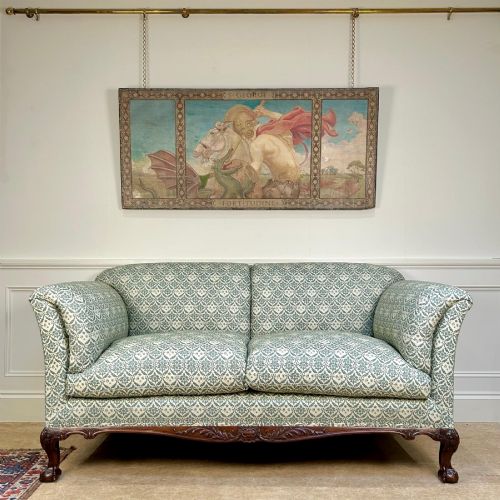
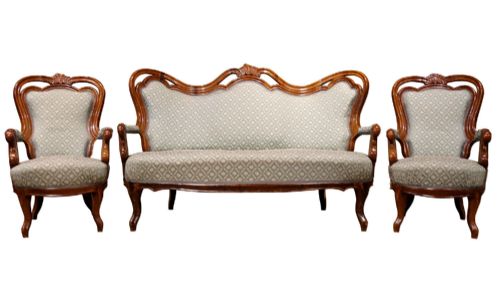
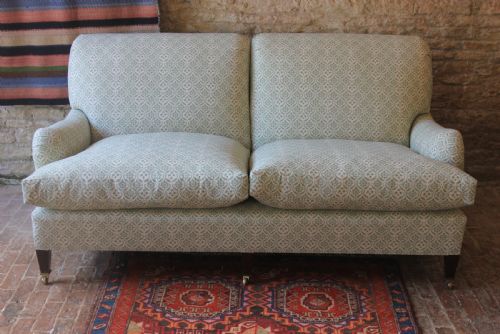
A green pattern sofa encompasses various historic seating forms ranging from nineteenth-century salon suites and Victorian settees to eighteenth-century George III designs. These pieces combine timber frames with patterned upholstery, including tapestry fabric and specialist textiles.
Buyers encounter diverse stylistic interpretations such as Regency, Edwardian, and English Country House aesthetics. Formats vary from two-seater settees and library sofas to large three-seat configurations and specialised tete-a-tete seating.
Materials and construction
Frames rely on solid hardwoods like mahogany, walnut, timber, and giltwood, often shaped with hand-carved details. Brass accents frequently appear on feet and hardware components.
Upholstery utilises traditional fabric and tapestry textile techniques fixed over sprung or padded foundations, finished with specialist coverings from makers such as Colefax & Fowler and Howard and sons.
Green Pattern Sofa Retail Price Guide 2026
Typical asking prices for green pattern sofa among the pieces listed under this phrase on Sellingantiques today, from the lower quarter to the upper quarter. They describe what is for sale here now, not the wider market.
An eighteenth-century giltwood tete-a-tete sofa lets two people converse face-to-face without ever straining their necks.
Assessing quality and craftsmanship
Quality rests in the precision of the timber frame carving, the integrity of structural woods like walnut and mahogany, and the sophistication of the joinery. Earlier eighteenth-century pieces demonstrate intricate hand-carved giltwood details that differ markedly from later twentieth-century production methods.
The standard of the upholstery materials elevates a piece, distinguished by the choice of fine tapestry fabric or textile and the pedigree of the maker involved in the covering or frame construction.
Howard and sons·Colefax & Fowler
The Green Pattern Sofa Glossary
- Salon suite
- A matching set of seating furniture designed for formal reception rooms. These collections typically include a main sofa alongside matching armchairs.
- Tete a tete
- A specialised two-seater sofa configuration allowing two people to sit facing each other in an S-shape. This form gained popularity during the eighteenth and nineteenth centuries.
- Giltwood
- Timber treated with gold leaf or gold paint applied to the carved surface. It appears frequently on formal antique frames.
- Lyre shaped
- A furniture back or arm contour styled in the form of an ancient Greek lyre. This motif defines many Regency period designs.
Green Pattern Sofa: Frequently Asked Questions
What periods do these sofas cover?
The selection spans from the eighteenth century through the Victorian and Edwardian eras up to later twentieth-century productions. Pieces reflect design movements including Regency, Queen Anne style, and George III.
Craftsmanship evolves across these periods from hand-carved giltwood frames to later twentieth-century upholstered forms by notable makers.
What fabrics are used for upholstery?
Upholstery materials include standard fabric, heavy tapestry fabric, and patterned textiles. Maker-specific coverings also feature on twentieth-century pieces.
These textiles define the visual pattern of the sofa, working alongside exposed wood frames in walnut, mahogany, and giltwood.
How do I identify a Regency style sofa?
Regency and Regency style pieces often incorporate distinct architectural motifs, such as lyre-shaped frames. They utilise timbers like mahogany and walnut.
These sofas reflect formal early nineteenth-century design aesthetics, contrasting with the lighter Edwardian or country house styles.
Are there matching seating sets available?
Salon suites provide matching sets that include a sofa alongside companion seating pieces. These coordinate in timber frame and fabric pattern.
Such suites were originally created for formal reception spaces and remain intact as multi-piece groupings.