

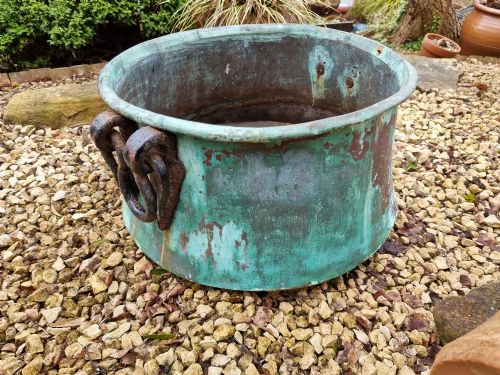


Green Metal Planters
Green metal planters are robust vessels of iron, copper and bronze built to hold plants indoors and out.
Green Metal Planters
Green metal planters span functional garden containers, decorative patio urns and converted domestic vessels shaped from iron, copper and bronze. When searching for green metal planters, buyers encounter items ranging from Victorian cast iron urns to Art Deco painted iron hanging baskets and French wrought iron pieces.
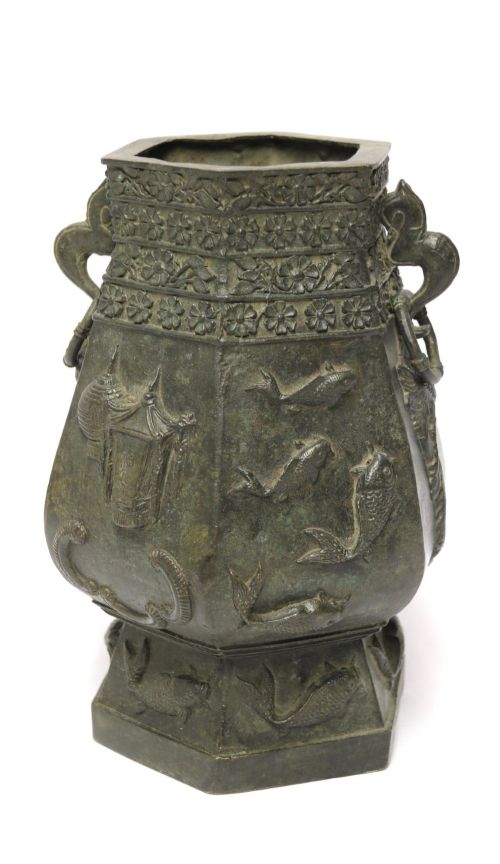
The selection includes utilitarian copper pots, log bins and milk churns alongside monumental bronze temple vases. Origins stretch from nineteenth century French and British pieces to Chinese and Japanese vessels, reflecting diverse manufacturing traditions across the periods.
How They Were Made
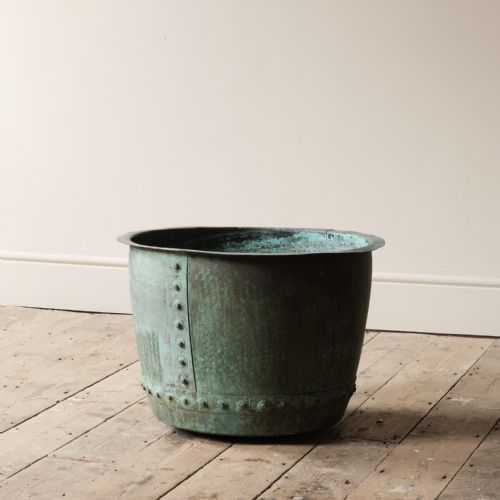
Makers fashioned these pieces through casting, riveting and forging using metals such as cast iron, wrought iron, copper and zinc. Cast iron examples relied on moulds to create heavy garden urns, while copper vessels utilised hand-riveted sheet metal construction.
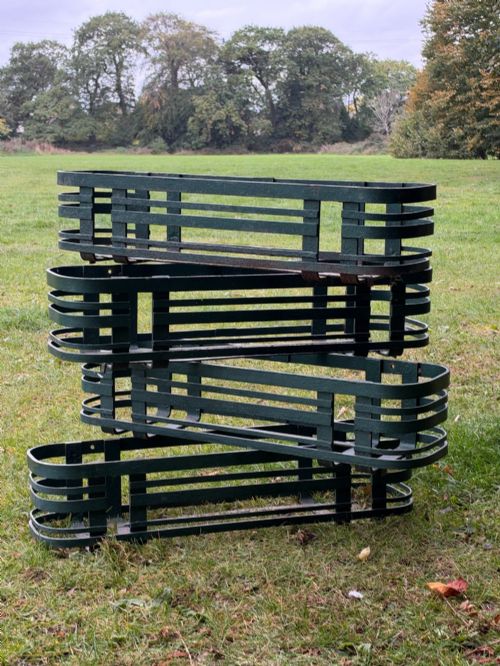
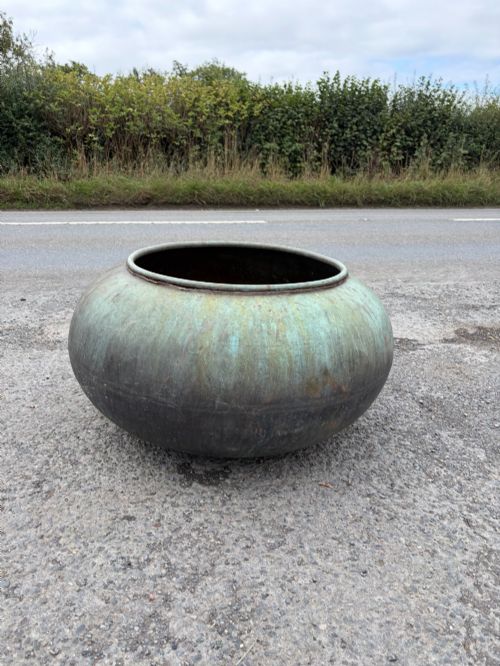
Surfaces received protective or decorative treatments, including applied paint finishes and natural verdigris oxidation on copper and bronze. Painted iron strapwork and utilitarian boilers show the practical application of metalworking techniques across different eras.
Green Metal Planters Retail Price Guide 2026
Typical asking prices for green metal planters among the pieces listed under this phrase on Sellingantiques today, from the lower quarter to the upper quarter. They describe what is for sale here now, not the wider market.
An old milk churn found a second career holding umbrellas and flowers, proving agricultural vessels make remarkably versatile indoor companions.
What Varies in Quality
Quality rests in the weight of the metal, the integrity of the construction and the depth of the finish. Heavy cast iron urns and solid bronze vessels demonstrate superior structural substance compared to lighter fabricated alternatives.
The character of the surface finish also distinguishes individual pieces, whether through genuine aged verdigris on copper or intact historical paint layers on iron work. Details such as riveted joints and well-defined decorative casting mark the distinction between ordinary and exceptional examples.
The Green Metal Planters Glossary
- Verdigris
- A green patina that forms naturally on copper, brass or bronze through atmospheric oxidation over time. This layer provides both a distinctive colour and a protective barrier for the metal beneath.
- Jardiniere
- An ornamental pot or stand designed to hold growing plants or flowers. These vessels typically sit indoors or on protected patios rather than exposed garden beds.
- Strapwork
- A decorative technique using flat, intersecting strips of metal arranged in geometric or interlaced patterns. In ironwork, it provides both structural support and visual interest.
- Usubata
- A traditional Japanese bronze vessel specifically designed for flower arrangements, featuring a broad top basin and a distinct pedestal base. These pieces often serve as garden or interior ornaments.
Green Metal Planters: Frequently Asked Questions
Can green metal planters stay outdoors all year?
Most cast iron, wrought iron and bronze pieces withstand outdoor conditions through seasonal weather changes. Metals like copper and iron develop natural oxidation or surface weathering when left exposed to the elements.
Heavier urns and robust vessels remain stable in gardens, though freezing water inside unlined containers can risk damage to the metal. Placing pots on feet or indoors during harsh winter months helps preserve vulnerable finishes.
How do I clean an antique metal planter?
Cleaning requires gentle methods that preserve the historic surface and any accumulated verdigris or paint layers. Warm water and a mild detergent remove surface dirt without stripping the character built up over decades.
Harsh chemical cleaners and abrasive scouring pads must be avoided because they damage patinated bronze, copper and painted iron surfaces. A soft brush clears dust from intricate cast iron details and riveted seams.
What is the difference between a planter and a garden urn?
Garden urns feature a classical footed or pedestal design with a flared bowl shape derived from ancient stone vessels. Planters encompass a broader range of flat-bottomed pots, buckets and bins built to contain soil and plantings directly.
While urns serve a decorative focal point on patios or terraces, planters prioritise practical volume for holding shrubs, flowers or logs.
How do I identify a nineteenth century iron urn?
Nineteenth century cast iron urns display heavy construction, sand-cast textures and traditional classical motifs such as fluting or foliate scrolls. Makers often assembled these pieces from multiple bolted sections rather than modern single-piece casts.
Examining the interior reveals casting irregularities and oxidation patterns consistent with age, while the weight indicates substantial iron usage typical of the period.