
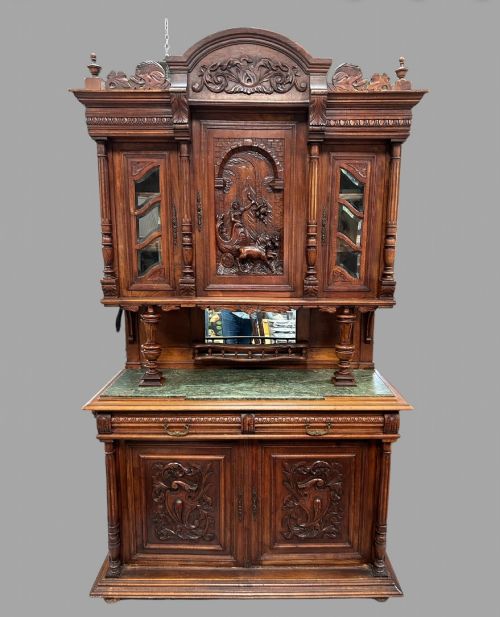
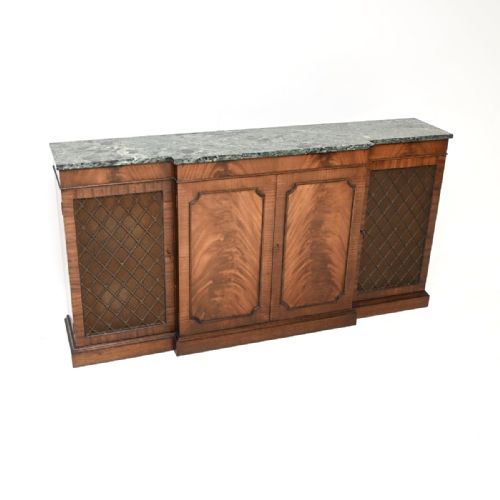


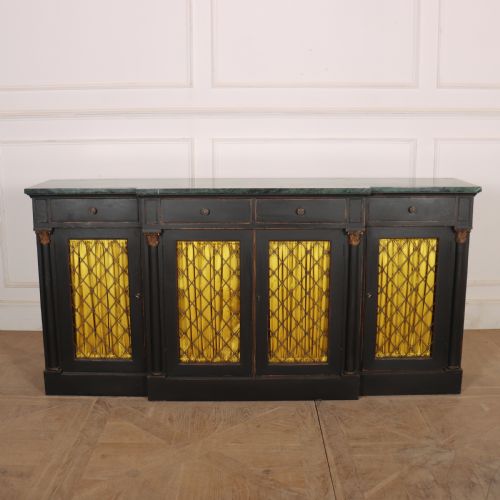


Green Marble Sideboard
A green marble sideboard brings solidity and striking cool colour to a room, uniting heavy timber cabinetry with a polished stone surface.
Green Marble Sideboard
A green marble sideboard sits at the intersection of robust storage furniture and classical decorative stonework. When you search for a green marble sideboard, you encounter substantial serving tables, commodes, and cabinets crowned with durable slabs of veined stone.
The pieces appearing under this description span several centuries, with Victorian and nineteenth-century examples dominating the selection alongside earlier eighteenth-century forms and later revival designs. Woods such as mahogany, walnut, rosewood, and painted finishes provide the supportive structure beneath the heavy stone tops.
Makers adapted these forms across various regional traditions, producing French Provincial dressers, English side cabinets, and Dutch commodes. Each version relies on the heavy stone surface to anchor a room while offering enclosed shelving or drawers for practical storage.
Construction and Materials
Cabinetmakers constructed the foundational carcasses of these pieces using dense hardwoods like mahogany, walnut, and rosewood, frequently applying detailed marquetry or parquetry veneers to the exterior surfaces. Painted finishes also appear on specific regional pieces, offering an alternative to polished timber.
The defining stone surface consists of heavy marble, selected for its deep green tones and natural veining, cut and polished to fit precisely over the timber base. Metal elements such as brass mounts, ormolu details, and occasional silver or glass additions secure the structural joints and embellish the facades.
The listings on this page span the 18th, 19th, and 20th centuries, featuring walnut, mahogany, and rosewood paired with marble and brass.
Distinctions in Quality
Quality rests significantly on the integration between the heavy stone slab and the timber carcass below. Finer pieces demonstrate precise joinery that supports the substantial weight of the marble without sagging or straining the primary structure.
The selection of materials dictates the upper tier of the range, where figured veneers, intricate brass or ormolu mounts, and carefully matched marble graining elevate standard storage into exceptional cabinet work.
The Green Marble Sideboard Glossary
- Commode
- A low chest of drawers or cabinet designed with decorative status, often featuring a prominent stone top. These pieces originated in France before becoming popular across Europe.
- Ormolu
- Gilded bronze mounts applied to furniture for decorative effect. The technique involves treating brass or bronze with an amalgam of mercury and gold.
- Marquetry
- The art of applying pieces of veneer to a structure to form decorative patterns. Craftsmen utilise various coloured woods to create pictorial designs on the cabinet doors.
- Breakfront
- A piece of furniture having a central section that projects forward from the flanking wings. This architectural arrangement creates depth and shadow across the front elevation.
Green Marble Sideboard: Frequently Asked Questions
What is a green marble sideboard used for?
These pieces serve as substantial storage furniture in dining rooms, hallways, or living spaces, providing enclosed shelving behind doors or drawers for tableware and household items.
The polished stone top offers a durable surface for serving food, displaying decorative objects, or holding lamps and mirrors.
How do I care for the marble top?
Wipe the stone surface regularly with a soft, damp cloth and mild, pH-neutral soap to prevent staining from acidic liquids or oils.
Avoid placing abrasive items directly onto the polished stone, and apply a specialised marble sealer periodically to protect the finish.
How do I date a marble topped cabinet?
Examine the secondary woods inside the drawers and the construction techniques used for the carcass joints, such as hand-cut dovetails or machine-made elements.
The overall style, whether Regency, Victorian, or Arts and Crafts, provides strong clues regarding the decade of manufacture.
Are these sideboards heavy?
The combination of dense hardwoods and thick marble slabs makes these pieces exceptionally heavy and robust.
Moving them generally requires at least two people, and care must be taken to lift the stone separately if it is not permanently fixed to the base.