





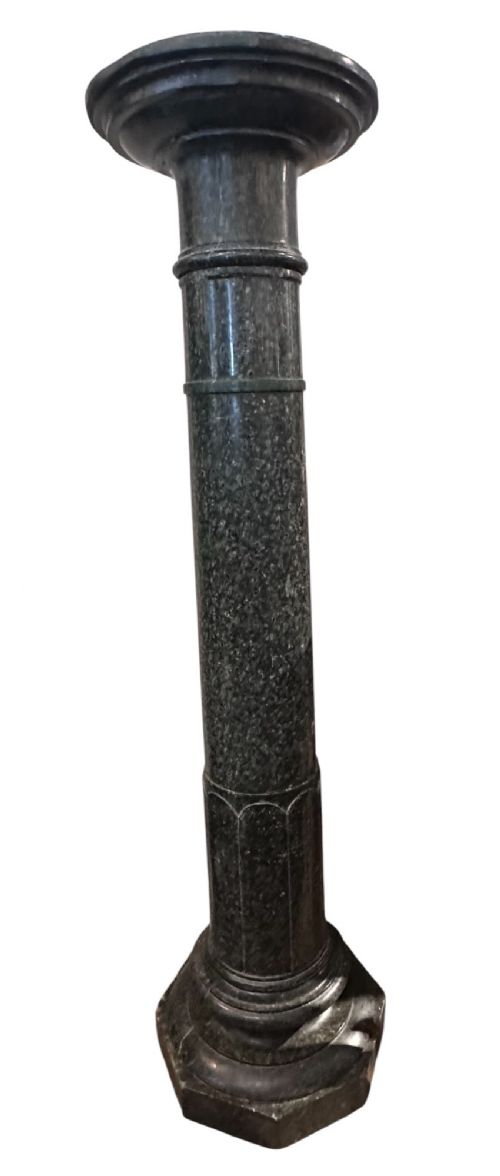


Green Marble Plinth Sculpture
A green marble plinth sculpture brings together classical stone bases and metal figures, offering a striking display for interiors.
Green Marble Plinth Sculpture
A green marble plinth sculpture combines a weighted stone base, often formed as a column, pedestal or flat slab, with an upper figure or bust. These decorative objects span the nineteenth century through the mid twentieth century, drawing on Neoclassical, Art Deco and Egyptian Revival traditions.
The most common forms on this page include tall serpentine or verde antico marble columns alongside compact bronze or spelter statuettes mounted directly onto marble bases. European workshops produced these pieces for grand interiors, ranging from architectural display columns to cabinet statuettes.
Buyers encounter both architectural supports designed to elevate other works of art and integrated figural sculptures where the green marble base forms an essential part of the composition. French and Italian makers feature prominently across these varied formats.
Materials and construction
Makers shaped natural stones such as verde antico, serpentine and onyx into smooth columns and plinths using specialised cutting and polishing techniques. These varied green marbles provide heavy, stable foundations for the metal figures placed upon them.
Figures and mounts utilise cast bronze, spelter or ormolu, sometimes finished with cold painting or gilding. Metal elements were securely attached to the stone bases using threaded rods or pins fitted into drilled apertures.
Listings feature green marble in varieties including verde antico and serpentine, paired with bronze, spelter and onyx.
Assessing quality and execution
The integration between the upper sculpture and the stone base reveals the standard of manufacture. Well executed pieces feature custom mounts that fit the contours of the marble precisely without visible gaps or poor alignment.
Josef Lorenzl
The Green Marble Plinth Sculpture Glossary
- Spelter
- A zinc alloy commonly used as a cost-effective substitute for bronze in nineteenth and early twentieth century statuary. It takes patination well to simulate heavier metals.
- Neoclassical
- A style drawing inspiration from the classical art and culture of ancient Greece and Rome. It emphasises symmetry, proportion and classical architectural motifs.
- Ormolu
- Gilt bronze produced by applying a finely ground high-carat gold mercury amalgam to a bronze object. The process creates a rich, durable golden surface.
Green Marble Plinth Sculpture: Frequently Asked Questions
How do I clean green marble?
Dust the marble surface regularly with a soft, dry cloth to prevent buildup. Avoid acidic cleaners or household detergents that can etch the polished stone.
For deeper cleaning, use a damp cloth with mild soap, then dry the surface thoroughly. Protect the stone from harsh chemicals and excess moisture.
Where should I place a heavy column?
Position large stone columns on structurally sound flooring that can support concentrated weight. Ensure the piece stands on a level surface to maintain balance and stability.
Keep heavy marble away from high traffic areas where it might be bumped. Adequate clearance allows the sculpture to be viewed properly from multiple angles.
How do I identify a spelter figure?
Examine the underside or unpainted areas of the metal for a dull greyish colour underneath the surface finish. Spelter is softer and lighter than bronze.
Look for casting seams that are filed down less carefully than those on high-end bronzes. The metal often shows minor surface pitting under magnification.
What defines the Grand Tour style?
Grand Tour pieces are sculptures and architectural models acquired by wealthy travellers in Europe during the eighteenth and nineteenth centuries. They typically replicate famous antiquities.
These works served as tangible proof of classical education and cultural travel. They range from small bronze statuettes to carved marble architectural fragments.