
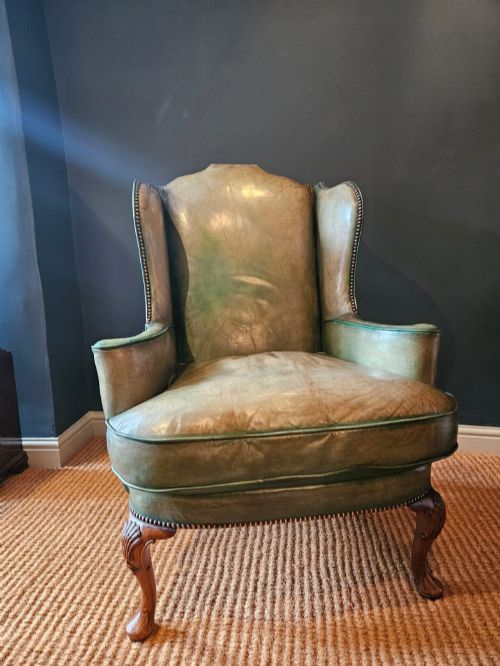
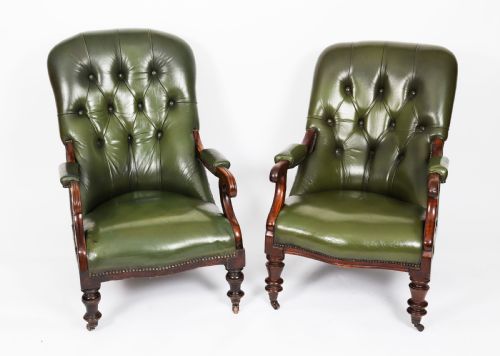


Green Leather Fireside Chair
A green leather fireside chair offers deep-seated comfort paired with period presence, making it the anchor of any traditional study or hearth.
Green Leather Fireside Chair
A green leather fireside chair brings together robust seating design and rich upholstery tones, spanning periods from the eighteenth century through to the Edwardian era and the nineteen-thirties. Buyers searching for a green leather fireside chair encounter forms such as wingbacks, library chairs, and deep upholstered armchairs shaped by Victorian, Georgian, and Regency influences.
The materials recorded across these pieces rely heavily on leather, hide, and rexine paired with frames of mahogany, walnut, and other woods, often detailed with brass elements. Pieces range from grand George III cabriole leg models to late nineteenth-century Queen Anne style wing chairs and Edwardian faded green leather designs.
Most examples on this page reflect formal domestic seating traditions where timber frames support padded arms and high backs designed to block draughts. The selection moves from button-backed mahogany wing chairs to carved showood fireside chairs, providing distinct silhouettes suited to period interiors.
Construction and materials
Frames are built from hardwoods such as mahogany and walnut, providing structural stability for deep-seated armchair designs. Joinery methods support carved showood elements and cabriole legs, while brass hardware often secures structural or decorative points.
Upholstery relies on leather, hide, and rexine stretched over webbing, hessian, and internal padding. Leather and hide finishes develop patinas over decades of use, while alternative surfaces like rexine appear on specific Victorian iterations.
Listings span periods from the Georgian era through to the nineteen-thirties, featuring mahogany, walnut, brass, and hide.
Judging quality and character
Quality rests in the harmony of the timber frame and the depth of the leather hide. Finer examples display crisply carved walnut or mahogany woodwork alongside supple leather that shows natural grain and age-related softening.
The distinction between standard production and superior craftsmanship lies in the proportion of the wings, the comfort of the sprung or stuffed interior, and the integrity of the joinery beneath the upholstery.
The Green Leather Fireside Chair Glossary
- Cabriole leg
- A furniture leg that curves out and then in, resembling an animal's leg. This form is common on eighteenth-century and revival seating.
- Wing back
- An armchair style featuring projecting side panels designed to shield the sitter from draughts. These wings frame the upholstered backrest.
- Showood
- Exposed wooden framing on an upholstered chair where timber is visible around the back or arms. This technique highlights the carved wood structure.
- Rexine
- A branded artificial leather fabric made from cloth coated with nitrocellulose. It appears as an alternative upholstery material on nineteenth-century seating.
Green Leather Fireside Chair: Frequently Asked Questions
How do I clean green leather?
Maintenance involves gentle dusting with a soft cloth and the application of specialist leather balms to keep the hide supple. Avoid harsh chemical cleaners that strip the original finish.
Regular care preserves the natural grain and prevents the leather from drying out over decades of daily use.
What rooms suit these chairs?
These armchairs anchor studies, libraries, and living rooms where traditional proportions complement architectural mouldings and open hearths. Their deep seats and high backs provide functional comfort.
Positioning them away from direct heat sources protects the timber frame and leather upholstery from environmental damage.
What is a Howard style armchair?
Howard style seating is characterised by deep, low-slung upholstery and rolled arms designed for maximum comfort. These chairs focus on generous padding rather than exposed wooden frames.
They offer a distinct silhouette compared to rigid wingbacks, blending nineteenth-century lounging comfort with refined craftsmanship.