
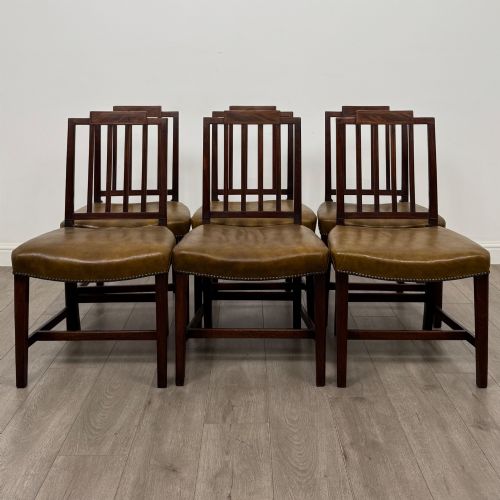
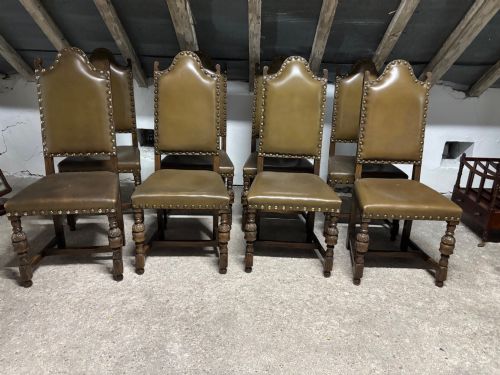
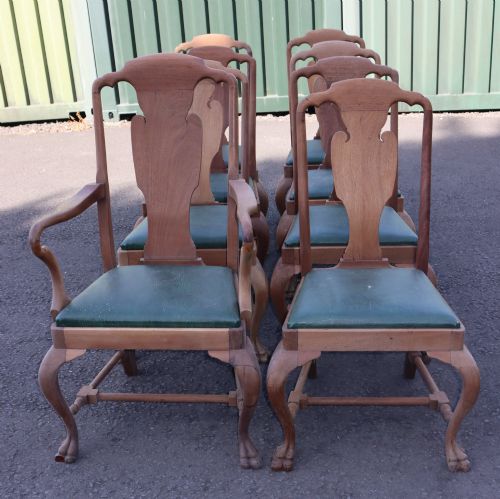
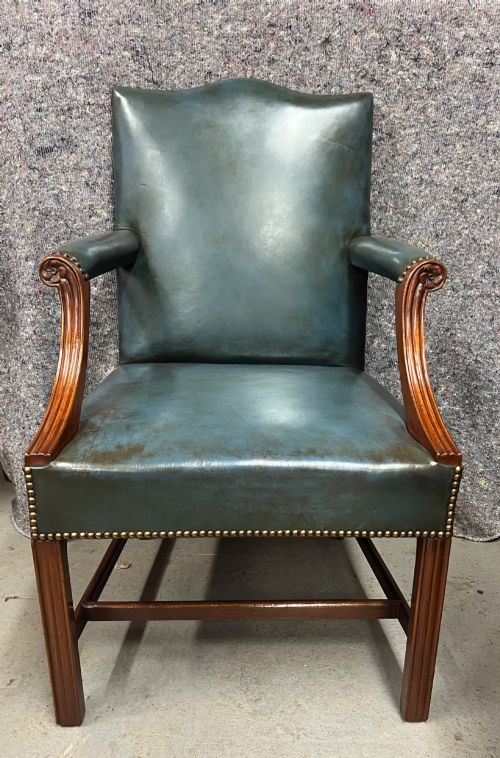

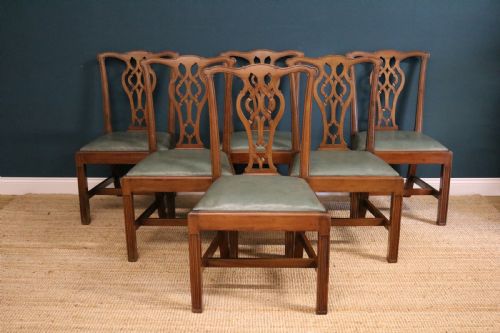


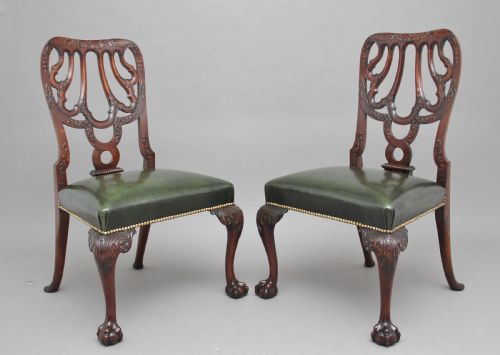


Green Leather Back Chair
A green leather back chair brings rich colour and enduring utility to a room, ranging from library armchairs to office seating.
Green Leather Back Chair
A green leather back chair encompasses a variety of seating forms designed for studies, libraries, and dining rooms across multiple centuries. When exploring this selection, buyers encounter everything from Georgian wingbacks and Regency library armchairs to Victorian desk chairs and Edwardian revolving office seating.
The evidence shows these pieces span periods from the eighteenth century through the early twentieth century, including revival styles that emulate earlier craftsmanship. Dining chairs, side chairs, and fireside armchairs appear frequently alongside heavy library seating upholstered in shades of green.
Originating predominantly from British workshops and cabinet makers, these chairs combine sturdy wooden frames with durable leather upholstery intended for daily use. Whether selecting a single desk chair or a matched set of dining seats, the primary focus rests on period character and functional design.
Materials and Construction
Makers constructed the frames of these chairs using dense hardwoods such as mahogany, oak, walnut, and rosewood, often hand-carved with traditional details. These timbers provide the structural integrity required to support heavy use over generations, while brass accents and studs frequently secure the upholstery.
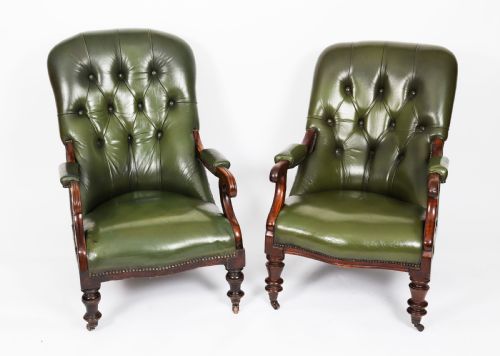
Upholstery centres on quality leather, paired occasionally with cane panels on specific library or bergère models. Traditional padding methods utilise natural stuffings within the back and seat, held firmly by the surrounding wooden framework.
Smokers bow office chairs provide a robust wooden refuge for paperwork.
Distinguishing Quality
The distinction between standard examples and the finest pieces lies in the crispness of the timber carving and the selection of the primary wood. Superior items display well-figured mahogany or oak, precise joinery, and finely moulded frames that reflect the high standards of period cabinet making.
The integration of the leather upholstery also defines the tier of craftsmanship, with hand-tooled borders and traditional buttoning marking out exceptional library and desk chairs. Proportions and the retention of original timber patination further elevate the status of individual chairs within this range.
The Green Leather Back Chair Glossary
- Wingback
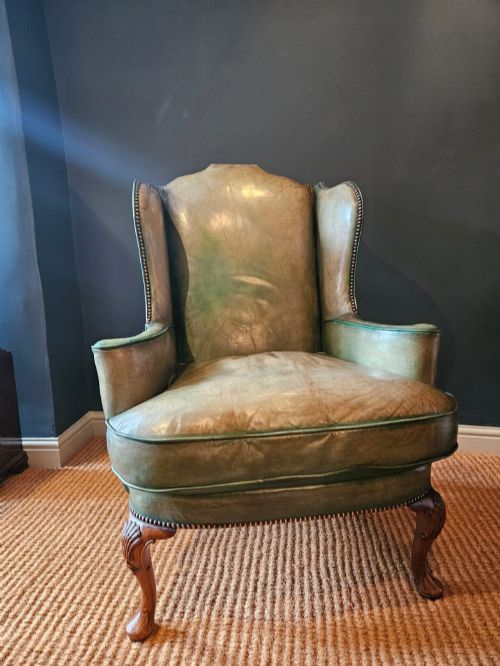
- An armchair with side panels designed to shield the sitter from draughts. These pieces often feature leather upholstery and deep buttoning.
- Bergère
- An enclosed armchair with stuffed upholstery and wooden framing. Cane work frequently appears on the sides and back of these seats.
- Gainsborough chair
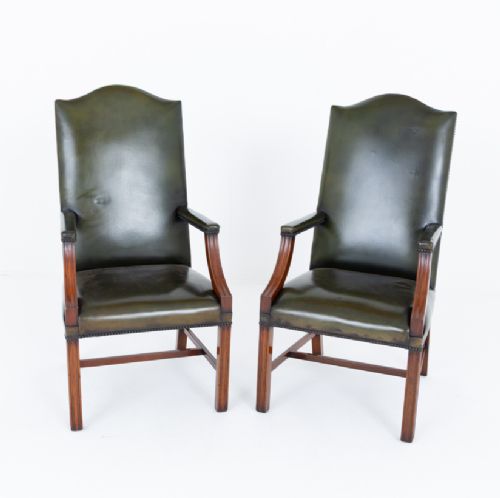
- A type of wide, upholstered armchair with an open-framed wooden design, short arms, and straight legs. They commonly serve as desk or library seating.
- Chesterfield
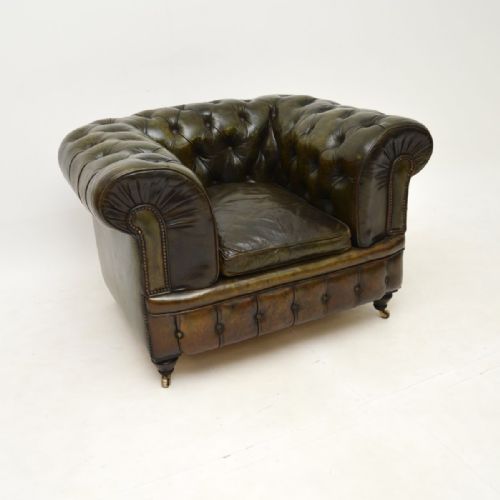
- A heavily padded armchair featuring deep buttoning and rolled arms. These pieces utilise durable leather across the back and seat.
- Cabriole leg
- A furniture leg that curves out and then tapers inward, finishing in a pad or claw foot. This form appears frequently on eighteenth-century seating.
Green Leather Back Chair: Frequently Asked Questions
How do I date a green leather chair?
Dating relies upon examining the timber species, framing style, and construction methods employed by the maker. Georgian and Regency pieces display specific carved details and wood patination distinct from later Victorian or Edwardian reproductions.
Upholstery techniques and hardware like brass studs also provide clues to the era of manufacture. Comparing the chair to documented period examples helps confirm its approximate decade of origin.
Are these chairs suitable for daily desk use?
Many of these pieces, particularly those designated as desk or office chairs from the Victorian and Edwardian periods, were built specifically for work environments. Solid timber frames and supportive leather backs provide the necessary durability for regular seating.
Revolving desk chairs and solid oak office models from the early twentieth century function well in modern studies. Buyers should check the seat height and proportion against their specific desk dimensions before purchase.
What is a Gainsborough chair?
A Gainsborough chair is a wide, upholstered armchair featuring open wooden arms and straight legs, popular during the eighteenth century and later revived in the Victorian era. They were originally designed for writing desks and libraries.
The distinct combination of an upholstered back and leather seat with exposed mahogany framing separates this form from standard armchairs. They offer a compact footprint while maintaining formal seating comfort.
How should I care for antique leather?
Maintaining antique leather requires keeping the material nourished with appropriate balms or waxes to prevent drying and cracking over time. Avoiding direct sunlight and intense heat sources protects the hide and preserves the original green colour.
Gentle dusting with a soft, dry cloth is sufficient for routine upkeep. Harsh chemical cleaners should be strictly avoided to protect the historical surface finish.