



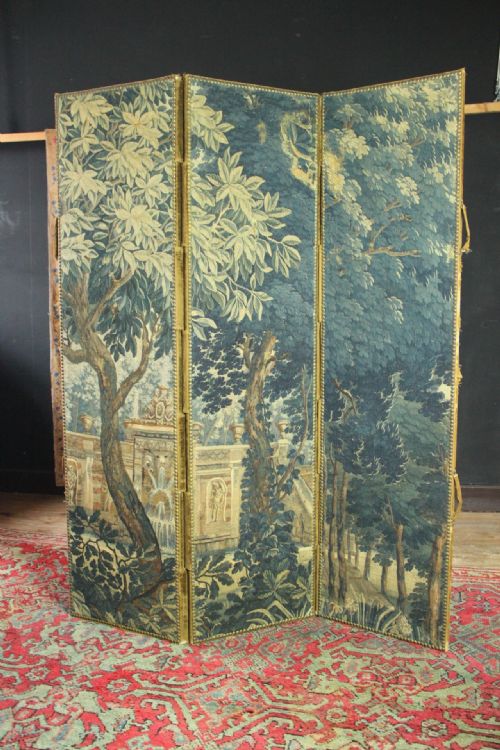


Green Landscape Tapestry
A green landscape tapestry brings centuries of woodland foliage and mythological scenes directly to an interior wall.
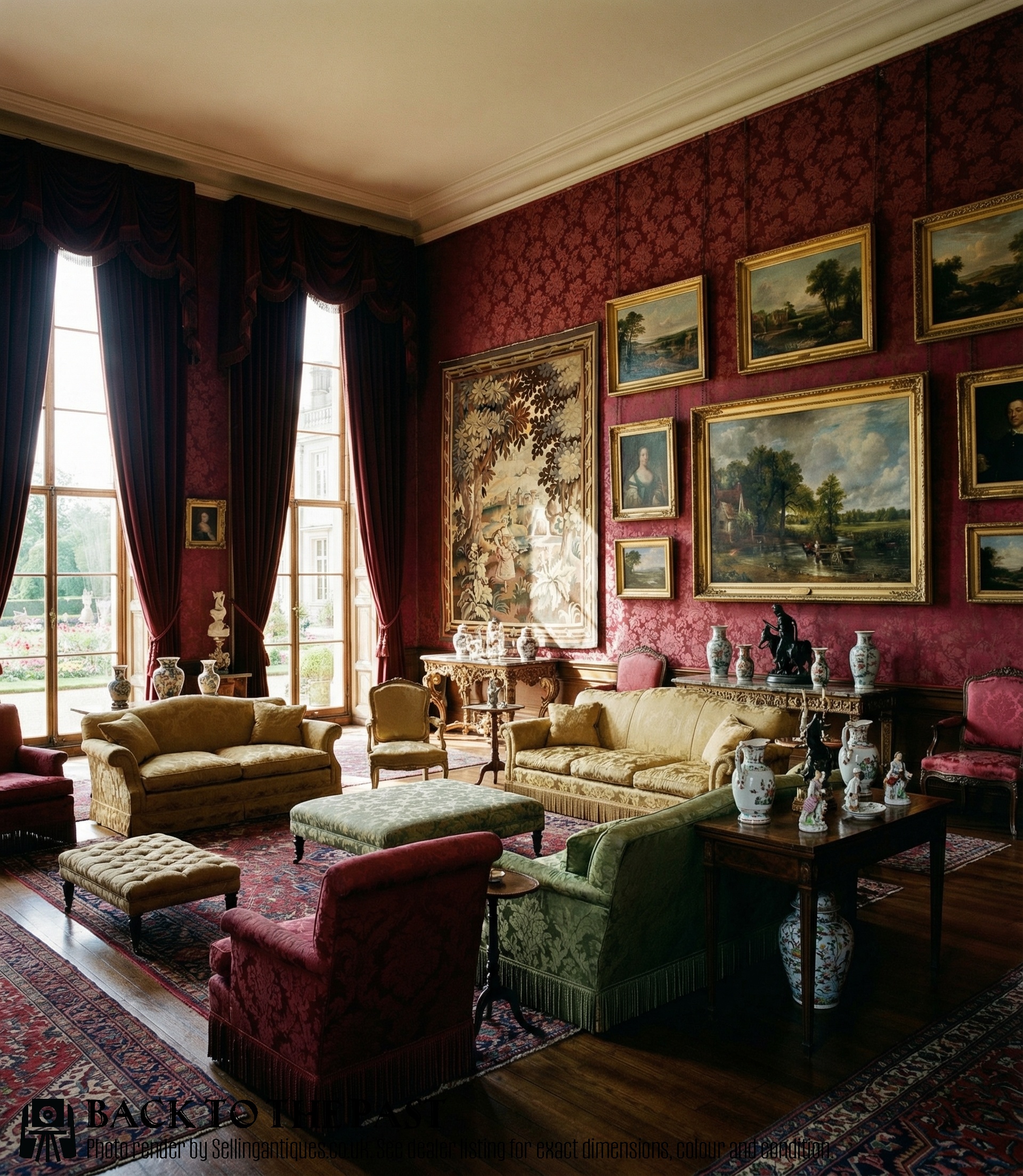
Green Landscape Tapestry
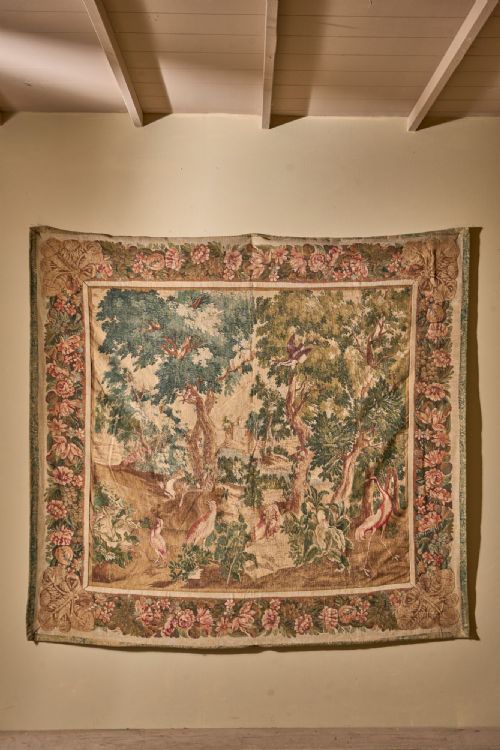
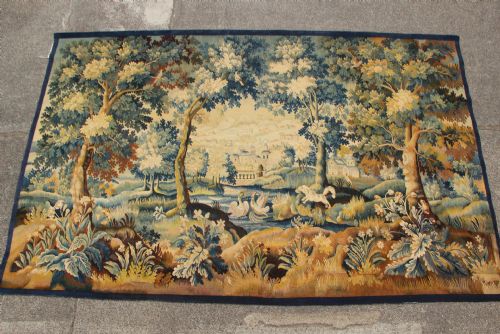
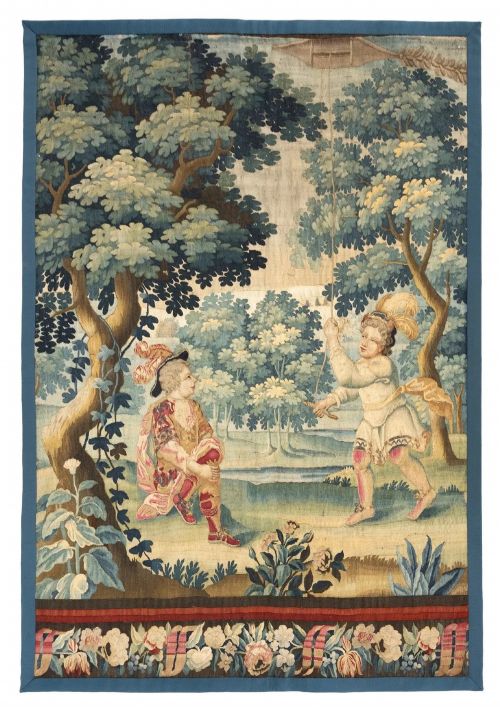
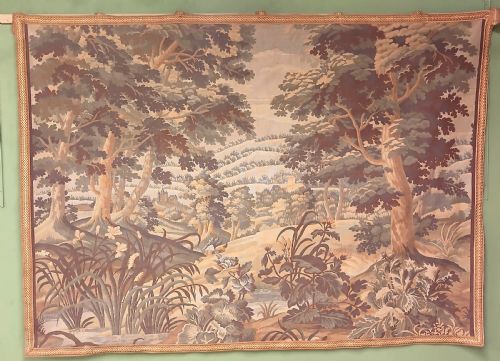
When searching for a green landscape tapestry, buyers encounter large-scale woven wall hangings dominated by foliage, trees, and garden vistas. These pieces span from the seventeenth century through to the nineteenth century, originating primarily from Flemish and French workshops including Aubusson and Audenaarde.
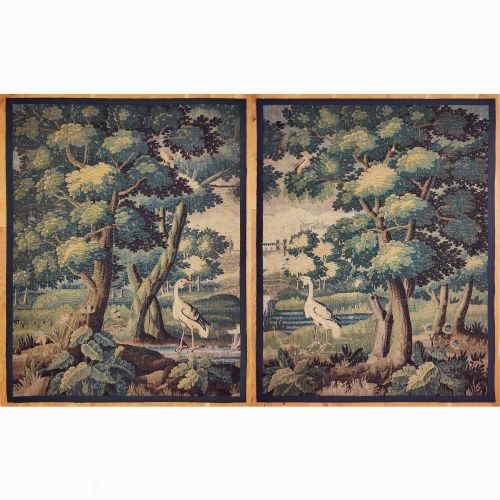
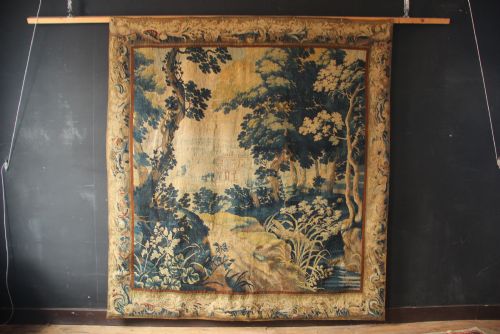
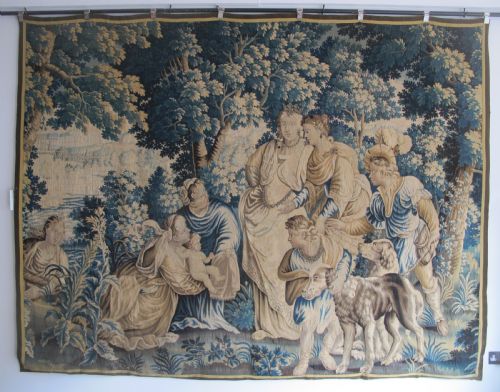
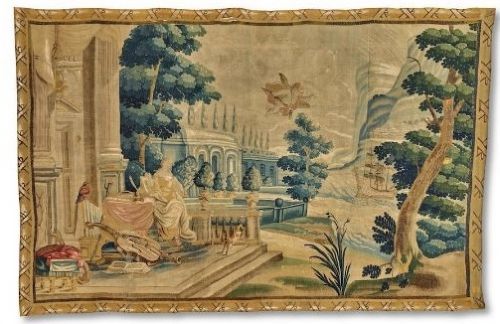
The version most commonly met on this page is the verdure tapestry, which depicts dense woods, distant chateaux, and occasional birds or mythological figures. These textile works function as monumental wall art, and occasionally appear mounted within folding screens.
Originating as portable insulation and decoration for stone-walled rooms, these textiles now serve as focal points in large spaces. The survival of these works demonstrates the enduring appeal of bringing forest greens and botanical scenes indoors.
What varies in quality
The separation between standard and exceptional pieces rests upon the density of the weave and the complexity of the pictorial depth. Finer works employ greater proportions of silk alongside wool, allowing for nuanced shading in the foliage and crisp architectural details in distant structures.
Preservation of the original colour palette also distinguishes superior examples, particularly where the characteristic green tones remain vibrant rather than shifting entirely to blue through the loss of yellow dye components. The clarity of the composition and the scale of the surviving textile panel further determine the distinction of the piece.
Forest floors woven centuries ago still sprout phantom blue leaves where yellow dye vanished in the wash.
The Green Landscape Tapestry Glossary
- Verdure
- A tapestry type dominated by plant motifs, trees, foliage, and sometimes animals or birds. These scenes create a forest or garden atmosphere across the wall.
- Aubusson
- A town in France renowned for its tapestry production, particularly pieces featuring pastoral landscapes and floral borders. Workshops here produced notable works from the seventeenth century onward.
- Flemish Baroque
- An artistic style prevalent in seventeenth-century Flanders that influenced the dramatic composition and rich detail of woven panels. This aesthetic emphasises movement and lush natural forms.
- Audenaarde
- A centre of tapestry weaving in the Spanish Netherlands known for producing verdure and landscape panels. Pieces from this origin often display deep forest compositions.
- Chinoiserie
- A decorative style reflecting European interpretations of Chinese and East Asian artistic traditions. These elements occasionally appear incorporated into broader landscape designs.
Green Landscape Tapestry: Frequently Asked Questions
How do I hang a large tapestry?
Large woven textiles require even weight distribution across the upper edge to prevent distortion of the fibres. A common method involves sewing a heavy-duty fabric sleeve to the reverse and sliding a flat wooden batten through it.
This batten can then be secured to the wall at multiple fixing points. Alternatively, specialised brass or wooden clips designed for textiles can be used at regular intervals along the top margin.
Where should I place a tapestry?
These wall hangings suit principal reception rooms, hallways, or stairwells where ample wall space allows the full composition to be viewed. Placing them away from direct sunlight protects the wool and silk yarns from fading over time.
Maintaining stable indoor humidity levels also preserves the structural integrity of the fabric fibres. Avoid damp exterior walls to ensure the longevity of the historical materials.
How do I date a woven panel?
Dating relies on examining the stylistic conventions, border designs, and materials present in the weave. Seventeenth-century Flemish examples typically feature heavy, exuberant foliage borders, whereas later French pieces often incorporate lighter neoclassical or pastoral elements.
Analysing the specific type of wool and silk fibres alongside any surviving provenance records helps narrow the period of origin.