




Green Fruit Oil Painting
Green fruit oil painting works capture garden produce and woodland harvests in pigment, offering a lasting slice of domestic abundance for the wall.
Green Fruit Oil Painting
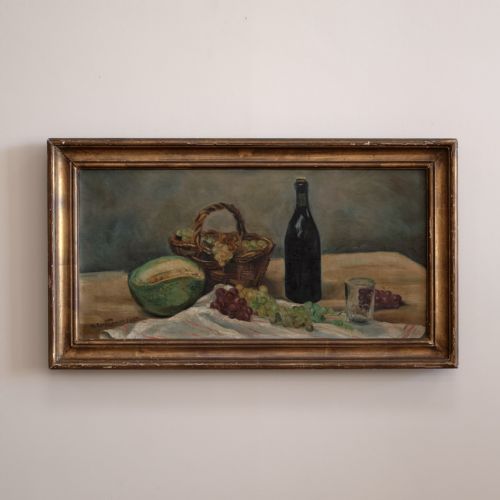
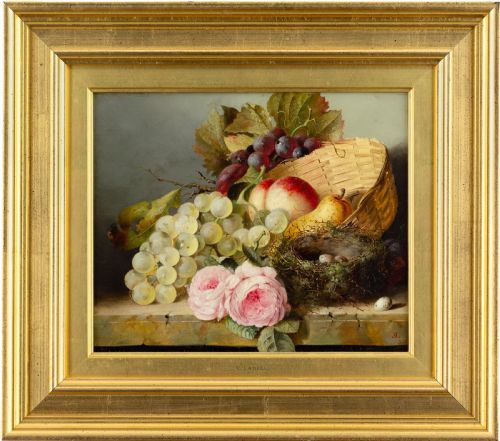
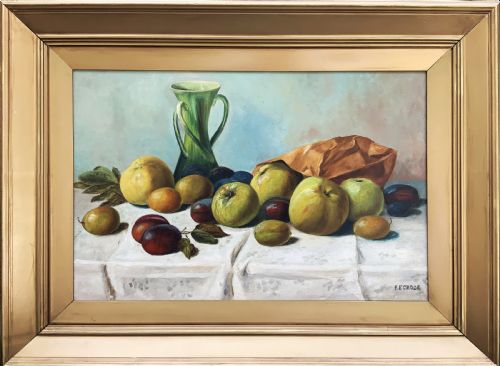
A green fruit oil painting presents carefully arranged compositions of apples, grapes, and citrus set against domestic table settings or rustic backgrounds. These works span the nineteenth and twentieth centuries, capturing the enduring appeal of natural subjects in various interior spaces.
Most examples found here date from the Victorian and Edwardian eras through to the mid twentieth century, reflecting academic realism, impressionism, and post-impressionism. Artists use oil paint on canvas, wood panel, or board to render the textures and subtle tones of unripened fruit.
Materials and Construction
Makers applied oil paint to stretched canvas, wooden panels, or prepared boards, building up layers to achieve depth and luminosity in the fruit. These supports are frequently housed in period frames made of wood, giltwood, or gold leaf.
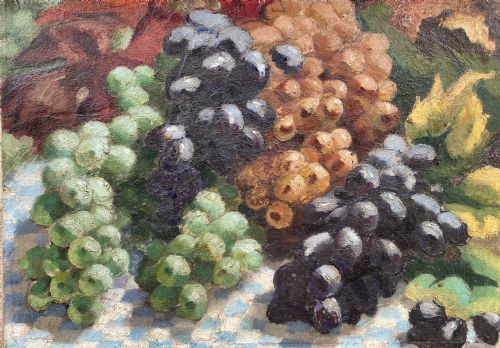
The technique relies on pigment handling that balances tonal precision with visible brushwork, particularly in later impressionist and post-impressionist interpretations of the subject.
Listings span the nineteenth and twentieth centuries, featuring oil paint on canvas, wood, and board within giltwood and wooden frames.
Assessing Quality and Execution
Superior execution shows in the draughtsmanship and the artist's command of light across curved surfaces, separating academic precision from simpler decorative works. The treatment of foliage, baskets, and surrounding ceramics reveals the painter's ability to render varied textures convincingly.
Framing plays a role in overall integrity, with solid wood period frames and genuine giltwood surrounds adding context that lesser or later replacements do not achieve.
Edward Ladell·William Duffield·Vincent Clare·Thomas Hooper·Oliver Clare·George Lance
The Green Fruit Oil Painting Glossary
- Oil paint
- A slow-drying paint made by combining pigments with a drying oil, typically linseed. This medium allows for smooth blending and rich tonal gradations.
- Giltwood
- Wood that has been coated with a thin layer of gold leaf or gilt powder. It provides a reflective, decorative border for traditional canvases.
- Wood panel
- A flat piece of timber used as a rigid support for painting instead of stretched canvas. Artists often favoured this surface for smaller, detailed still life studies.
- Impressionism
- A nineteenth-century art movement characterised by relatively small, thin, yet visible brush strokes and an emphasis on accurate depiction of light.
Green Fruit Oil Painting: Frequently Asked Questions
How do I hang a heavy framed oil painting?
Secure the hanging wire or rings directly into the wooden studs of the wall using appropriate fixings rated for the weight of the frame and canvas.
Ensure the piece hangs level and away from direct sunlight or moisture sources to protect the oil paint and gilt surround.
What periods do these still lifes come from?
The available works range from nineteenth century realism through Edwardian examples to mid twentieth century modernist interpretations.
Styles shift from highly detailed Victorian academic compositions to looser post-impressionist studies on canvas or board.
Are these paintings signed by the artists?
Several examples feature visible artist signatures or inscriptions, while others remain attributed to specific schools or periods based on style.
Documentation and signatures help place the work within a known maker's output or regional tradition.