








Green Forest Painting
A green forest painting brings the quiet depth of woodland light and shadow straight onto your wall.
Green Forest Painting
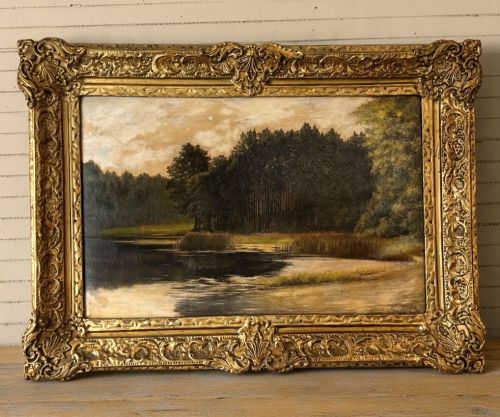
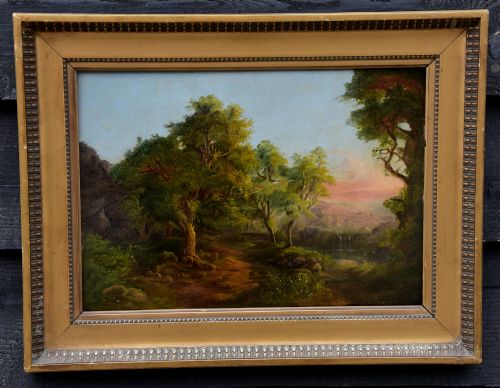
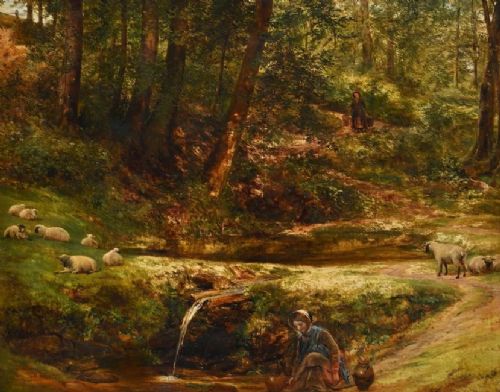
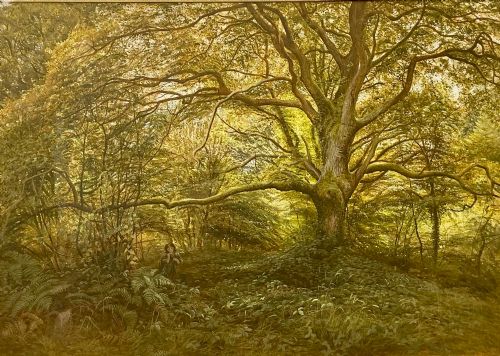
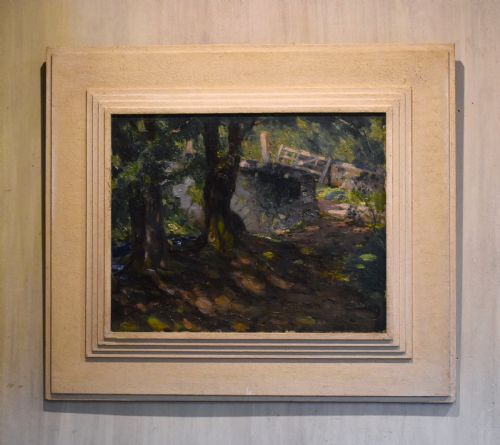
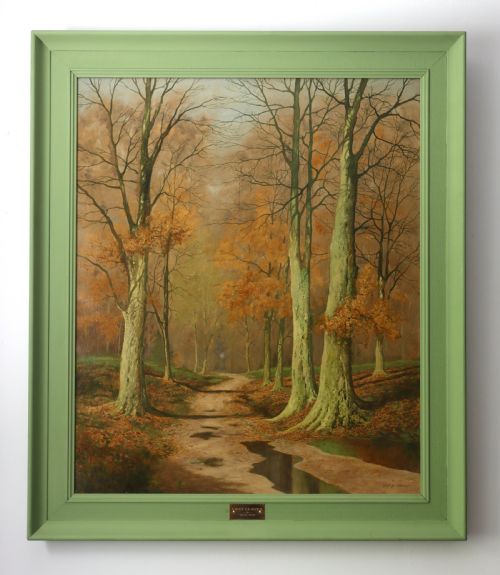
A green forest painting captures woodland scenes, river landscapes, and quiet tree-lined views through various historical periods. These works range from Victorian watercolours to mid-century impressionist canvases, showing how artists interpreted the natural world over decades.
The pieces on this page primarily consist of oil paintings and watercolours on canvas, board, paper, and wood panel. They span from the mid-nineteenth century through the Edwardian era and into the mid-twentieth century.
Buyers will encounter both signed original works by listed British and French artists and atmospheric atmospheric pieces by nineteenth-century English schools. Each work reflects the specific landscape traditions of its era, from romantic realism to impressionist studies of light among trees.
Materials and methods
Artists built these works using oil paint on stretched canvas, wooden panels, or rigid board, layering pigment to achieve depth in foliage and shadow. Others applied transparent watercolours onto paper, capturing lighter woodland atmospheres with fluid washes.
Supports varied according to period and intention, with nineteenth-century pieces often utilising prepared wooden boards or heavy canvas. Frames typically consist of wood, complementing the natural subject matter of the woodland scenes.
Green Forest Painting Retail Price Guide 2026
Typical asking prices for green forest painting among the pieces listed under this phrase on Sellingantiques today, from the lower quarter to the upper quarter. They describe what is for sale here now, not the wider market.
Listings feature works spanning from the 1850s to the 1960s, executed in oil paint and watercolour on canvas, board, paper, and wood.
Markers of quality
Quality rests in the artist's handling of light filtering through branches and the convincing depth of the woodland interior. Stronger examples demonstrate confident brushwork or delicate watercolour control that brings texture to bark, leaves, and forest floors.
Condition of the canvas, board, or paper surface plays a major role, alongside the preservation of the original pigments. Works that retain their luminous summer greens and deep earthy tones without excessive fading or past restoration command greater attention.
William H Myers·Richard Redgrave·Thomas Bromley Blacklock·James Proudfoot·Rowland Henry Hill·Ernest Higgins Rigg·Augustus William Enness·Charles Branwhite·Albert de Belleroche·Walter Emsley·Henri Harpignies
The Green Forest Painting Glossary
- Canvas
- A heavy woven fabric stretched across a wooden frame to serve as a support for oil paint. It provides a flexible yet durable surface for textured brushwork.
- Board
- A rigid flat panel made from wood or wood pulp used as a painting support instead of canvas. Artists frequently utilised board for smaller plein air landscape studies.
- Watercolour
- A painting method where coloured pigments are suspended in a water-based solution on paper. It relies on the white of the paper to show through translucent washes.
- Impressionism
- A style of painting focusing on the visual impression of the moment, particularly shifting light and natural colours. Practitioners often worked outdoors to capture immediate atmospheric effects.
- Barbizon School
- A French art movement part of an overarching movement towards realism in landscape painting. Artists painted directly from nature, focusing on forests and rural countryside.
Green Forest Painting: Frequently Asked Questions
What periods do these paintings cover?
The selection spans from the mid-nineteenth century through the Victorian and Edwardian eras up to the mid-twentieth century.
Most pieces reflect nineteenth-century romanticism and early twentieth-century impressionist approaches to landscape subjects.
How should I hang a woodland painting?
Position the painting at eye level on a wall with balanced ambient lighting to bring out the subtle tones in the foliage.
Keep oil and watercolour works away from direct sunlight and damp environments to protect the canvas and paper.
What is the difference between oil and watercolour?
Oil paint uses a slow-drying medium that allows artists to build rich textures and deep layers on canvas or board.
Watercolour uses water-soluble pigments on paper, creating lighter and more translucent studies of light and trees.
Are these paintings signed by the artists?
Several pieces feature signatures or inscriptions from the original nineteenth and twentieth-century painters.
Others represent works by regional English schools or circle attributions where the specific hand remains anonymous.