

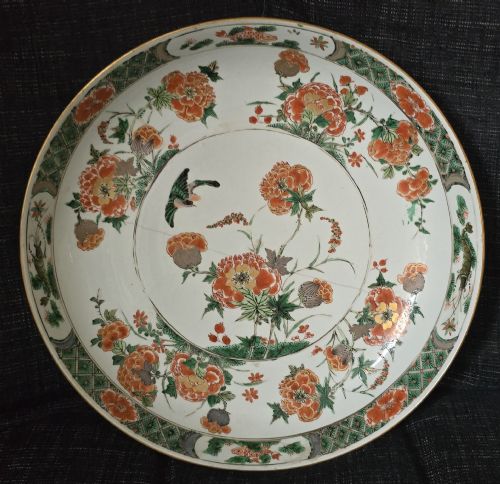


Green Famille Verte
Green famille verte items are vibrant Chinese porcelain and enamel pieces prized for their distinct palette and rich decorative heritage.
Green Famille Verte
When you search for green famille verte, you encounter a distinct category of Chinese porcelain defined by its predominant green overglaze enamels. These works span several periods, with pieces originating from the 17th century through to the 19th century and the turn of the 20th century.
Buyers often meet 19th-century interpretations alongside earlier Kangxi period examples and 18th-century style pieces. Whether configured as a ginger jar lamp or standing as a decorative baluster vase, each item brings a traditional aesthetic to an interior.
How they were made
These items rely on hard-paste porcelain as a durable foundation for intricate decoration. Artisans applied overglaze enamels directly to the fired ceramic body to achieve the characteristic vibrant surface appearance.
Colour is built up using distinct palettes of glaze and enamel, sometimes complemented by biscuit enamelling or gilt mounting. Certain pieces incorporate brass fittings when adapted into table lamps or decorative lighting.
Green Famille Verte Retail Price Guide 2026
Typical asking prices for green famille verte among the pieces listed under this phrase on Sellingantiques today, from the lower quarter to the upper quarter. They describe what is for sale here now, not the wider market.
The listings on this page span several eras, recording pieces from the 17th, 18th, and 19th centuries, alongside items dated specifically to 1870, 1880, 1890, and 1900.
What varies in quality
The standard of painting on the porcelain surface separates exemplary items from standard production. Precision in hand-painted detail, particularly on figural scenes depicting court life or animals, defines the upper tier of craftsmanship.
Age and historical association influence the standing of a piece, with items bearing period marks or provenance holding distinct recognition. Furthermore, the skill involved in subsequent adaptations, such as mounting a vase as a lamp with appropriate wiring, affects the overall execution.
The Green Famille Verte Glossary
- Famille Verte
- A French term meaning green family, used to describe a Chinese porcelain palette dominated by green overglaze enamels. This style developed during the Qing dynasty and encompasses various shades of green alongside other enamel colours.
- Overglaze Enamel
- Glassy pigments applied to a previously fired and glazed porcelain surface, then fixed with a second, lower-temperature firing. This technique allows for bright, varied surface decoration.
- Hard-paste Porcelain
- A dense, vitrified ceramic made from petuntse and kaolin, fired at high temperatures. It forms the robust body typical of traditional Chinese export wares.
- Charger
- A large decorative plate or dish, often displayed on a wall or sideboard rather than used for dining. In these listings, they frequently showcase complex enamelled narratives.
- Biscuits
- Unglazed fired porcelain or ceramic bodies. Biscuit enamelling involves applying colours directly to this porous surface before firing.
Green Famille Verte: Frequently Asked Questions
What is green famille verte porcelain?
Green famille verte porcelain is a traditional Chinese ceramic style characterised by its prominent green overglaze enamel decoration. The palette typically includes iron red, blue, yellow, and black alongside the dominant green tones.
These pieces were produced across multiple centuries, featuring scenes of court life, figures, birds, and botanical motifs. They range from decorative dishes and chargers to figurines and vases.
How do I identify a Kangxi period piece?
Kangxi period pieces date from the 17th to early 18th century and are often noted for their fine porcelain bodies and meticulous painting. Authentic examples may feature specific reign marks on the base, though later copies often replicate these markings.
Examining the depth of the enamel work, the clarity of the blue underglaze where present, and the overall weight and feel of the porcelain helps determine the actual period of production.
Can I use these vases as lamps?
Many famille verte vases in these listings have been adapted as table lamps, often featuring gilt mounts and professional rewiring. This is a common conversion that allows antique porcelain to function in modern interiors.
When living with these lamps, ensure they are placed securely away from heavy traffic areas to protect the antique porcelain and any applied brass fittings from accidental knocks.
What is the difference between famille rose and famille verte?
Famille verte relies primarily on a palette of green enamels introduced during the 17th century. In contrast, famille rose, which emerged later, is defined by the introduction of an opaque pink or purple enamel derived from colloidal gold.
Both styles utilise hard-paste porcelain bases and overglaze enamelling techniques, but their distinct colour schemes create entirely different visual impressions on the finished objects.