


Green Enamelled Glass Vase
A green enamelled glass vase brings rich colour and painted detail to a room, offering the bold decorative appeal collectors seek.
Green Enamelled Glass Vase
A green enamelled glass vase encompasses Victorian, Art Nouveau, and Art Deco examples produced across the nineteenth and early twentieth centuries. These vessels appear in forms ranging from single cabinet vases and mantle lustres to garniture sets and miniature cameo glass pieces.
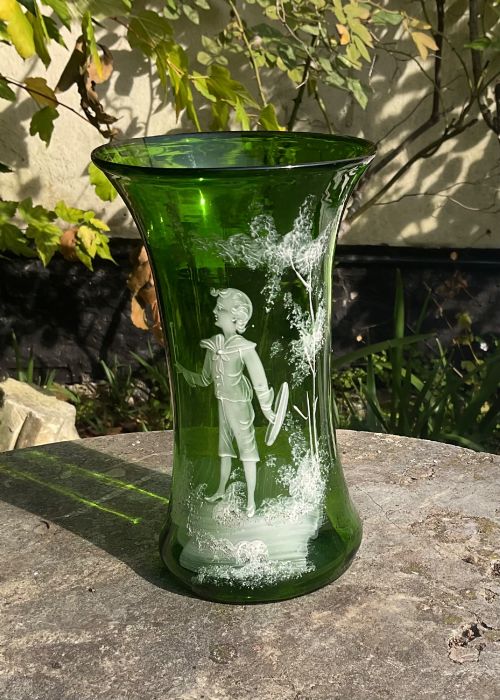
The green glass body serves as a canvas for hand painted enamel scenes, overlaid portraits, and gilt decoration. Collectors most frequently encounter Victorian Mary Gregory pieces alongside Bohemian hunting scenes and French cameo glass landscapes.
Vessels from the eighteen-eighties and nineteen-hundreds dominate the selection, showing how makers utilised rich emerald and uranium glass grounds. Each piece demonstrates the shift from ornate Victorian figural painting to stylised Art Deco geometry and naturalistic Art Nouveau motifs.
How they were made
Makers shaped these vessels through hand blowing techniques, often using lead crystal or uranium glass tinted green during production. Artisans then applied enamel pigments by hand, sometimes combining the paint with gold leaf or gilt enamel accents.
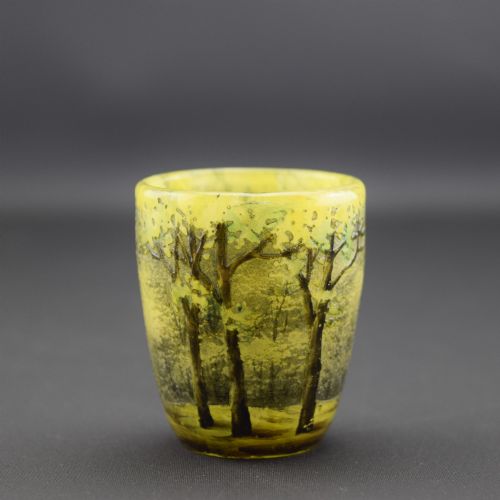
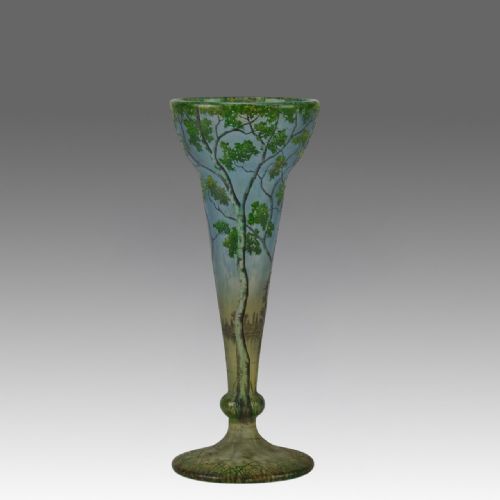
Cameo glass pieces required multi-layered glass blowing followed by acid etching or wheel carving to reveal contrasting coloured designs beneath the surface. Workshops such as Daum Frères utilised these complex methods to build dimensional summer landscapes and botanical motifs.
Listings span the Victorian, Art Nouveau, and Art Deco periods, utilising materials such as uranium glass, cameo glass, and gilt enamel.
What varies in quality
The refinement of the hand painted enamelwork separates standard production from exceptional examples, particularly in figurative scenes and botanical details. Crisp brushwork and careful layering of pigment indicate skilled workshop execution.
The depth and complexity of the underlying glass manufacture also determine the tier of the piece. Hand blown lead crystal and multi-layered cameo glass carved with intricate landscapes represent the higher end of the range.
Daum Frères·Karl Palda
The Green Enamelled Glass Vase Glossary
- Mary Gregory
- A style of white enamel painting depicting silhouetted Victorian children, frequently set against a green glass background. This style became popular during the late nineteenth century.
- Cameo glass
- A form of art glass created by fusing layers of different coloured glass together before carving or etching away the exterior layers to form a raised design. This technique requires considerable skill.
- Uranium glass
- Glass that has been spiked with uranium oxide to produce a vivid yellow-green colour which glows brightly under ultraviolet light. It was widely used in nineteenth and twentieth century decorative glass.
- Mantle lustres
- Ornamental vases fitted with hanging glass prisms, designed to sit on a fireplace mantle. They often feature hand painted enamel decoration and gilt highlights.
- Gilt enamel
- Enamel paint mixed with powdered gold or gold leaf to add metallic highlights to the glass surface. This technique provides a reflective finish that catches the light.
Green Enamelled Glass Vase: Frequently Asked Questions
How do I identify uranium glass?
Uranium glass displays a distinct yellow-green or lime coloration under normal daylight. It contains trace amounts of uranium oxide added to the molten batch.
The most reliable way to confirm uranium glass is by holding it under a blacklight, which causes the glass to emit a bright neon green glow.
Where were Bohemian green glass vases made?
Bohemian glass was produced primarily in the Bohemia region, now part of the Czech Republic, which has a long tradition of glassmaking. These pieces often incorporate rich green hues and heavy enamel or gilt decoration.
Craftsmen in the area utilised hand blowing and hand painting techniques that defined late nineteenth and early twentieth century European decorative arts.
What is cameo glass?
Cameo glass is a luxury art glass technique involving two or more fused layers of contrasting colours. Artisans carve away the top layer to leave a raised, opaque design against a translucent background.
This method demands advanced glassblowing and carving expertise. Master glasshouses used it to create detailed landscape and botanical scenes.
How should I clean antique enamelled glass?
Antique enamelled glass requires gentle maintenance using only a soft, dry cloth to remove dust. Water and cleaning solutions can damage delicate enamel pigments and gold leaf.
Avoid submerging these pieces in water or exposing them to harsh chemicals. Proper handling preserves the fragile painted surfaces for the future.