


Green Emerald Dress Ring
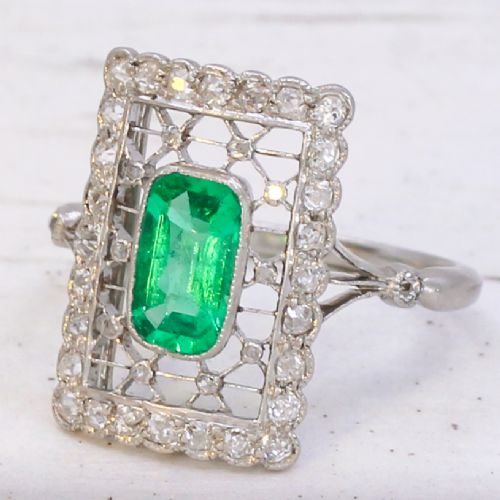
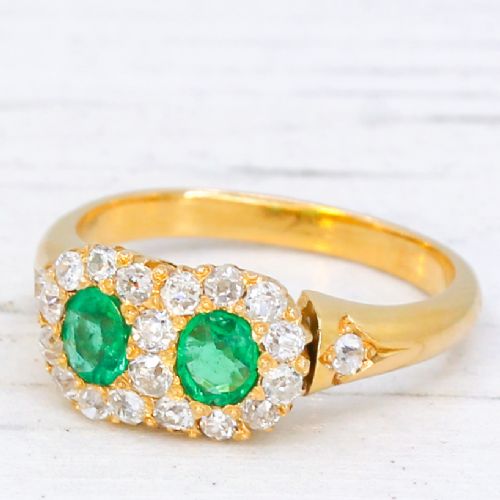
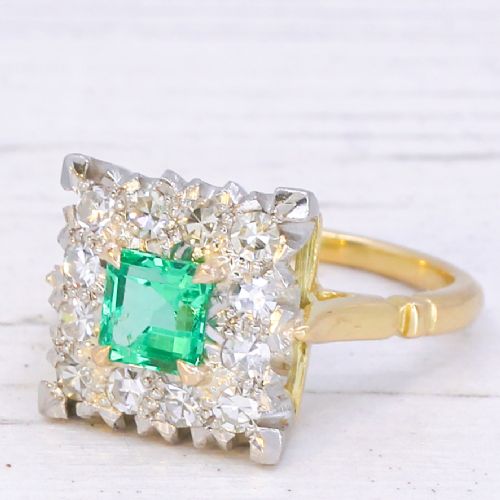
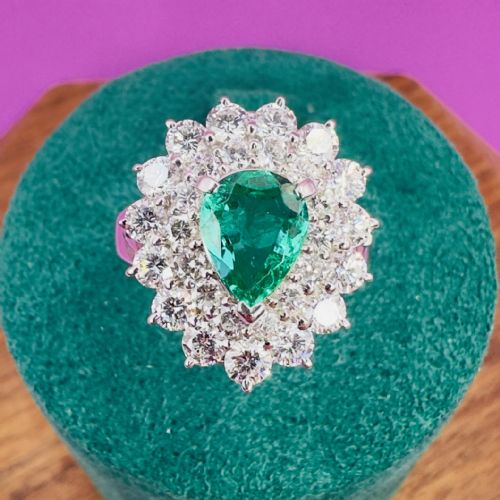
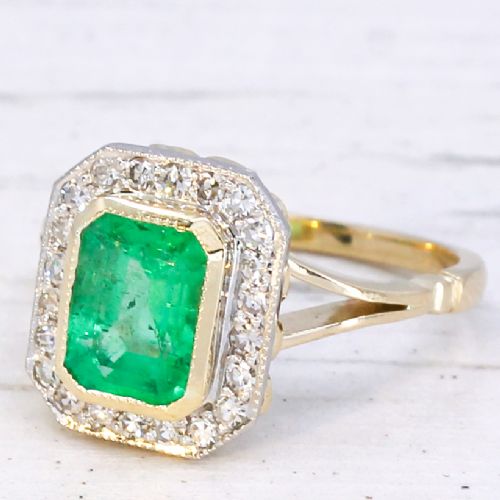
A green emerald dress ring carries the rich verdant fire of beryl, framed in diamond clusters or gleaming platinum to catch the light.
Green Emerald Dress Ring
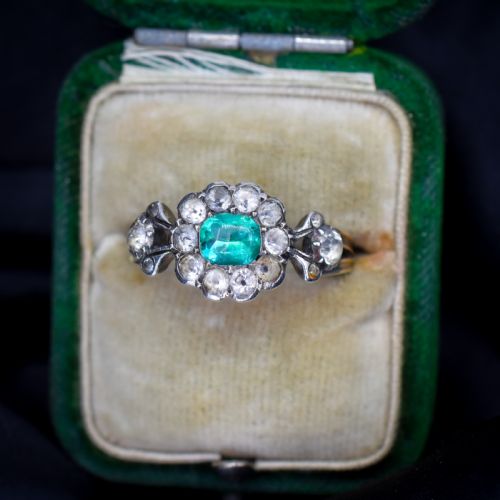
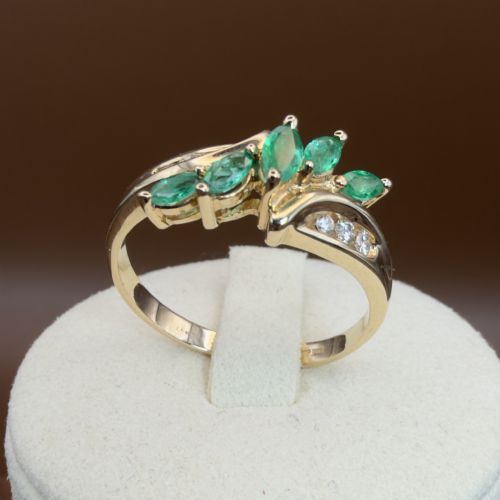
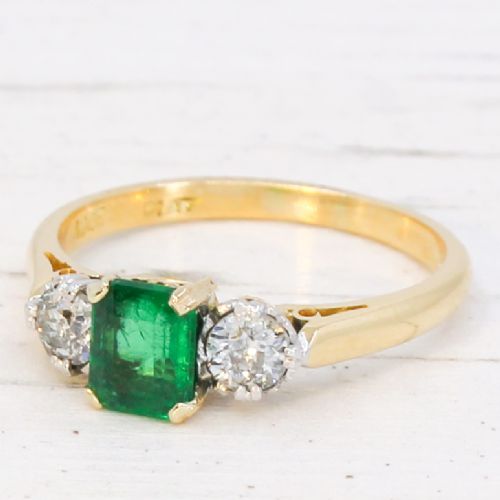
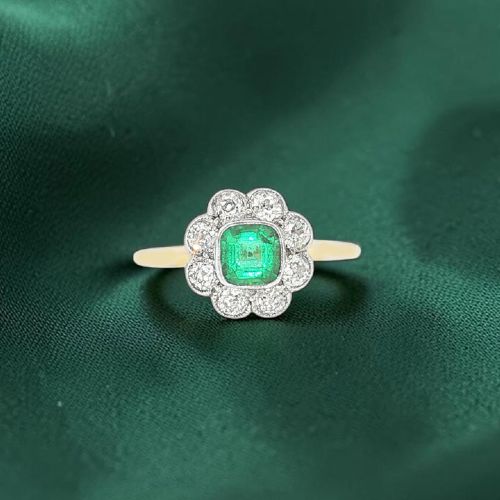
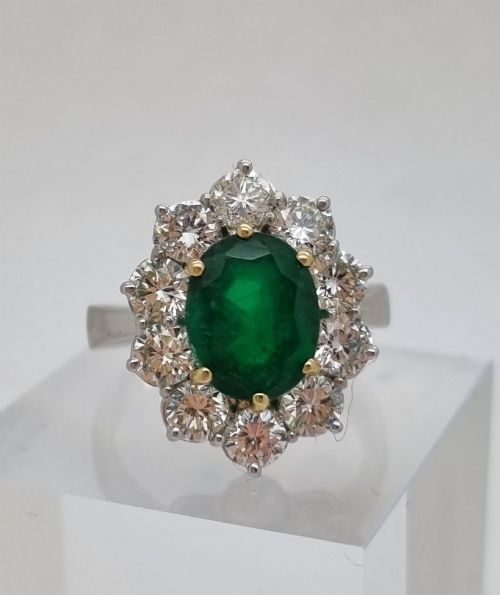
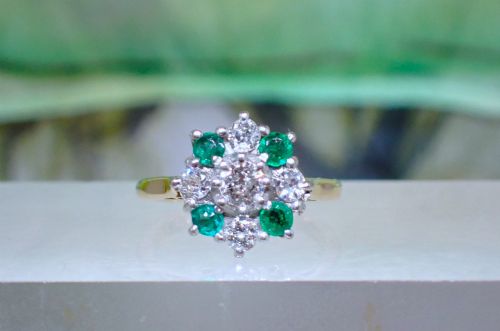
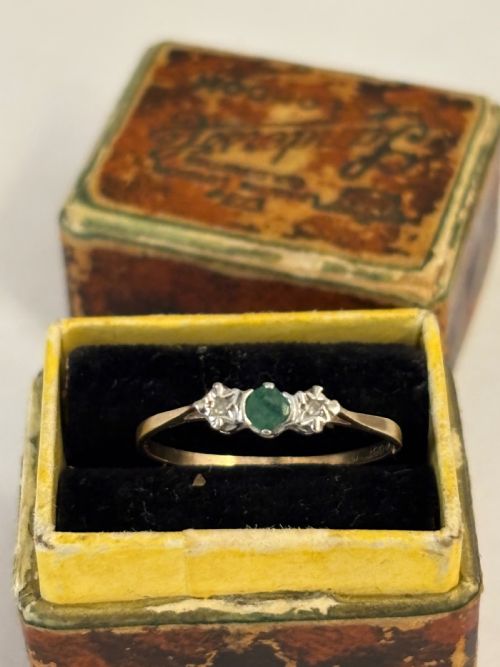
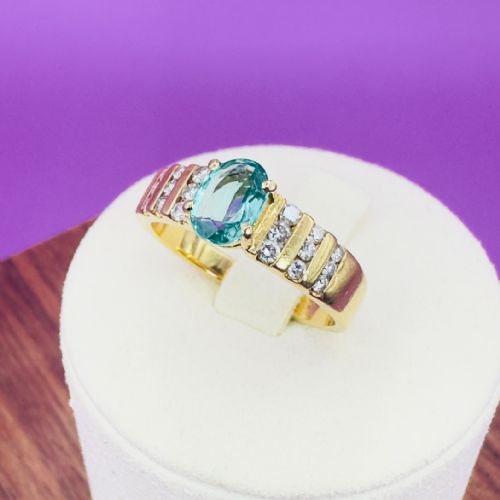
A green emerald dress ring brings together vibrant green beryl and sparkling diamonds set in yellow gold, white gold, or platinum. These pieces span historical periods from Georgian pastes to Edwardian clusters and Mid-Century cocktail rings.
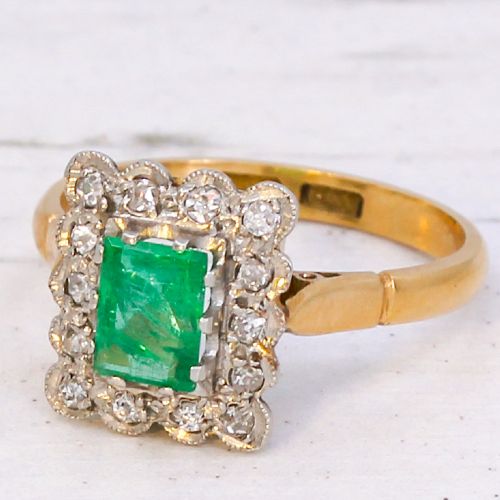
The cluster format dominates the selection, centring a prominent emerald within a halo of old-cut or brilliant diamonds. Buyers also encounter three-stone settings, delicate bands, and substantial solitaire designs reflecting Art Deco and twentieth-century aesthetics.
Materials and construction
Craftsmen utilised durable precious metals including platinum, 18ct gold, and 9ct gold to securely mount emeralds alongside brilliant and old-cut diamonds. Settings incorporate intricate claw, bezel, and cluster arrangements designed to maximise light transmission through the gemstone.
Many mountings pair yellow gold with white gold or platinum highlights to enhance the contrast between the green beryl and the surrounding diamonds.
Green Emerald Dress Ring Retail Price Guide 2026
Typical asking prices for green emerald dress ring among the pieces listed under this phrase on Sellingantiques today, from the lower quarter to the upper quarter. They describe what is for sale here now, not the wider market.
Some past owners preferred adjustable shanks so a single heirloom finger could accommodate changing seasons without resizing.
Distinctions in quality
Quality rests in the origin, clarity, and treatment level of the emerald, with Colombian stones and negligible oil certifications commanding distinct attention. The proportion, cut, and colour saturation of the central beryl relative to the accompanying diamonds determine the overall visual harmony.
The precision of the metalwork, whether delicate Edwardian millegrain or bold Art Deco platinum geometry, separates standard production from exceptional fine jewellery.
The Green Emerald Dress Ring Glossary
- Cluster ring
- A ring design featuring a central gemstone surrounded by a geometric arrangement of smaller stones, typically diamonds.
- Columbian emerald
- Beryl sourced from specific mines renowned for producing stones with exceptional depth of green colour and specific trace mineral profiles.
- Old cut
- A vintage diamond cutting style characterised by a high crown, small table, and deep pavilion, designed to catch candlelight.
- Millegrain
- A decorative technique featuring a row of tiny raised metal beads along the edges of a setting.
- Paste
- Faceted lead glass used in historic jewellery to imitate gemstones.
Green Emerald Dress Ring: Frequently Asked Questions
How do I care for a vintage emerald ring?
Emeralds are a softer gemstone and require gentle cleaning with warm soapy water rather than ultrasonic machines. Store the ring separately to prevent harder diamonds from scratching the beryl.
Limit exposure to harsh chemicals and sudden temperature changes to preserve the natural integrity and clarity oils of the stone.
Are these rings suitable for daily wear?
Many of these pieces were built for formal evening wear as cocktail or dress rings rather than rigorous daily use. Platinum and high-carat gold mountings offer durability, but the softer emerald requires mindful protection against knocks.
Choosing a secure bezel setting rather than high prongs helps safeguard the central stone during regular outings.
How can I tell an Edwardian ring from Art Deco?
Edwardian rings typically feature delicate platinum-topped yellow gold work, intricate filigree, and softer floral or garland motifs. They lean towards romantic elegance and subtle symmetry.
Art Deco pieces embrace bold geometric lines, stark platinum settings, and precise abstract symmetry that reflect the modernist movement of the nineteen-twenties and thirties.
What does oil treatment mean for emeralds?
Natural emeralds commonly contain internal fractures that are routinely treated with natural oils or resins to improve transparency and clarity. Certificates often grade this as minor, moderate, or negligible oil.
Stones with negligible oil enhancement require less artificial filler and are particularly prized by collectors for their inherent purity.