



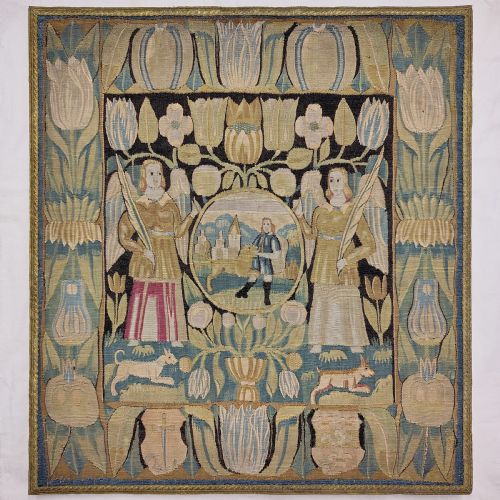

Green Embroidered Textile
A green embroidered textile brings centuries of needlecraft into a room, offering rich textures and historic stories woven into fabric.
Green Embroidered Textile
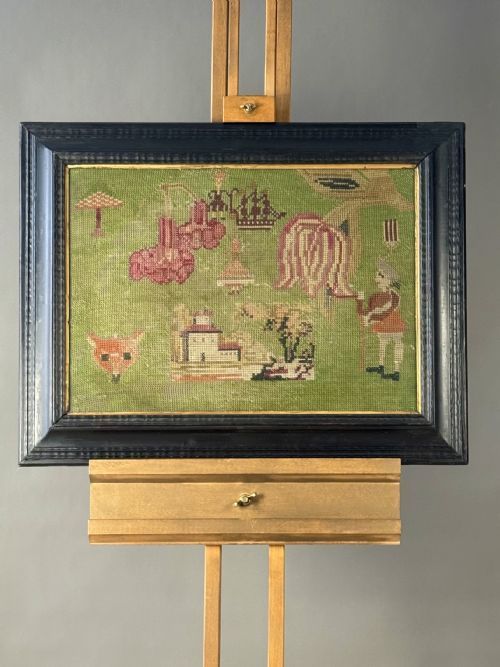
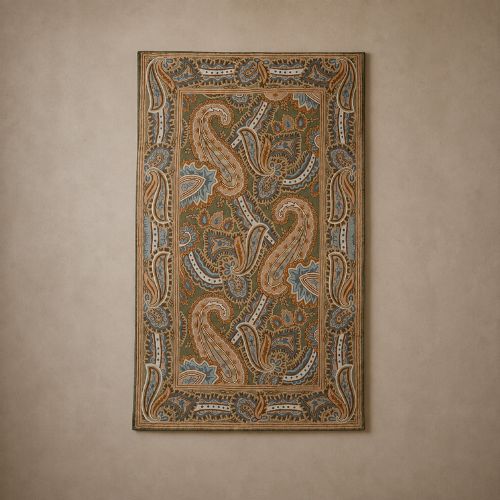
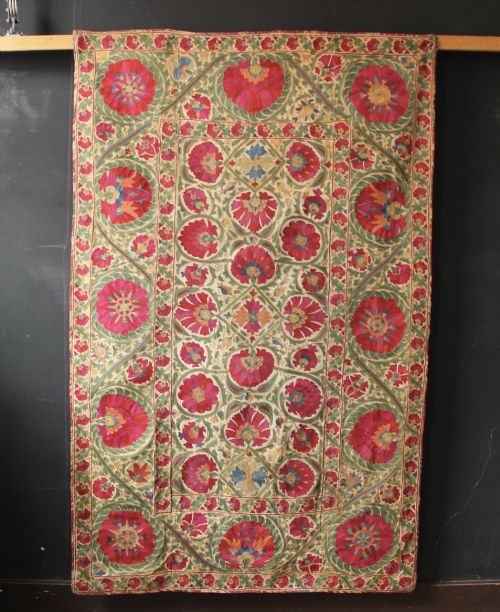
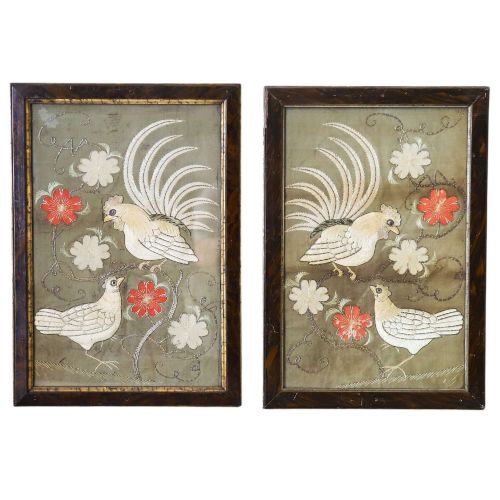
A green embroidered textile spans wall hangings, bed covers, samplers, and framed panels created across multiple centuries. Buyers encounter English crewelwork, Central Asian Suzanis, and French silk panels framed for display.
The objects range from small band samplers worked by children to large tribal wall hangings and velvet bed covers. Pieces from the seventeenth century onward appear alongside nineteenth-century works and later tribal textiles.
English crewelwork and Central Asian needlework dominate the forms seen here. Buyers select these items to introduce historic depth and textured colour to interior spaces.
How they were made
Makers utilised natural base materials including linen, cotton, wool, silk, canvas, and velvet. Artisans worked upon these grounds using silk thread, wool, and beads to build intricate surface patterns.
Techniques range from crewelwork embroidery and gros-point wool pictures to needlepoint and intricate Suzani stitchery. Artisans applied these methods by hand, often incorporating wooden frames and glass for finished display pieces.
The listings span from the 17th century through the 1920s, featuring wool, silk, linen, and velvet materials.
What varies in quality
Quality depends upon the precision of the stitchwork and the complexity of the design. Dense, fine needlework and well-preserved silk thread distinguish superior examples from simpler pieces.
The integrity of the ground fabric and the survival of the original green tones dictate the desirability of a textile. Works that retain their structural stability and vibrant materials stand apart from heavily faded or compromised specimens.
The Green Embroidered Textile Glossary
- Crewelwork
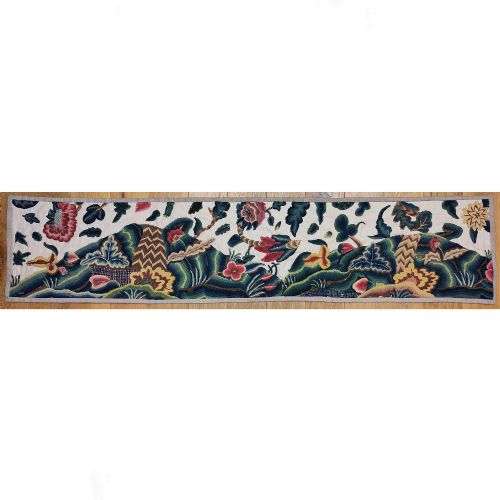
- Embroidery executed with wool yarn on a linen or cotton ground. This technique creates textured floral and fauna motifs popular in English needlework.
- Suzani
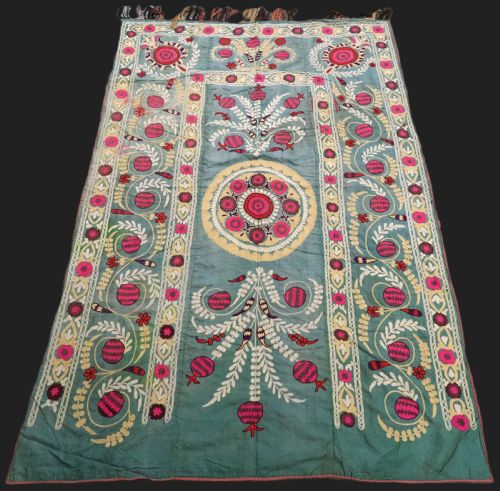
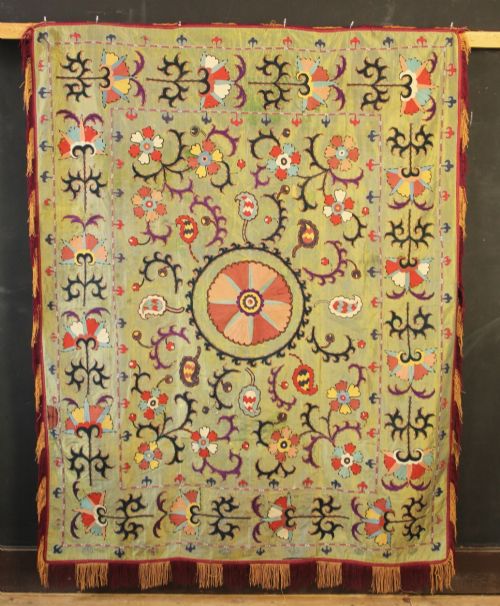
- Central Asian embroidered tribal textile created in panels and joined together. These pieces often feature bold floral medallions and silk thread on silk or cotton.
- Sampler
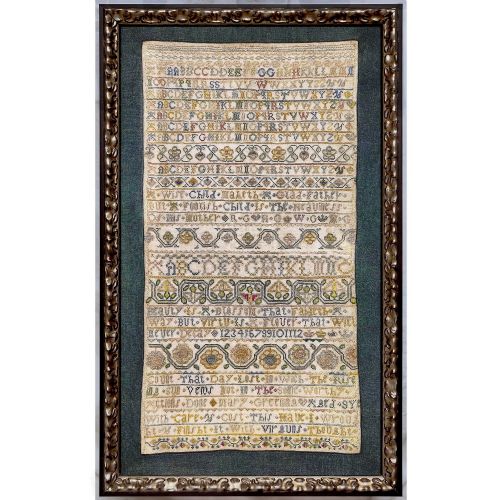
- A piece of needlework demonstrating various stitches and alphabets. Historic examples were frequently worked by young girls to practice sewing skills.
- Gros-point
- A counted-thread embroidery stitch worked on canvas. It produces a sturdy, durable textile suited for pictorial wall art and furnishings.
- Band sampler
- A long, narrow embroidery format displaying horizontal rows of distinct patterns. Makers utilised these to record stitch variations and motifs.
Green Embroidered Textile: Frequently Asked Questions
How should I hang a textile?
Mount textiles using non-damaging methods such as conservation framing behind glass or gentle stitching to a padded, weight-distributing support board. Avoid direct sunlight to protect fragile threads.
Keep pieces away from damp environments and heat sources to maintain the stability of historic linen, silk, and wool grounds.
Are these pieces cleaned?
Historic textiles generally require minimal cleaning to preserve delicate fibres and historic dyes. Professional textile conservators handle stabilisation rather than standard washing.
Surface dust can be removed very gently with low suction through a mesh screen, but water cleaning risks severe damage to antique threads.
Can I date a sampler?
Samplers often include stitched dates, maker names, and ages which help establish a precise period. Stylistic elements of the lettering and motifs also offer clues to the era of creation.
Comparing the border designs and stitch types against documented examples narrows down the decade in which the maker worked.
What is a prayer suzani?
A prayer suzani incorporates an architectural mihrab or arch motif within its embroidered design. Central Asian makers produced these for domestic decoration and ceremonial use.
The layout typically directs the eye upward through floral vines and medallions arranged beneath the central arched field.