




Green Damask Salon Chair
A green damask salon chair brings formal nineteenth-century elegance and rich textile texture directly into a modern drawing room.
Green Damask Salon Chair
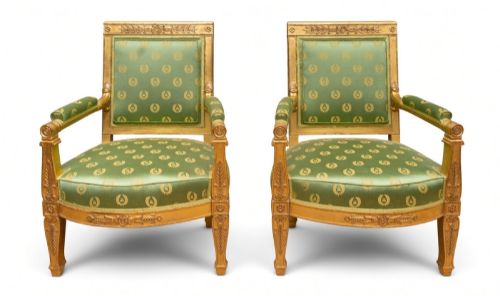
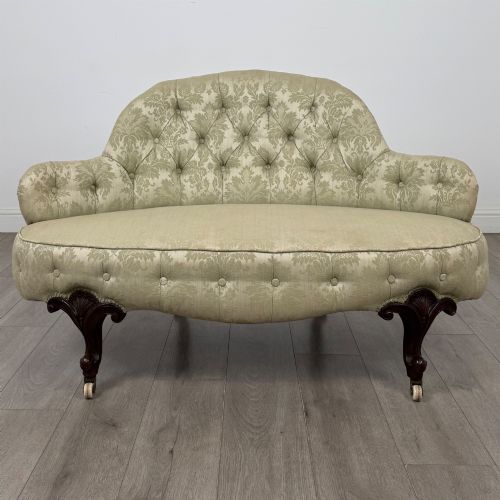
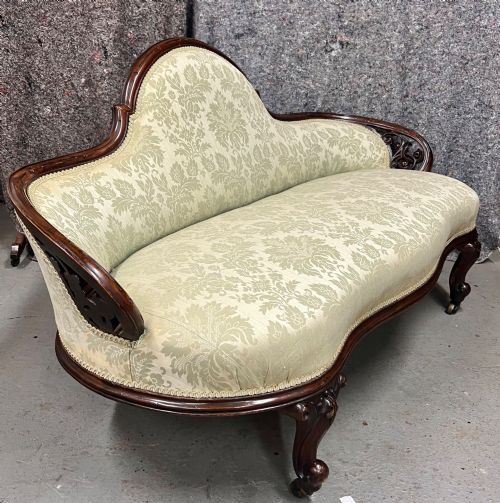
A green damask salon chair combines patterned upholstery with period frames originating mainly from Victorian England and nineteenth-century France. These seating pieces encompass drawing room chairs, nursing armchairs, and matching pairs designed for formal entertaining and quiet repose.
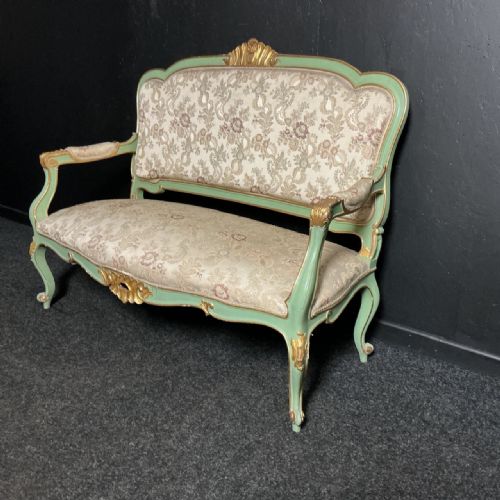
The versions most commonly met on this page span Victorian walnut and mahogany frames, alongside giltwood and painted French salon chairs. Makers utilised styles ranging from Rococo Revival and Louis XV Revival to Georgian Style and William and Mary adaptations.
Each piece functions as a striking focal point, whether configured as an open armchair, a low side seat, or a compact drawing room chair. The combination of patterned textile and carved timber creates an enduring visual presence suited to traditional and eclectic interiors.
Materials and construction
Frames rely on dense timbers such as mahogany and walnut, together with carved giltwood and ceramic elements that define the structural silhouette. Cabinetmakers shaped these hardwoods to support intricate upholstery forms including button backs and sprung seats.
Upholstery relies on damask fabric, prized for its woven patterns that catch the light across the seat and backrest. Artisans secured these textiles over traditional stuffing to achieve the firm yet comfortable contours demanded by nineteenth-century salons.
Green Damask Salon Chair Retail Price Guide 2026
Typical asking prices for green damask salon chair among the pieces listed under this phrase on Sellingantiques today, from the lower quarter to the upper quarter. They describe what is for sale here now, not the wider market.
Some nineteenth-century nursing chairs were built deliberately low so ladies could tend infants without tangling heavy petticoats.
Assessing quality and craftsmanship
The distinction between standard examples and exceptional work rests on the crispness of the timber carving and the sophistication of the frame proportions. Finer pieces display deeply sculpted details on walnut or giltwood, whereas simpler versions rely on plain turned legs.
Upholstery execution also dictates distinction, marked by precise pattern alignment of the damask fabric across curved surfaces. The integrity of the underlying joinery determines how securely the chair withstands daily use.
Jacob Desmalter
The Green Damask Salon Chair Glossary
- Damask
- A reversible figured fabric with patterns woven into the flat ground, historically produced in silk, wool, or cotton. This textile provides the characteristic sheen seen on formal nineteenth-century seating.
- Fauteuil
- An open-armed French armchair with upholstered back and armrests, typically featuring an exposed wooden frame. These chairs formed part of coordinated salon suites during the eighteenth and nineteenth centuries.
- Giltwood
- Timber treated with a thin layer of gold leaf or metallic powder applied over a prepared gesso base. This luminous finish was favoured for formal French and English reception rooms.
- Rococo Revival
- A nineteenth-century design movement drawing inspiration from the curving asymmetrical motifs of the eighteenth-century Rococo period. Furniture in this style exhibits naturalistic leaf carving and cabriole legs.
- Salon chair
- A light, decorative chair designed for entertaining guests in a formal reception room rather than for heavy daily lounging. These pieces prioritise ornamental carved frames and refined upholstery.
Green Damask Salon Chair: Frequently Asked Questions
Where were salon chairs placed originally?
Salon chairs were arranged informally around drawing rooms and reception spaces to facilitate conversation among guests.
Their lightweight construction allowed servants to reposition them easily depending on the size of the gathering.
How do I care for antique damask upholstery?
Protect antique damask fabric from direct sunlight to prevent the green dye from fading over time.
Regular gentle vacuuming with a soft brush attachment removes surface dust without stressing the woven threads.
Can I use a salon chair daily?
These chairs were built for formal entertaining rather than heavy everyday lounging, so moderate use suits them best.
Checking the stability of the timber joints ensures the frame remains secure under regular sitting.
How do I distinguish Victorian from French pieces?
Victorian English chairs often utilise darker woods like walnut and mahogany with sturdy, upright proportions.
French pieces frequently feature giltwood finishes, painted surfaces, and more flamboyant revival styling such as Rococo curves.